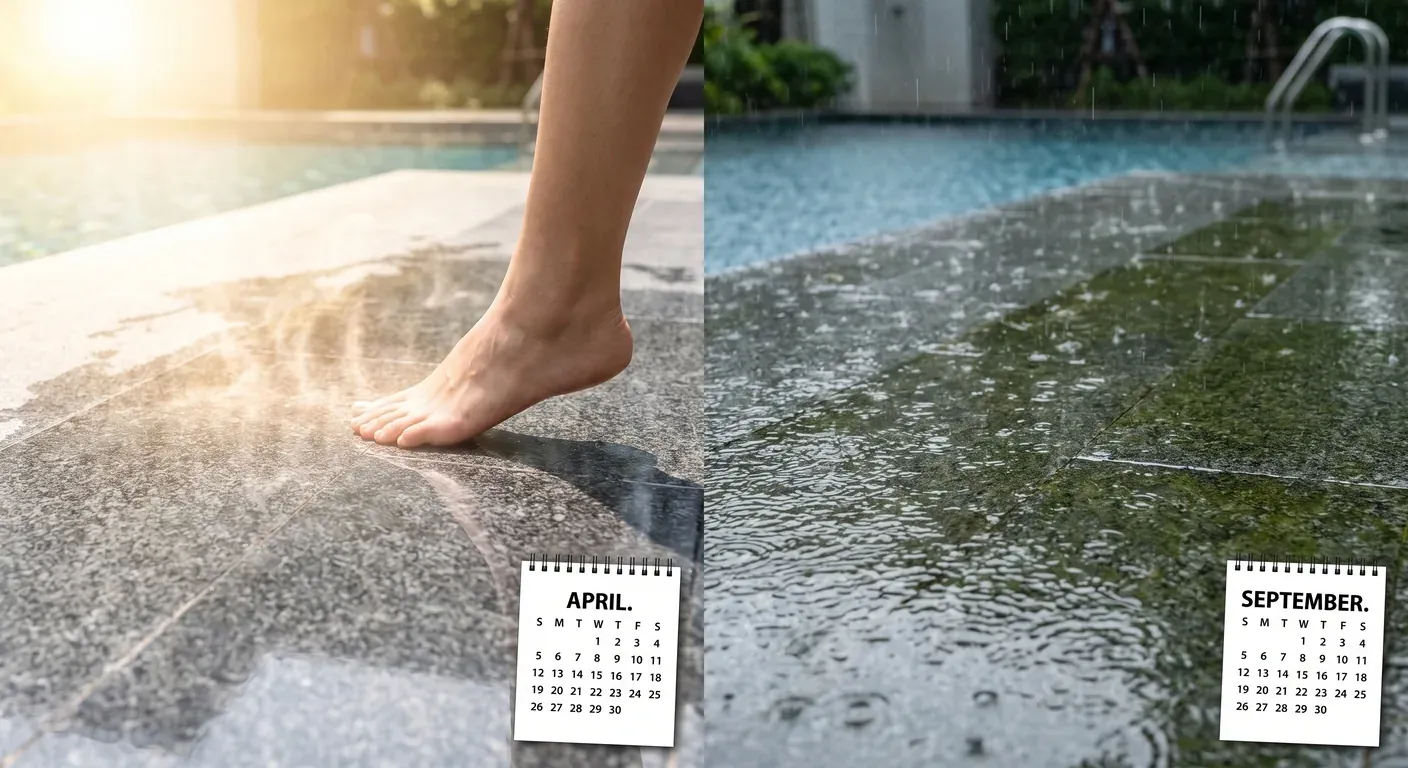
Outdoor natural stone must perform under conditions very different from those inside a building. In Thailand and other tropical climates, exterior surfaces may experience intense sunlight, heavy rain, high humidity, heat and constant wet-dry cycling.
Look at the stone's physical properties
Water absorption, flexural strength, abrasion resistance and weathering performance can all be relevant depending on the application. Testing standards used by the stone industry include ASTM methods for absorption, compressive strength and flexural strength. Slip resistance and weathering can also be assessed where required.
Not every stone within a geological family performs identically. Exterior suitability should therefore be assessed using data for the specific material whenever possible.
Granite and selected quartzites
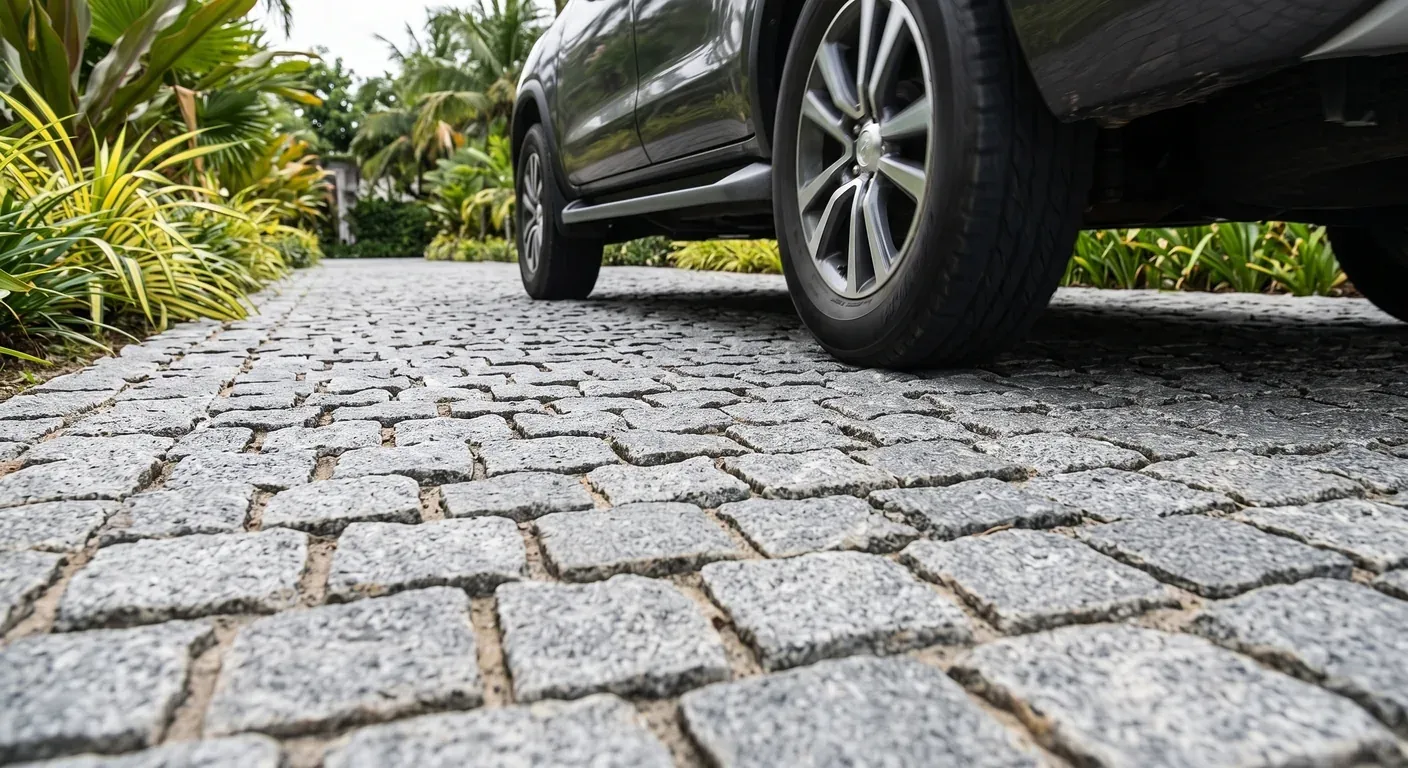
Granite is frequently specified externally because of its hardness and durability. Certain quartzites can also perform extremely well outdoors, particularly where abrasion resistance is required. Stone names alone, however, should never replace technical assessment.
Limestone and travertine
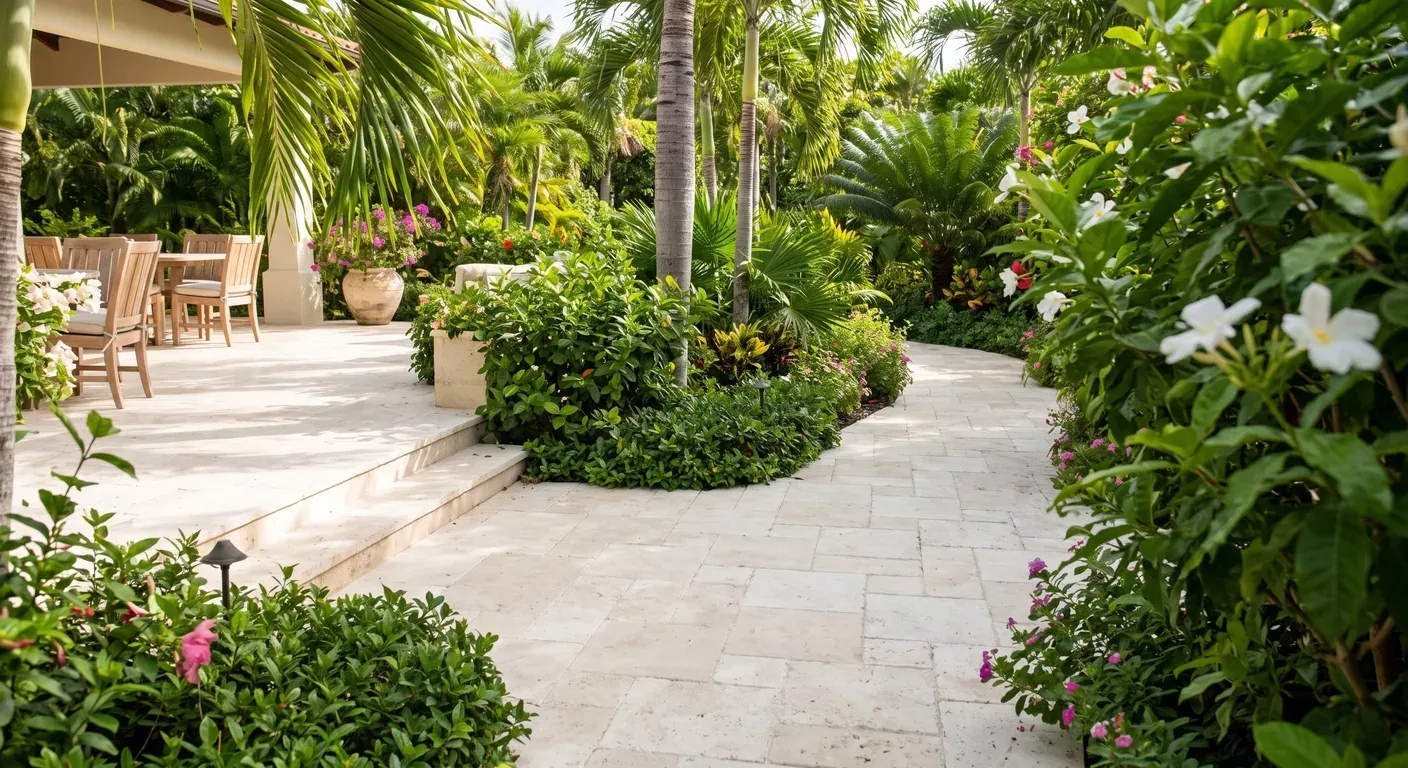
Limestone and travertine have been used in exterior architecture for centuries and can be highly successful when the particular stone is appropriate for the environment. They also provide the warm beige, ivory and earth-toned appearance that works particularly well in tropical landscape and hospitality design.
Surface temperature matters
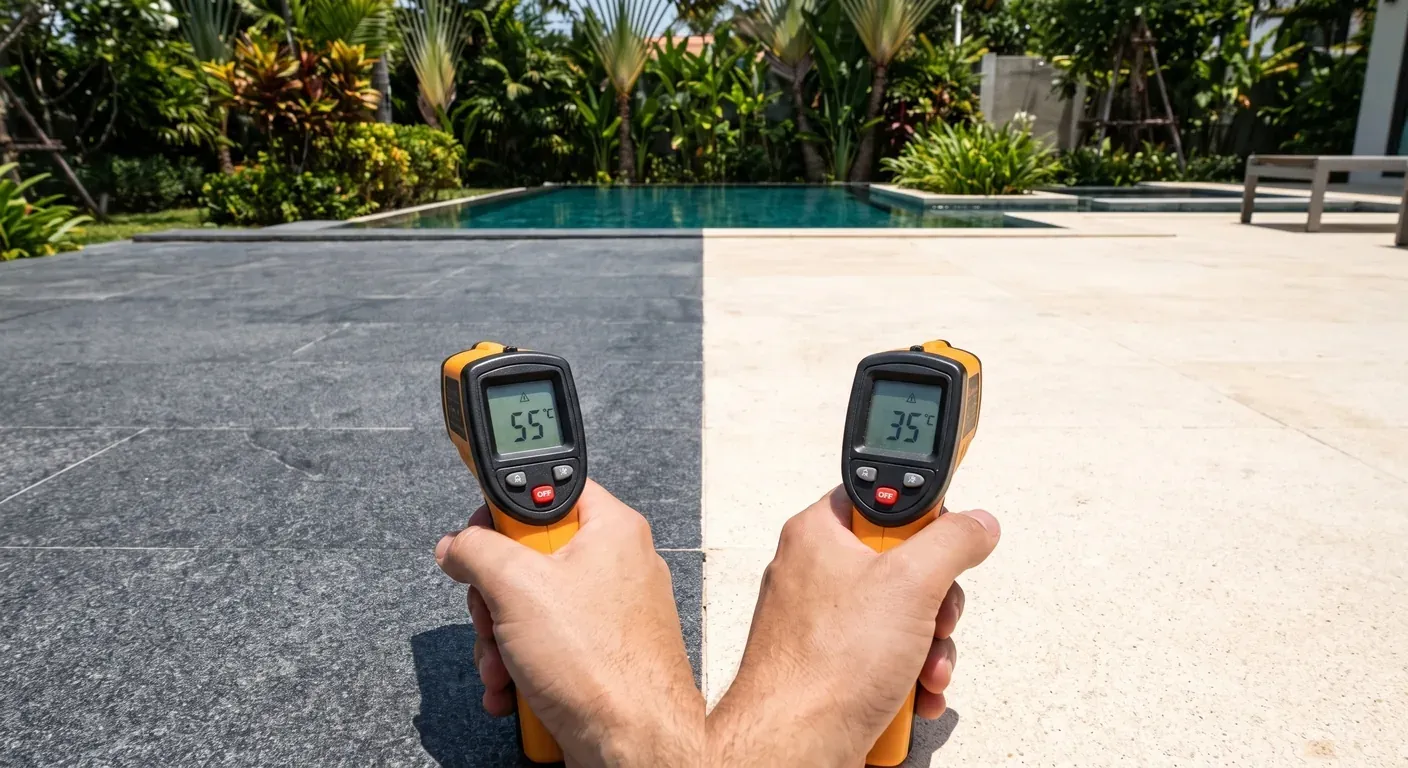
Dark paving can become extremely hot under direct tropical sunlight. Creams, ivories, sand tones and other lighter colours are often preferable around swimming pools and barefoot areas because they can reduce heat gain as well as create a softer visual effect.
Avoid highly polished exterior flooring
Exterior surfaces generally benefit from textured finishes such as brushed, flamed, bush-hammered or sandblasted stone. These treatments can increase surface texture while giving the stone a more natural architectural character.
The correct outdoor stone is therefore a combination of material, finish, detailing and environment rather than simply a geological category.