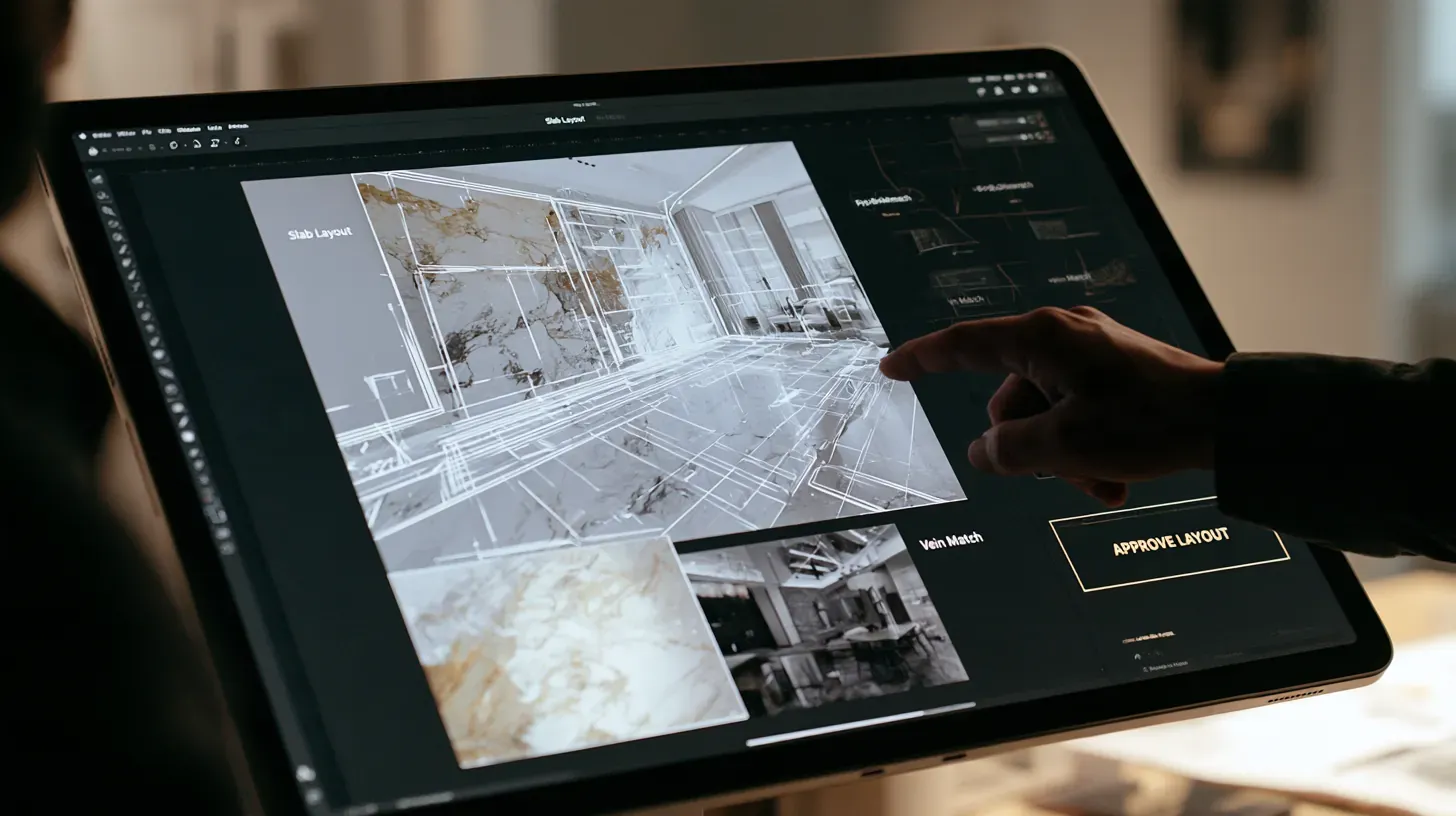
Natural stone can be treated simply as a surface finish, or it can be composed almost like a piece of artwork. Bookmatching and vein matching are two techniques used to control that composition.
What is bookmatching?
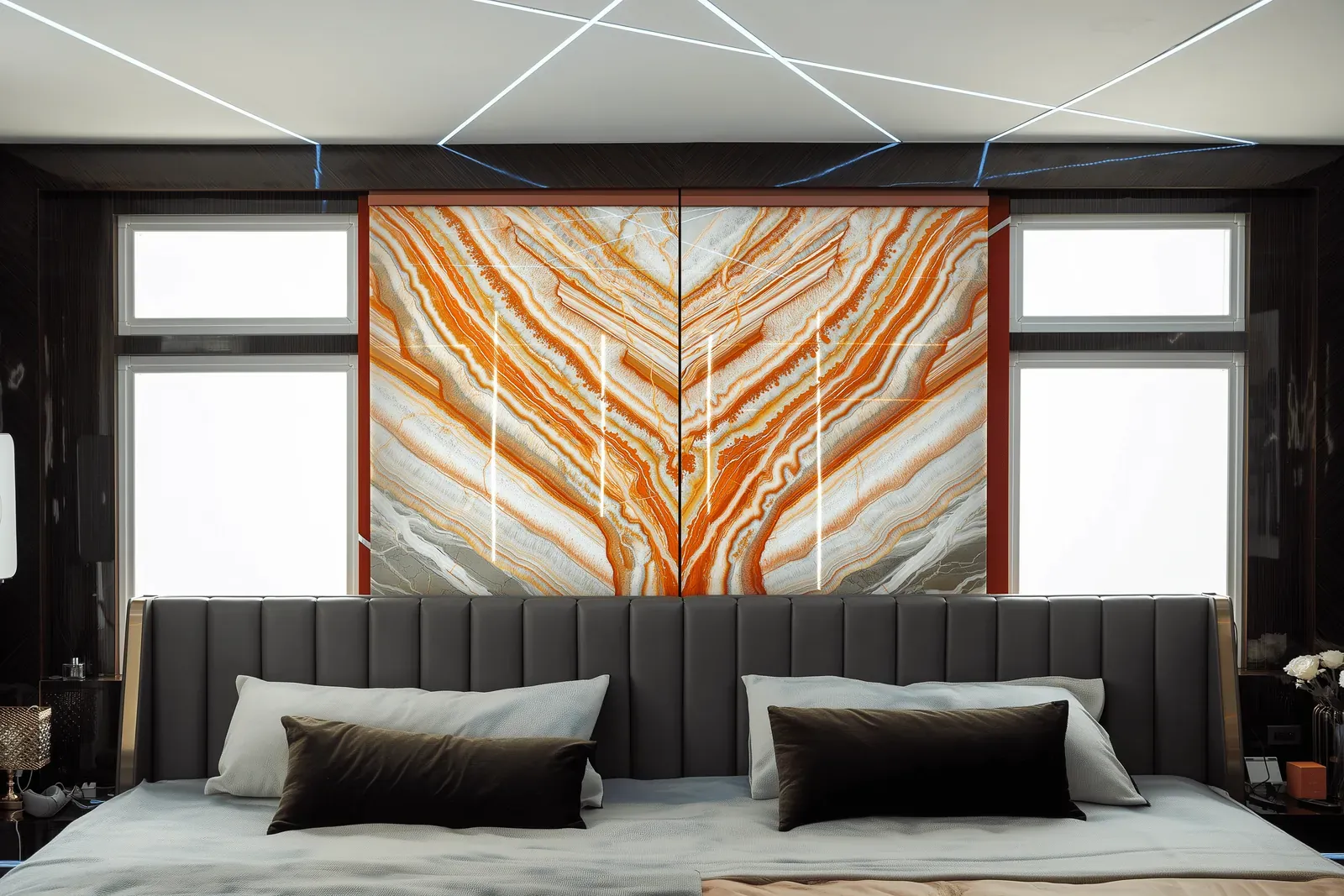
Blocks of stone are cut into sequential slabs. When alternating slabs are opened against one another, their patterns can form an approximately mirrored composition, similar to opening the pages of a book. This is known as bookmatching. It is particularly effective with highly directional marbles and quartzites.
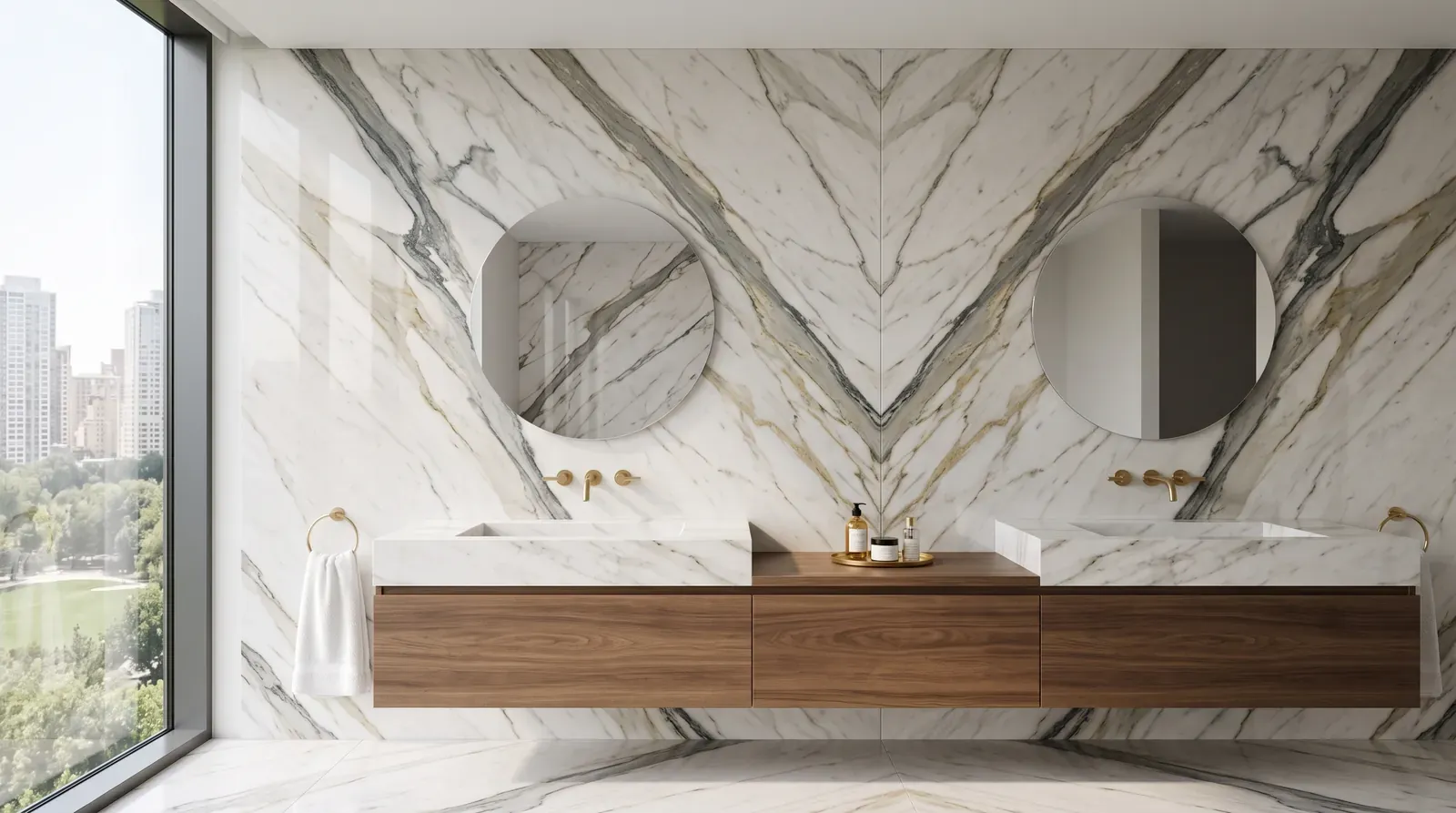
What is vein matching?
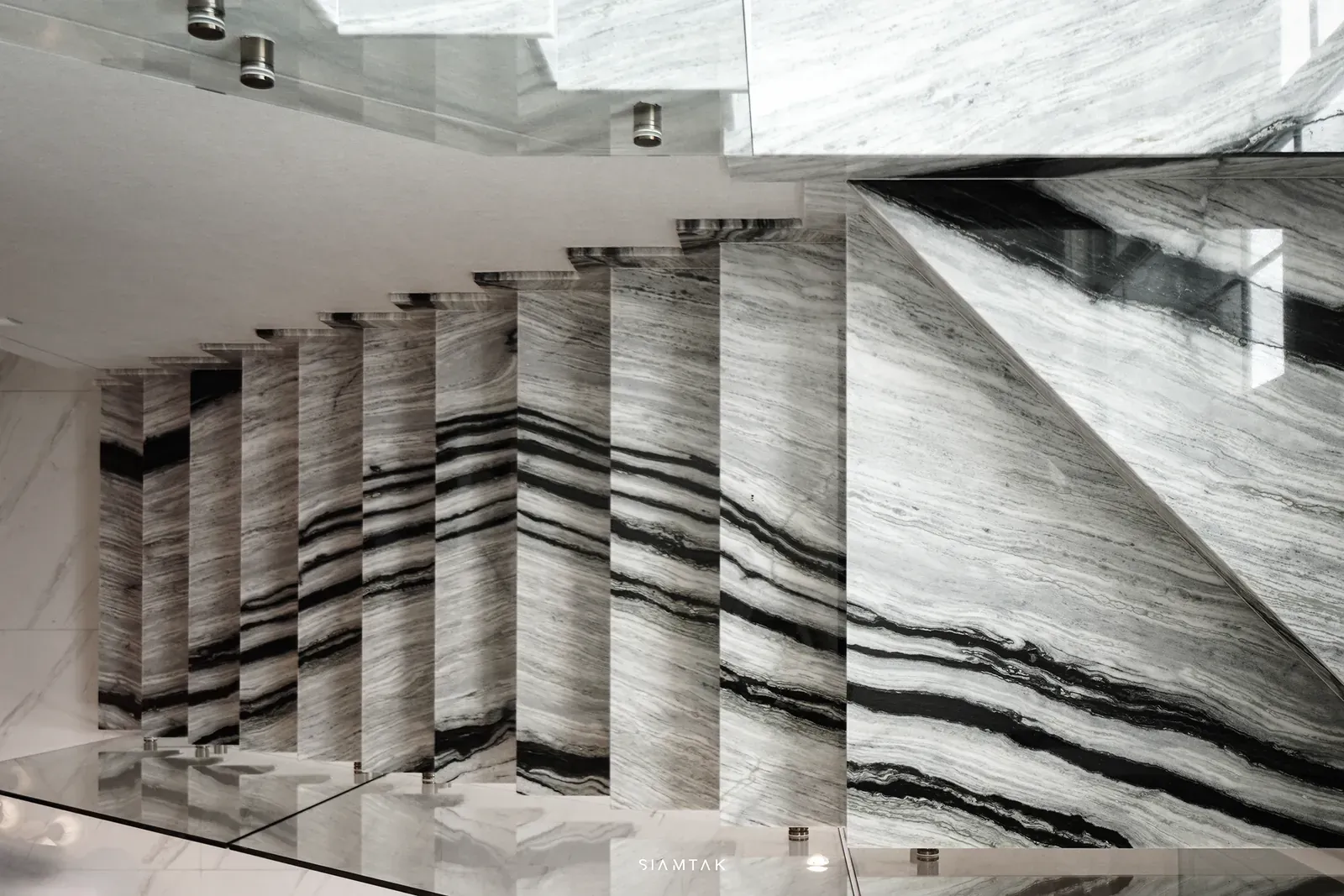
Vein matching has a different objective. Instead of creating symmetry, slabs are positioned so that major veins appear to continue naturally from one panel into the next. The finished installation reads as a larger continuous geological surface.
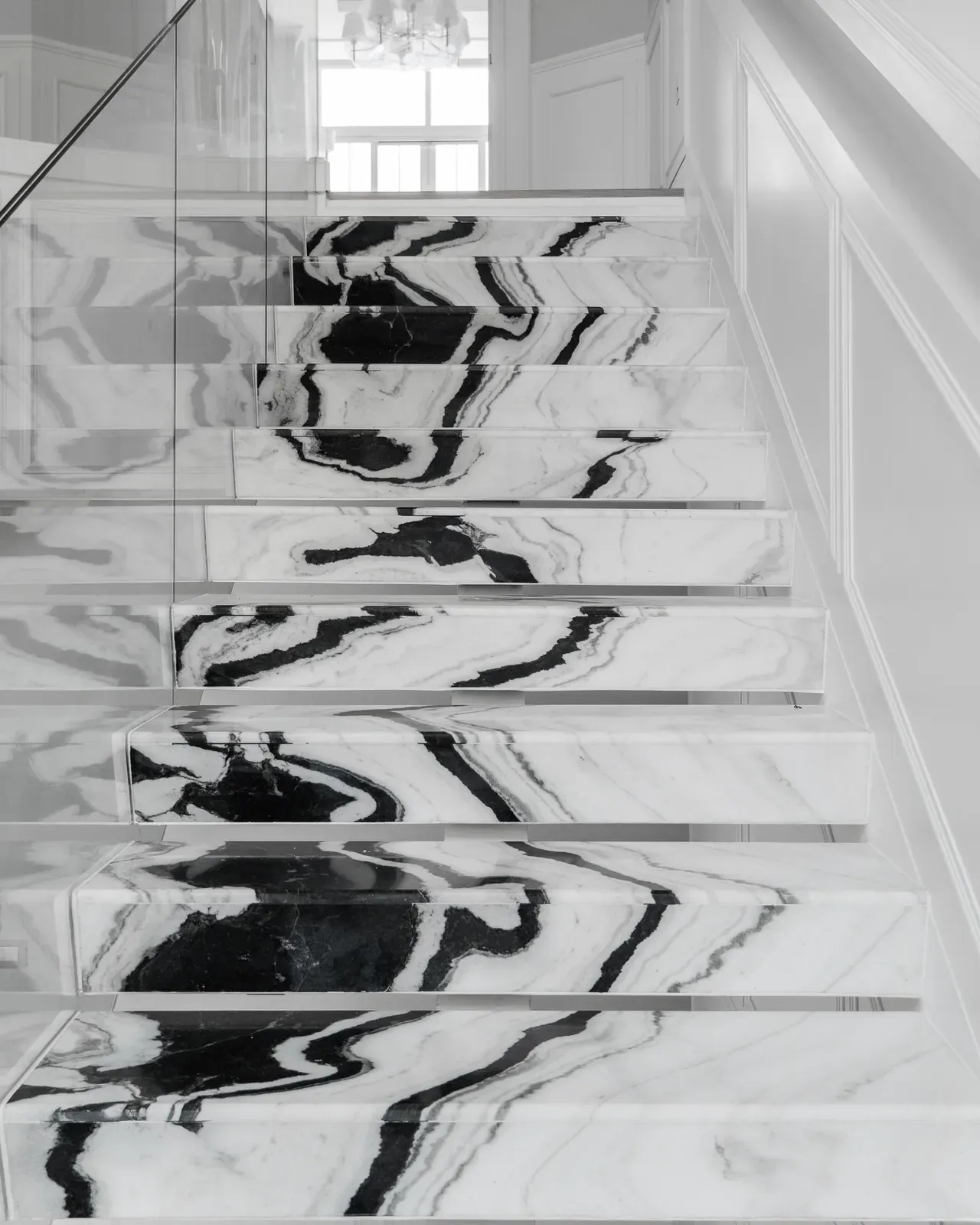
Natural does not mean mathematically identical
Stone is not printed. Even consecutive slabs vary because the saw removes material between each cut and geological features change through the depth of the block. Perfectly identical bookmatching should therefore not automatically be expected.
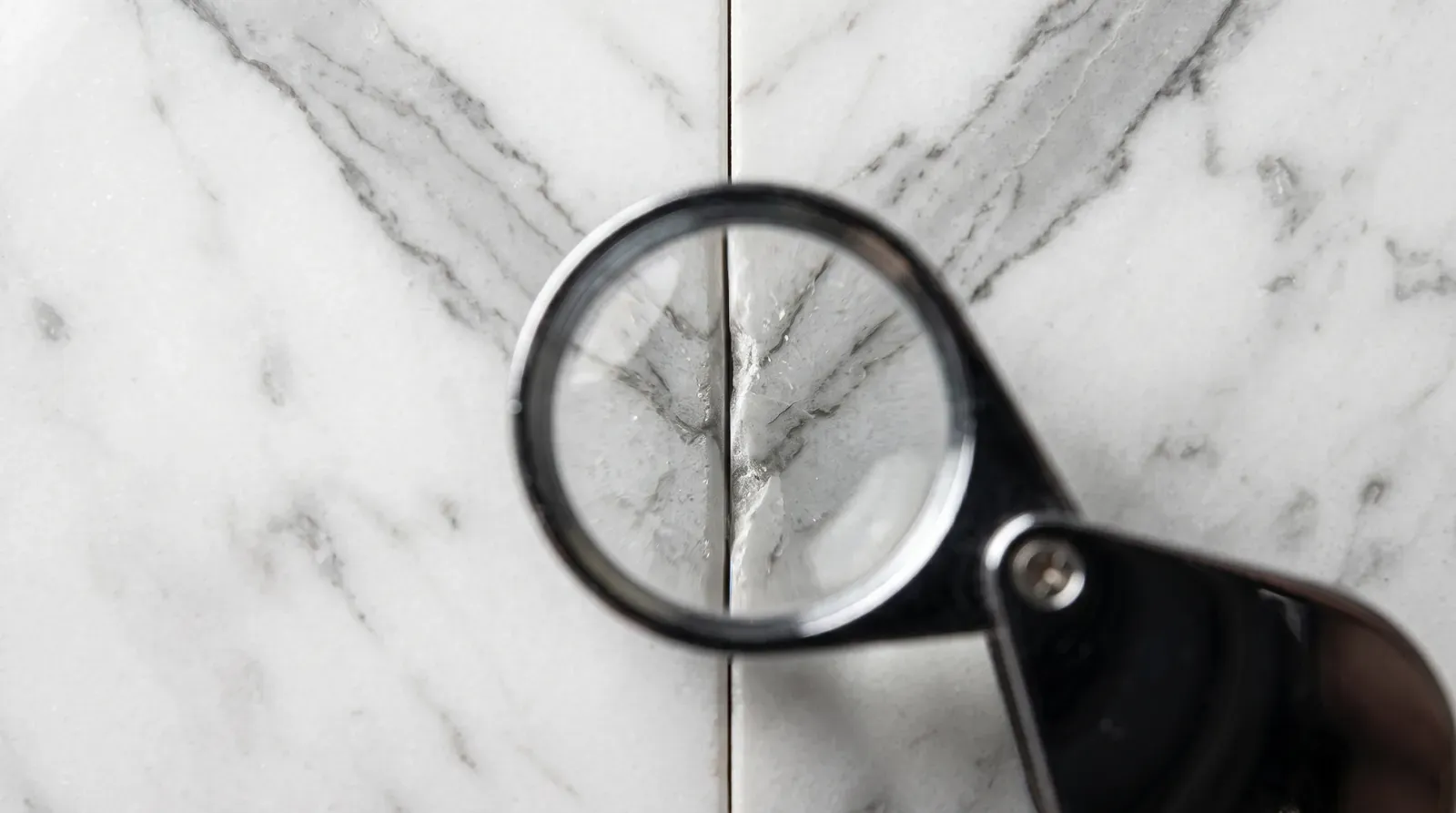
A changing design direction
Designers are also becoming interested in less symmetrical compositions. Veins can continue organically through several surfaces without creating an obvious central mirror line. For architects, the lesson is important: slab layout should happen before cutting begins.
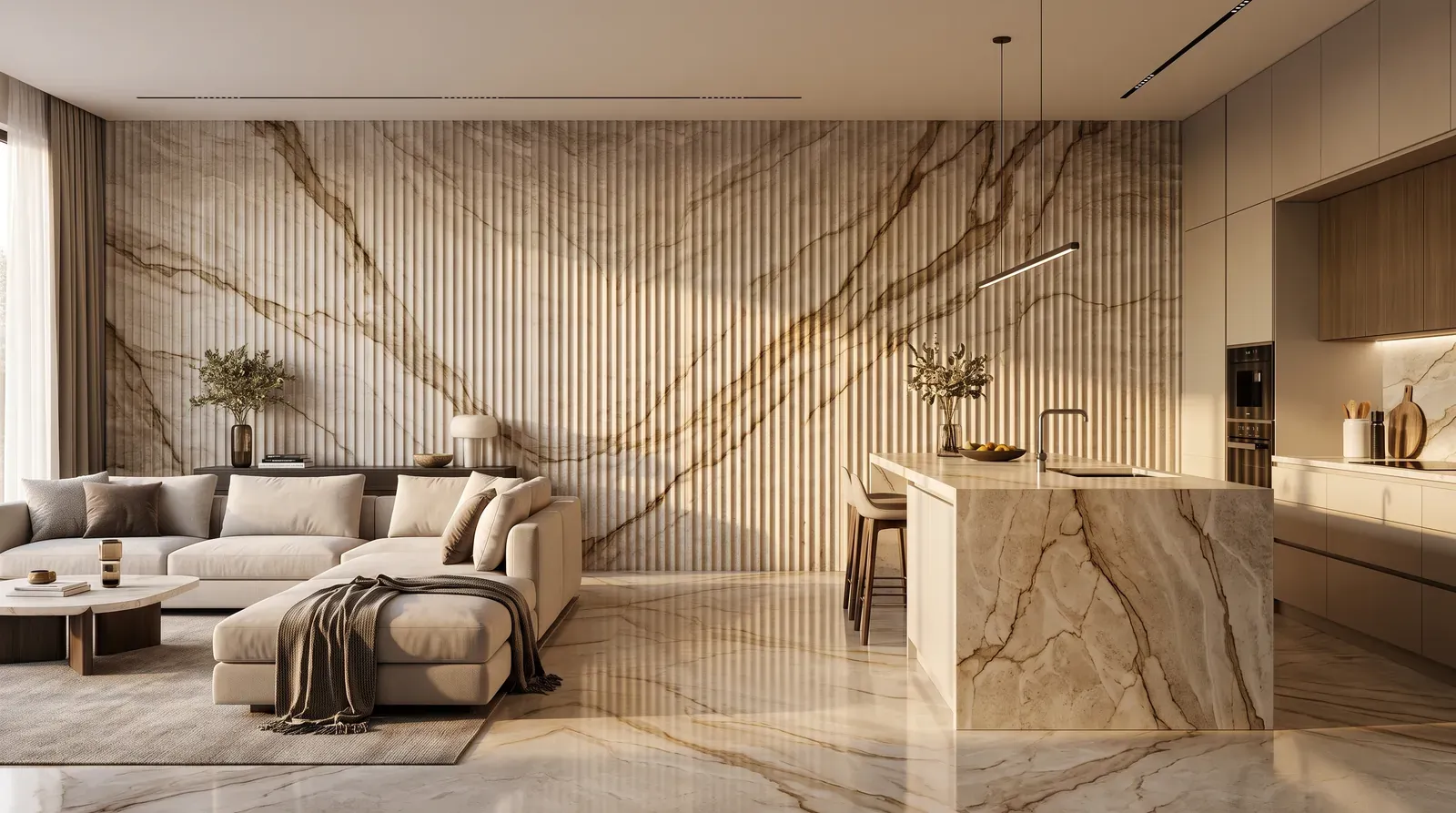
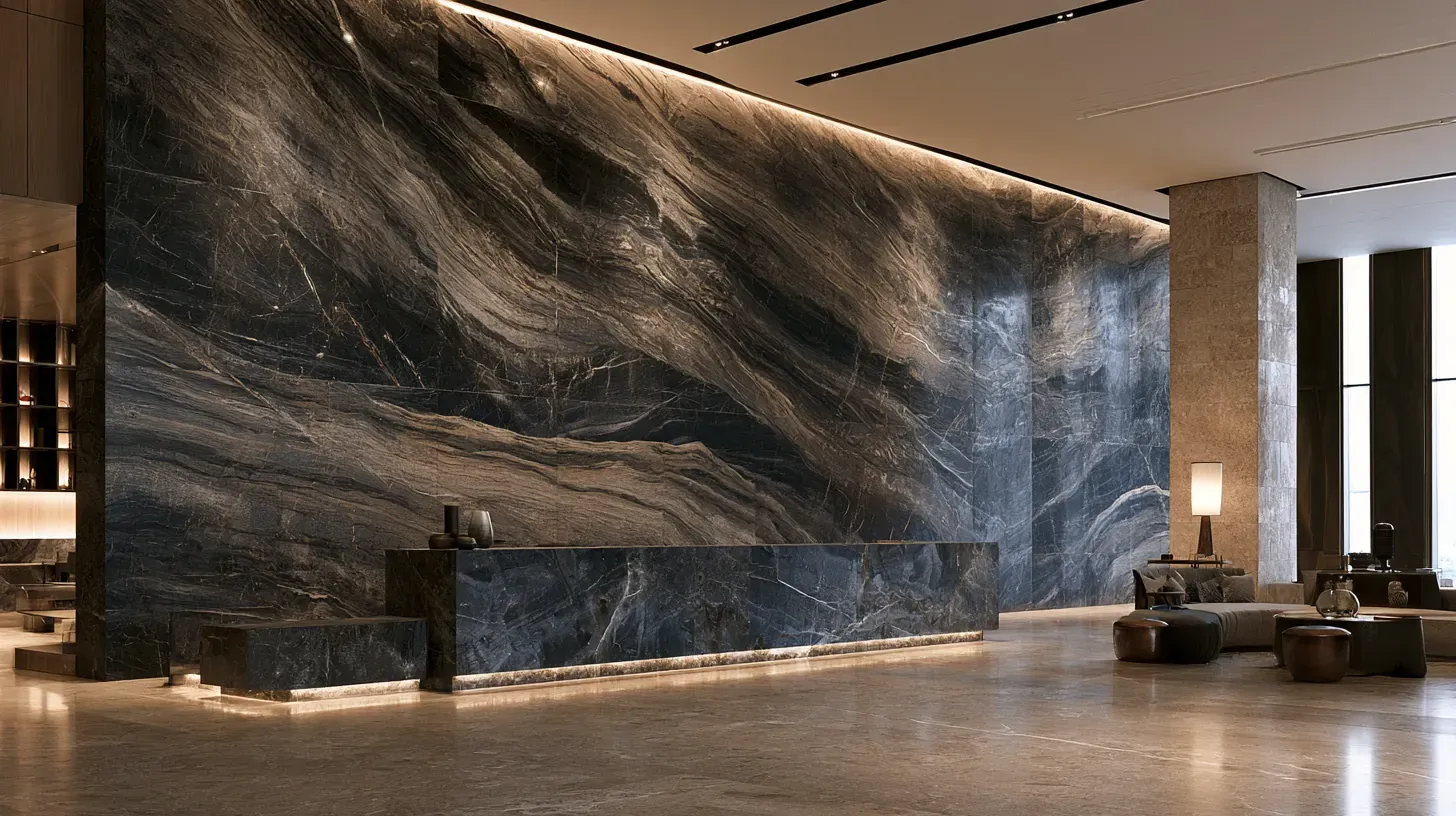
The stone should be photographed, positioned, sequenced and approved as a composition rather than treated as a collection of interchangeable panels.