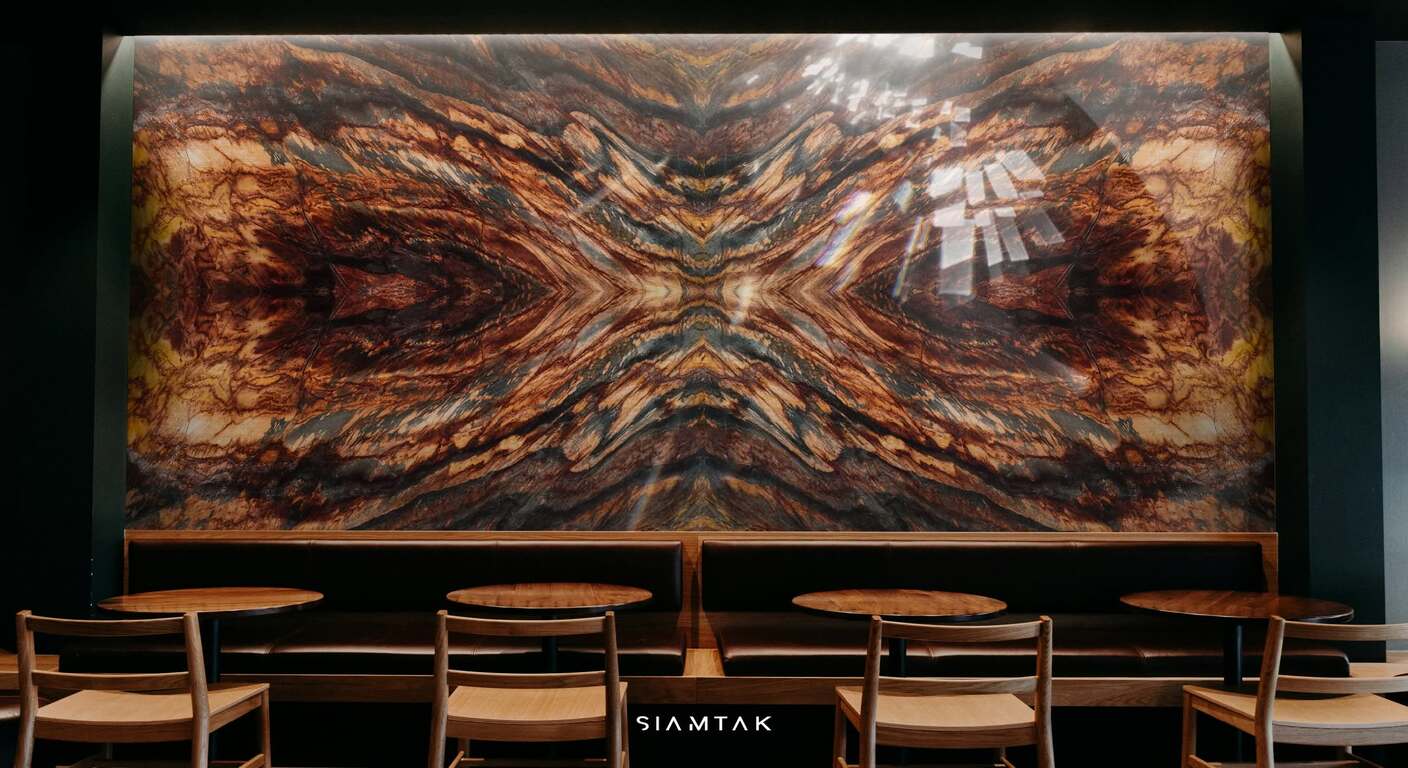
Choosing natural stone should begin with more than colour. Marble, granite, quartzite, limestone and travertine may all be used architecturally, but they are geologically different materials. Their hardness, porosity, acid sensitivity, abrasion resistance and structural characteristics vary considerably.
The most successful specification therefore begins with one question: what does the stone need to do?
Start with the application
A stone selected for a feature wall has very different performance requirements from one used on a restaurant floor, kitchen island or swimming-pool terrace. For heavily used surfaces such as kitchen worktops and commercial floors, abrasion resistance and durability become particularly important. Granite and genuine quartzite are generally strong candidates for demanding applications. Marble can also be used successfully, but its calcite composition means it is susceptible to acid etching from substances such as citrus juice, vinegar and wine.
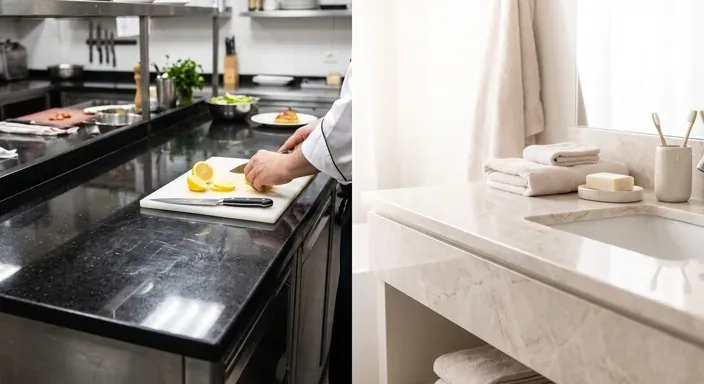
For bathrooms, the priorities shift towards water exposure, surface grip, waterproofing and drainage. For external areas, designers should consider water absorption, weathering, thermal performance and slip resistance in addition to appearance.
Consider how you want the stone to age
Natural stone is not a printed surface. It changes with use. Marble can gradually acquire subtle scratches and etching. Limestone and travertine may develop a softer patina. For many architects and designers, this ageing process is precisely part of the material's appeal.
If maintaining a highly uniform appearance is essential, a particularly sensitive natural stone may not be the appropriate choice.
Choose the finish together with the stone
The same material can behave and appear very differently depending on its finish. A polished surface intensifies colour and veining. Honing produces a softer, matt appearance. Brushing and leathering add texture, while bush-hammered, sandblasted and flamed finishes can provide greater surface texture for exterior environments.
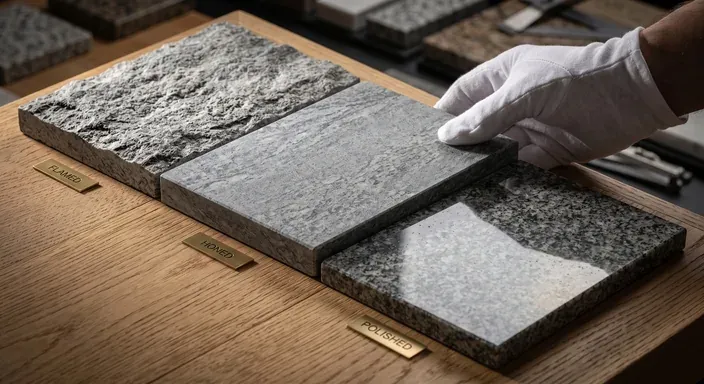
Surface treatment is therefore part of material specification rather than merely a decorative decision.
Always select from the actual slab
Small samples cannot show the full movement, colour variation or geological character of a large slab. Where the stone has expressive veining, inspect the complete slabs and consider how they will be positioned before fabrication. Consecutive slabs may also allow veins to be matched across adjoining surfaces.
Natural stone selection is ultimately a balance between appearance, performance and expectation. The best stone is not necessarily the hardest or most expensive material. It is the stone whose natural characteristics are appropriate for the architecture in which it will be used.