Natural stone is highly durable, but incorrect cleaning products can damage a surface surprisingly quickly. The first rule is to understand the stone you are cleaning.
Marble, limestone, travertine and onyx contain calcium carbonate and are therefore sensitive to acids. Granite and quartzite are predominantly siliceous and generally more resistant to common household acids.
Use a neutral cleaner
Routine cleaning should generally be performed using water and a pH-neutral cleaner formulated for natural stone. Acidic bathroom cleaners, vinegar and aggressive descaling products should not be used indiscriminately on calcareous stones.
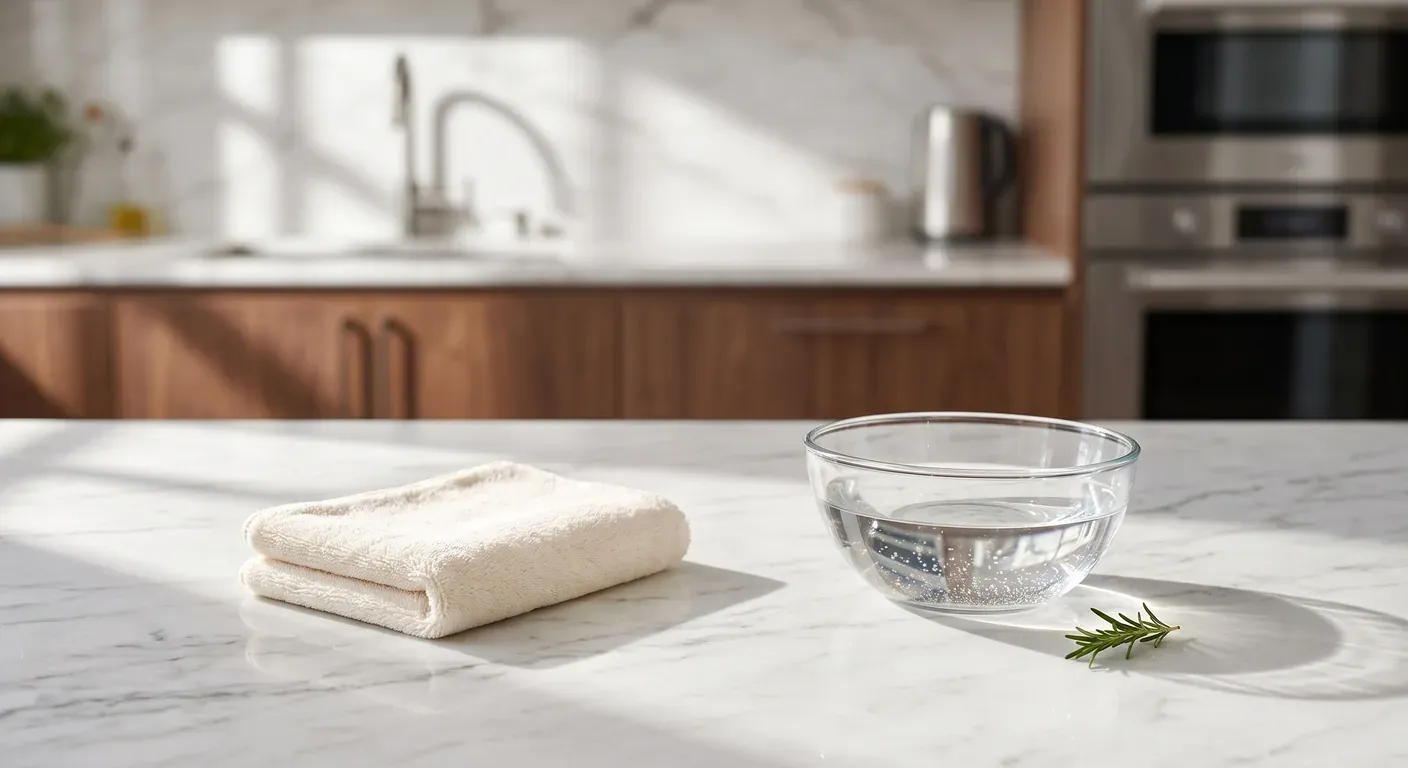
Clean spills promptly
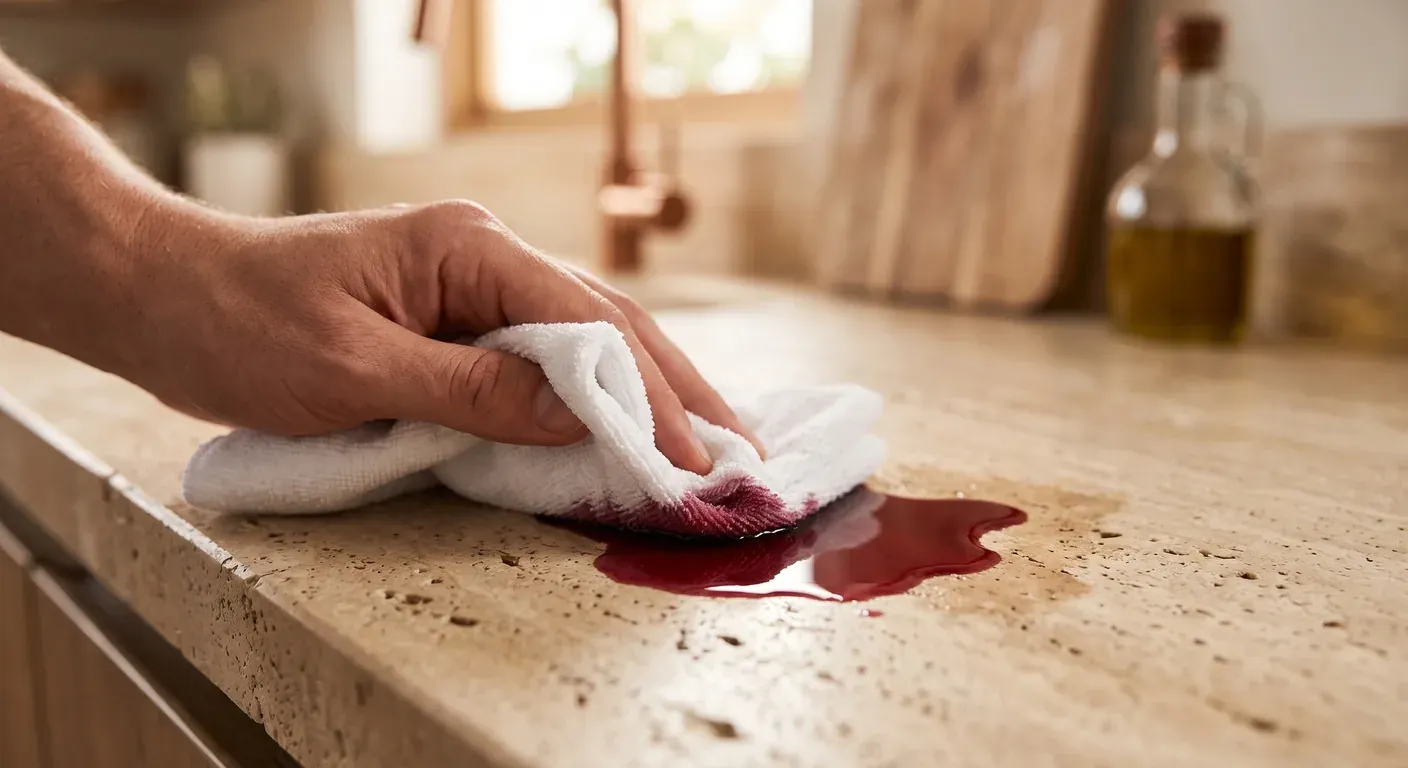
Blot liquids rather than spreading them across the surface. Wine, coffee, oils and coloured liquids should be removed quickly, particularly from more absorbent stones.
Understand what sealing actually does
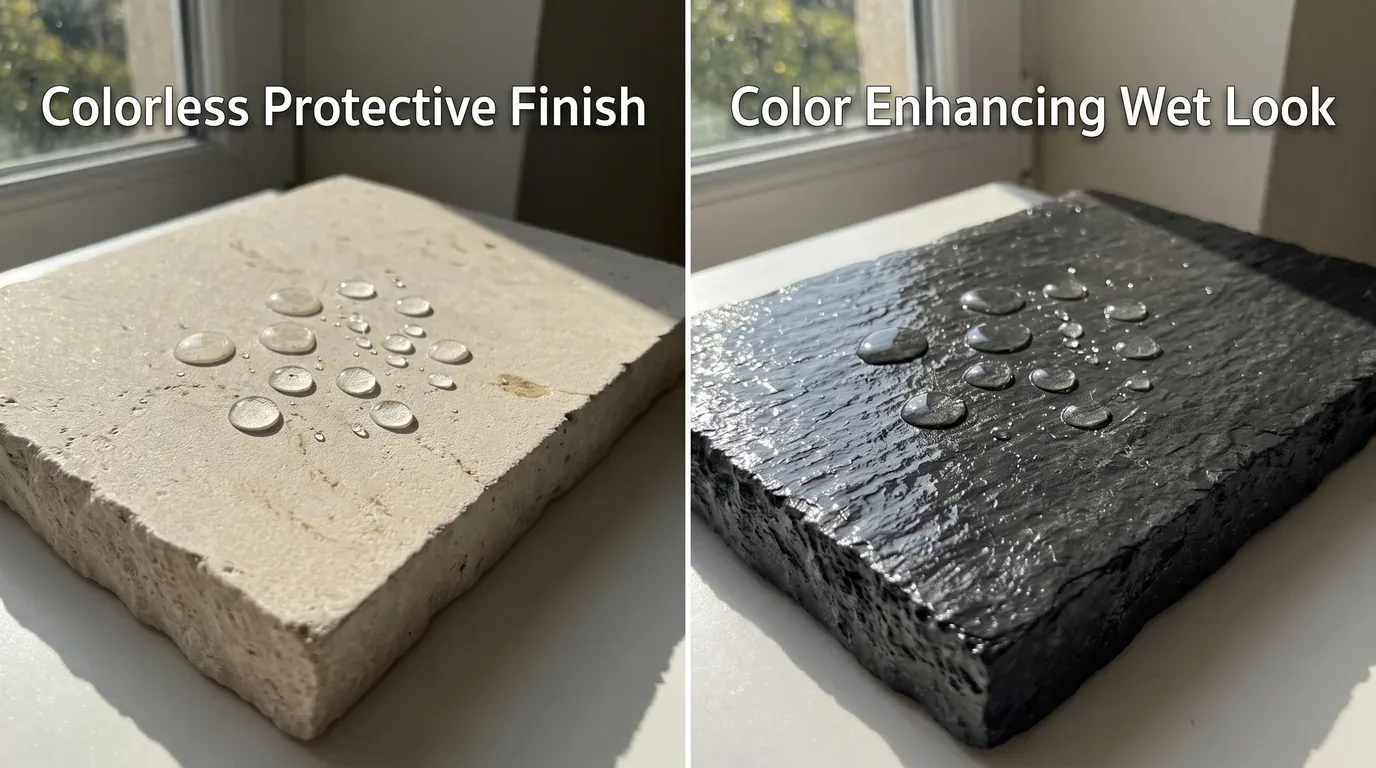
One of the most common misconceptions about natural stone is that sealing makes it stain- and acid-proof. It does not. An impregnating sealer primarily reduces the rate at which liquids enter the stone. It cannot stop the chemical reaction between acid and calcite that causes marble to etch.
Does every stone need sealing every year?
No. Sealing intervals depend on the individual stone, finish, sealer and environment. A simple water test can provide an indication: if water quickly darkens the stone, additional protection may be required. If it remains on the surface without noticeable absorption, immediate resealing may not be necessary.
Stone can be restored
Another important advantage of natural stone is that many forms of surface wear can be mechanically refinished. Honed marble can be re-honed. Polished surfaces can often be repolished. Localised stains can sometimes be treated with a poultice. Maintenance should therefore be thought of as preservation rather than replacement.