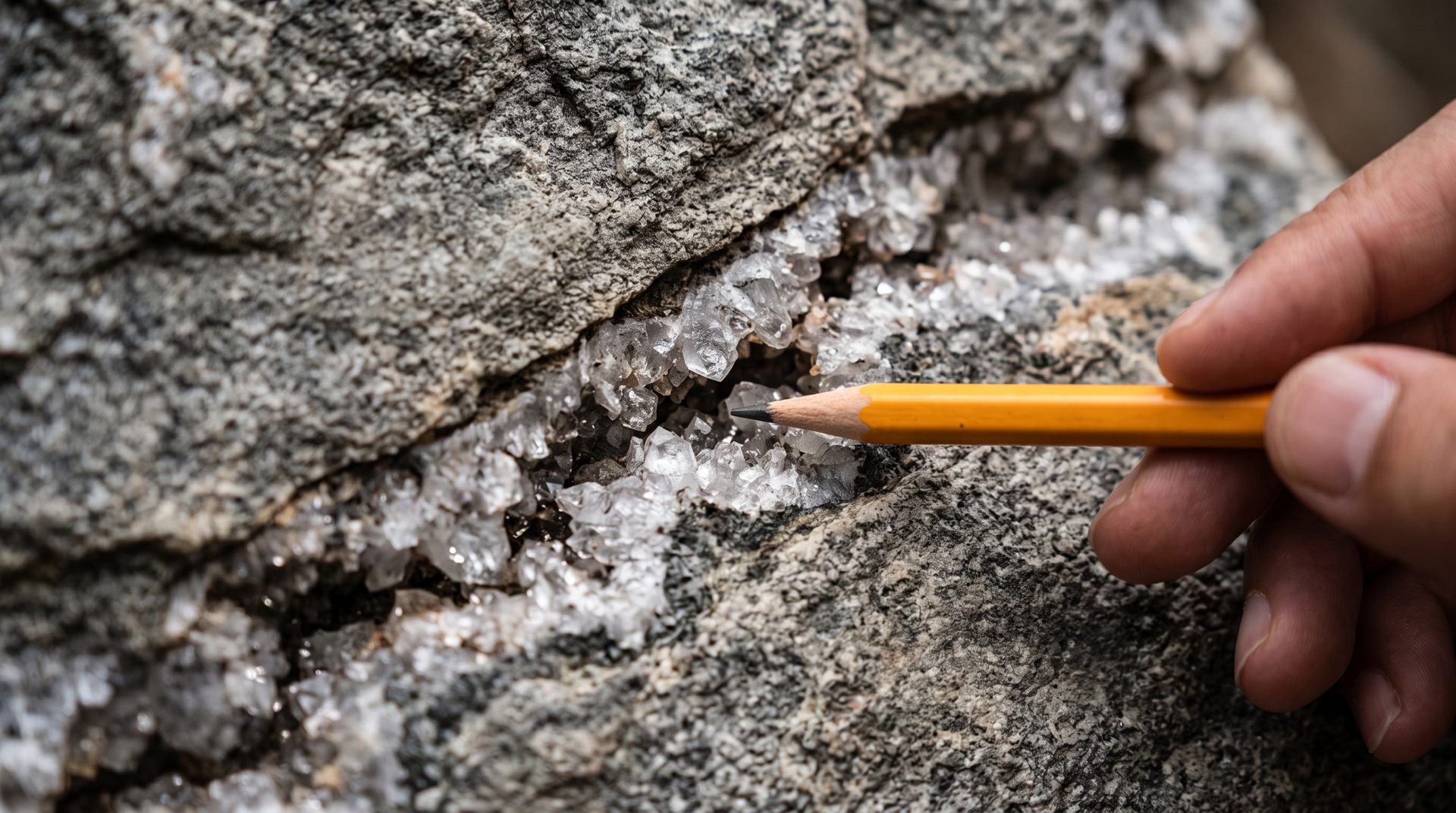
A 100 x 100 mm sample can tell you the approximate colour of a stone. It cannot tell you what the finished project will look like. Natural stone can change dramatically across a three-metre slab, which is why final selection should be based on the actual slabs whenever possible.
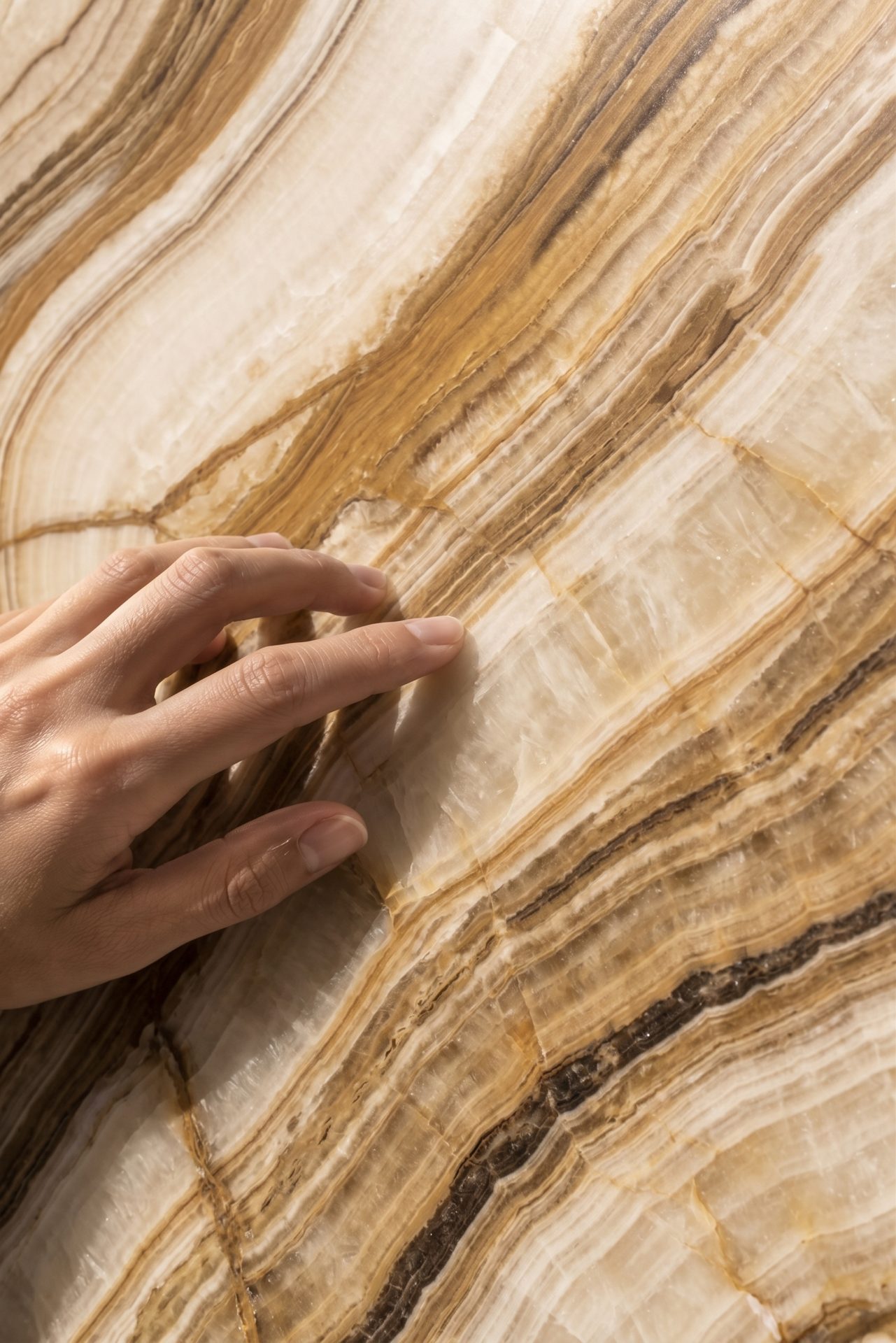
Look at the entire slab
Stand several metres away first. This allows you to understand the overall movement. Then move closer and inspect mineral deposits, fissures, veins, colour transitions and other natural characteristics. Neither scale should be considered in isolation.
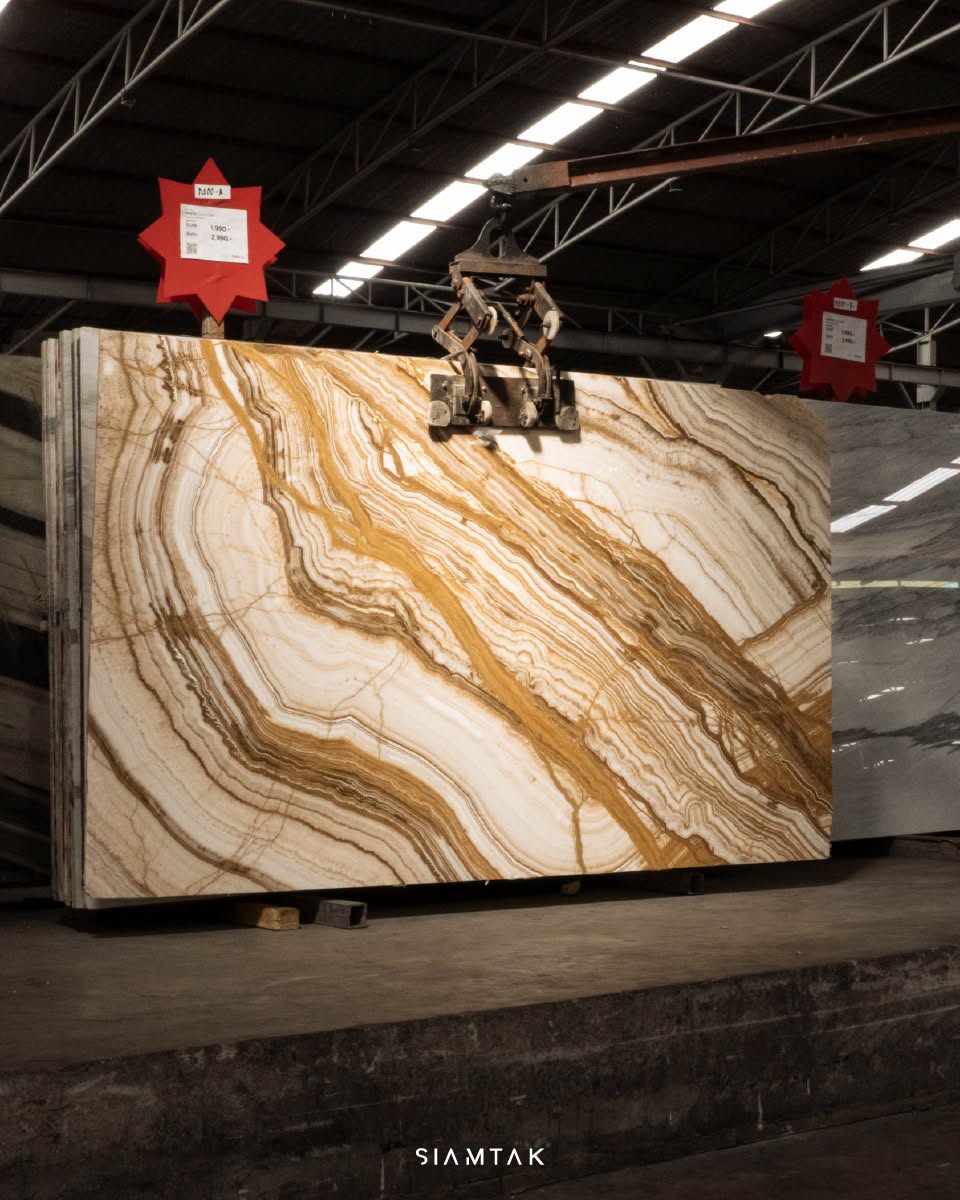
Consider where every important vein will go
On an island or feature wall, the position of a major vein can completely change the composition. Digital slab layout can be extremely useful because project geometry can be positioned over photographs or scans of the slabs before cutting.
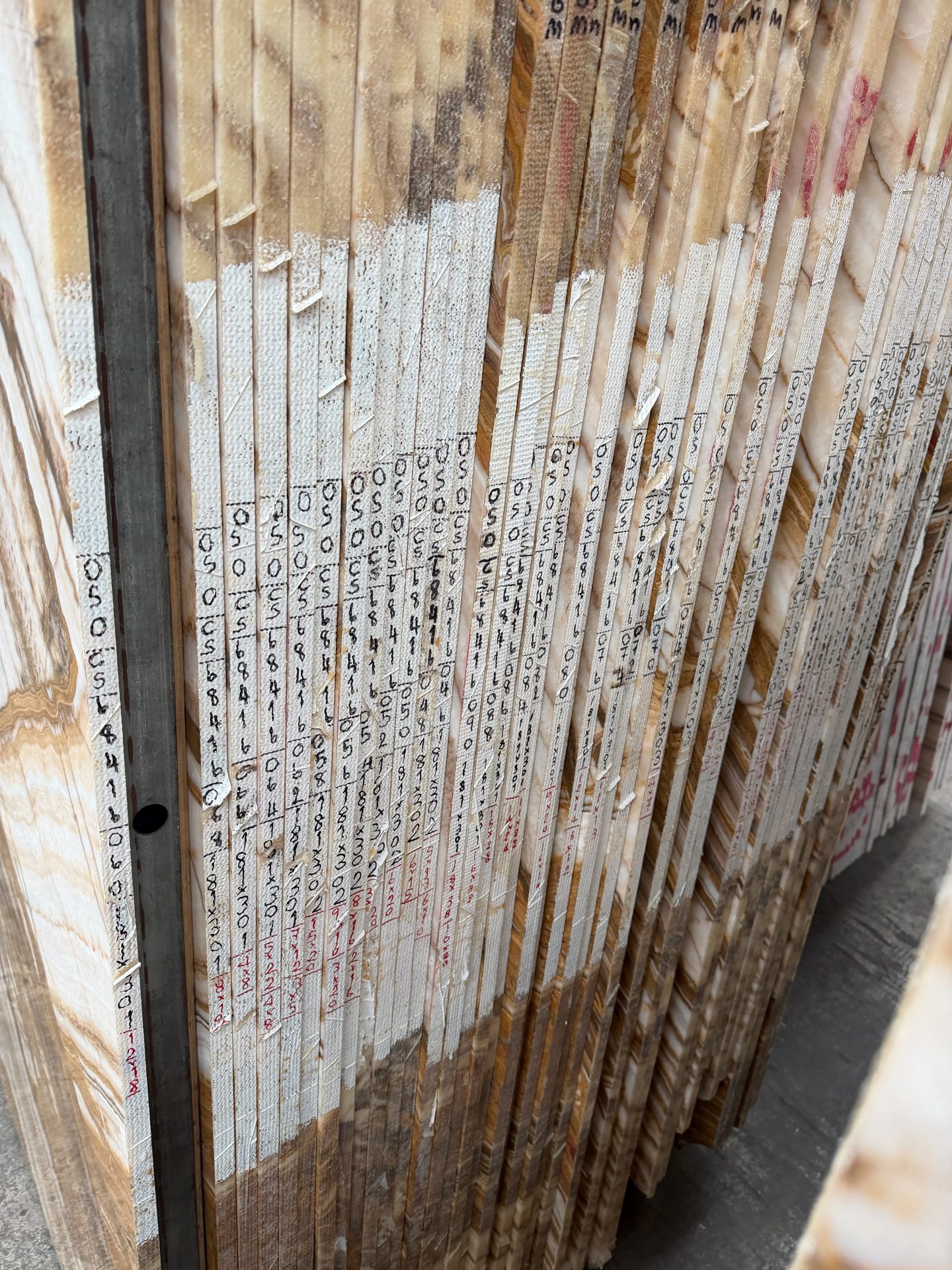
Select adjacent slabs together
If several slabs are required, review them as a set wherever possible. Sequential slabs are particularly important where the design requires bookmatching or continuous veining.
Ask about the material, not just its commercial name
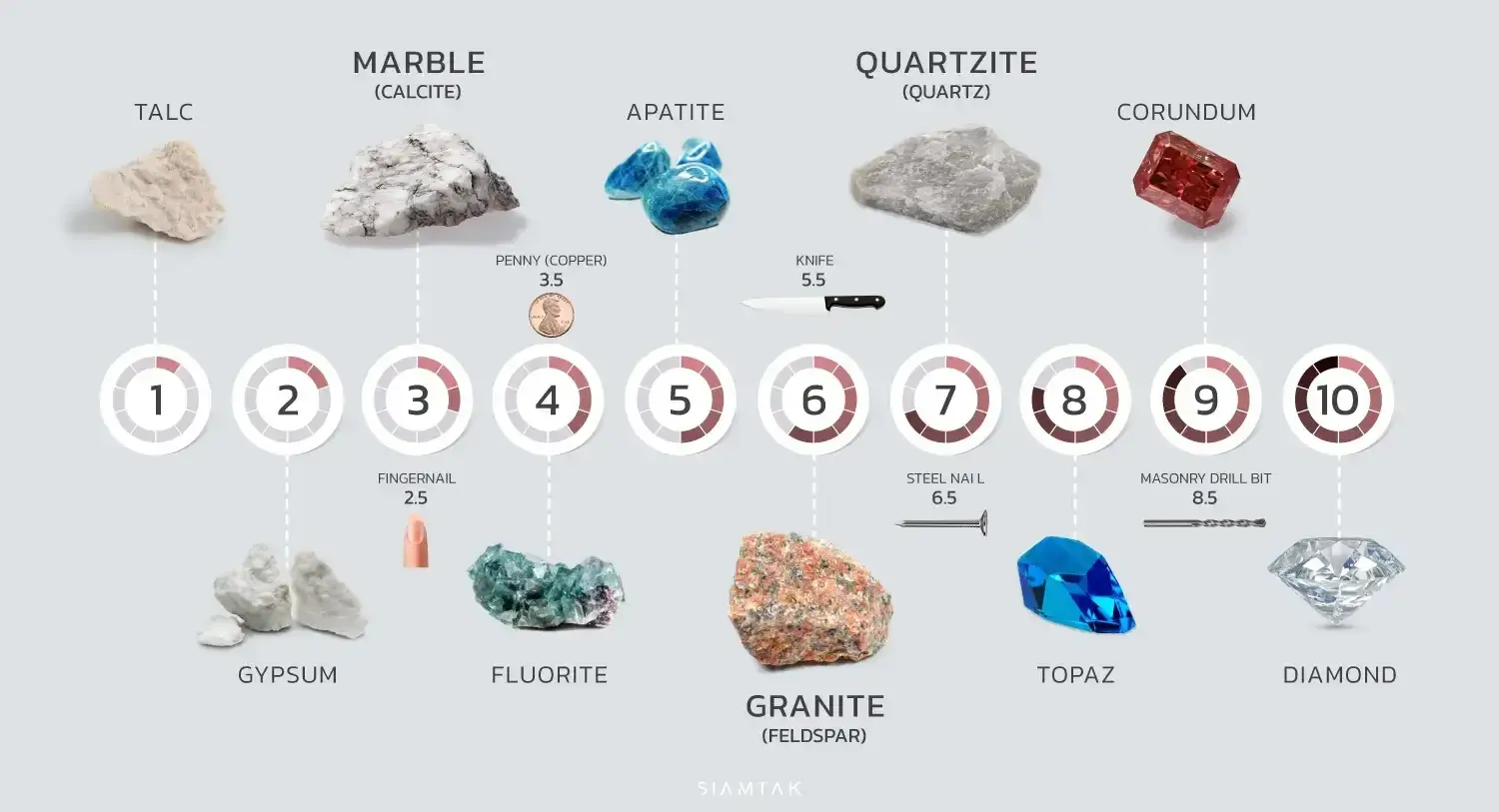
Stone names are useful for identification but can sometimes be misleading. This is particularly relevant to quartzite, where marble and dolomitic marble may occasionally be marketed under quartzite terminology. Where performance matters, technical characteristics are more useful than the label.
Variation is not a defect
The reason to choose natural stone is precisely because it is geological rather than manufactured. Fossils, mineral deposits, colour variation and unexpected veins are part of the material. Good slab selection does not eliminate these characteristics. It determines how to use them deliberately.