Calling a material natural does not automatically make it sustainable.
The more useful question is how the material is extracted, processed, transported, installed, maintained and eventually reused or disposed of.
Minimal transformation
Unlike many composite surfaces, natural stone is fundamentally a single geological material. After extraction, its principal processing stages involve cutting, finishing and fabrication rather than manufacturing a new material from multiple ingredients.
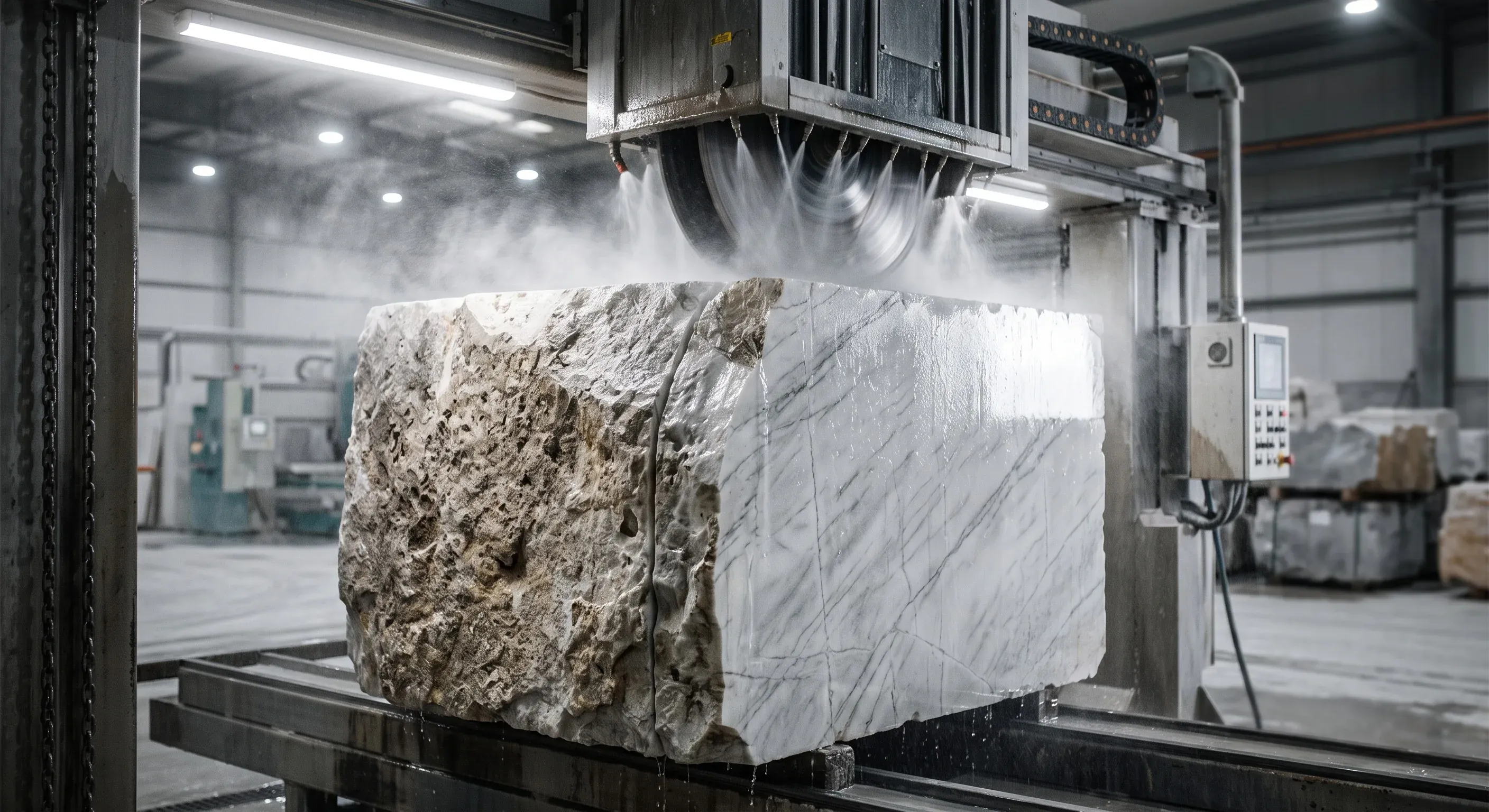
Embodied carbon
Industry-wide Environmental Product Declarations show that natural stone can perform competitively in embodied-carbon comparisons, although project-specific impacts vary according to quarrying, processing, transport distance, thickness and fabrication. EPD data should therefore be used in context rather than as a universal claim.
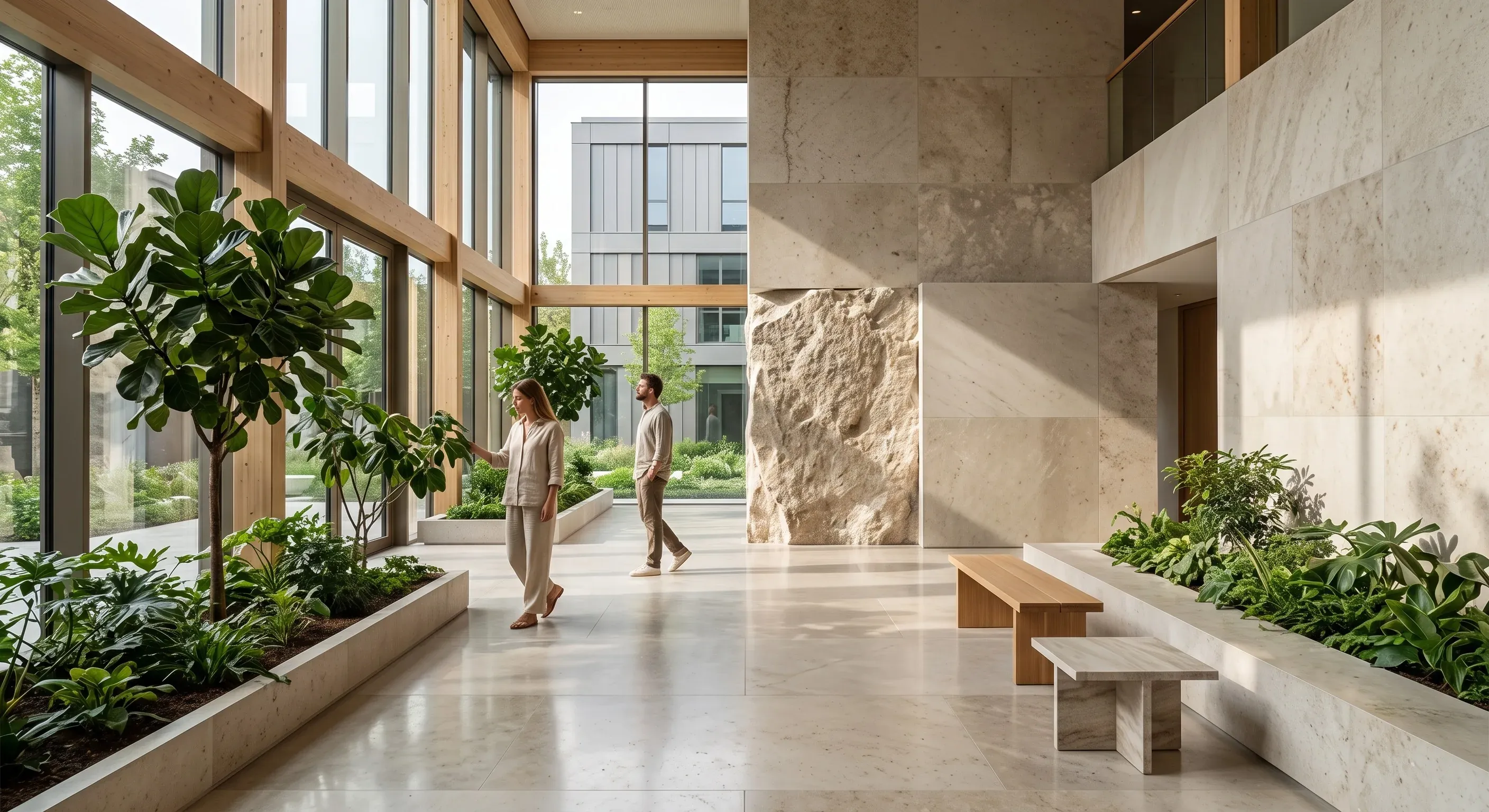
Longevity matters
Stone's greatest sustainability advantage may ultimately be its lifespan. A material that can remain in a building for decades, or centuries, avoids repeated cycles of removal and replacement. Stone can also frequently be refinished rather than discarded.
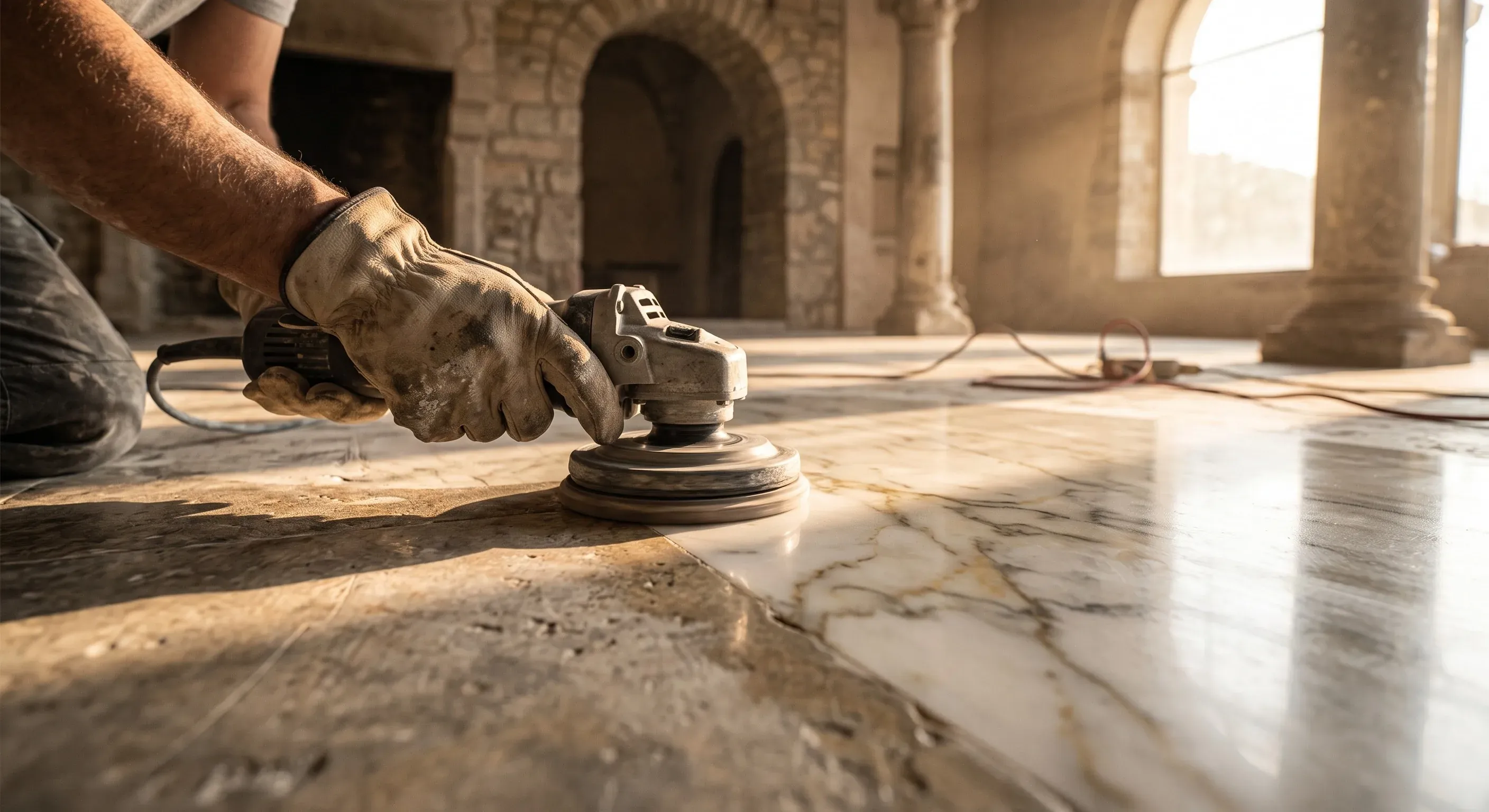
Better use of the block
Sustainable stone design is increasingly concerned with yield as well as extraction. Careful slab planning, thinner cutting where technically appropriate, reuse of remnants and designing smaller components from offcuts can significantly reduce waste.
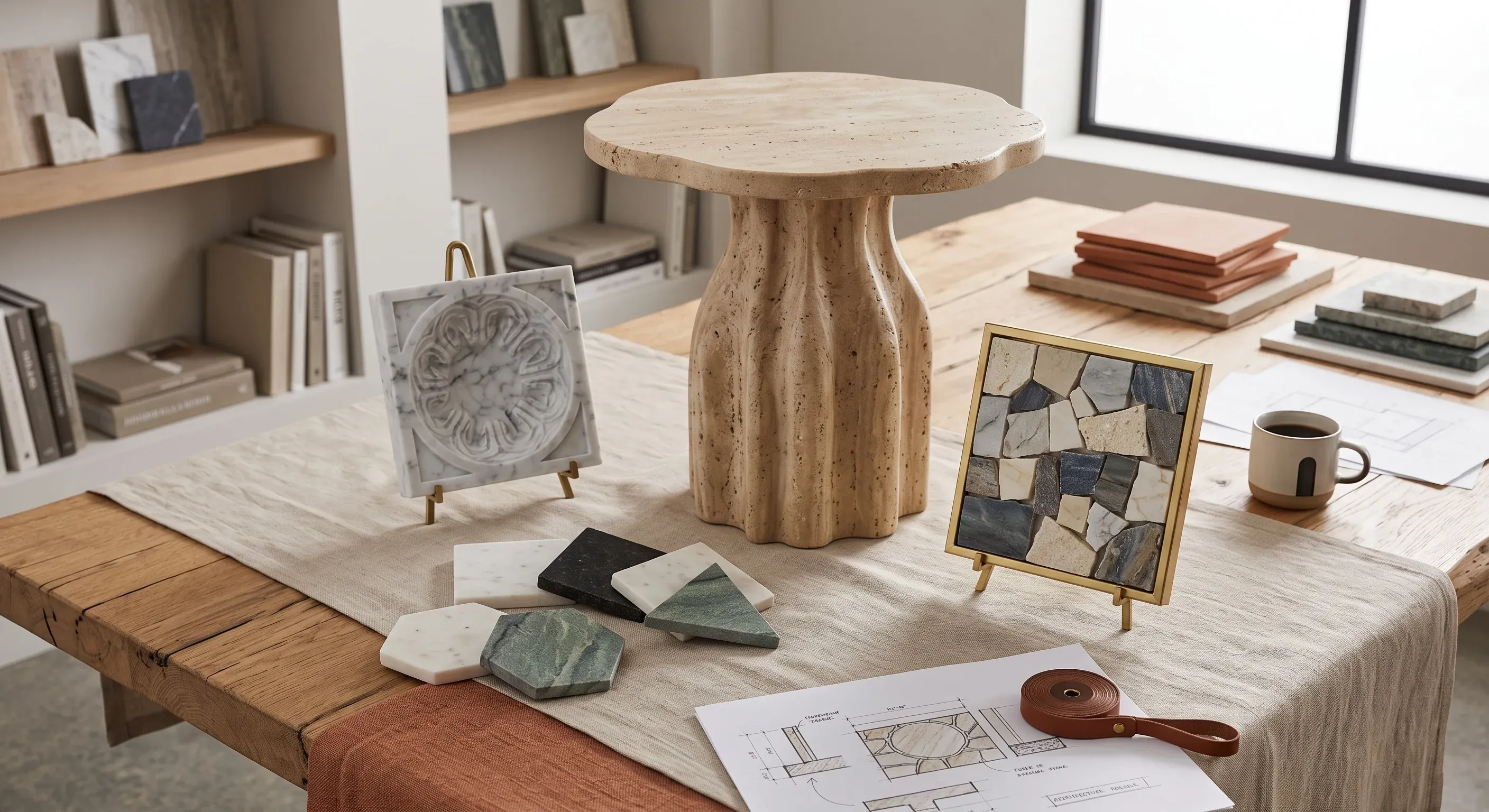
Responsible specification
Architects can look for Environmental Product Declarations, responsible quarry practices and recognised sourcing frameworks such as ANSI/NSI 373 where applicable.
The strongest sustainability argument for natural stone is not simply that it comes from nature. It is that a responsibly sourced stone can be minimally processed, highly durable, repairable, reusable and capable of remaining part of a building for generations.