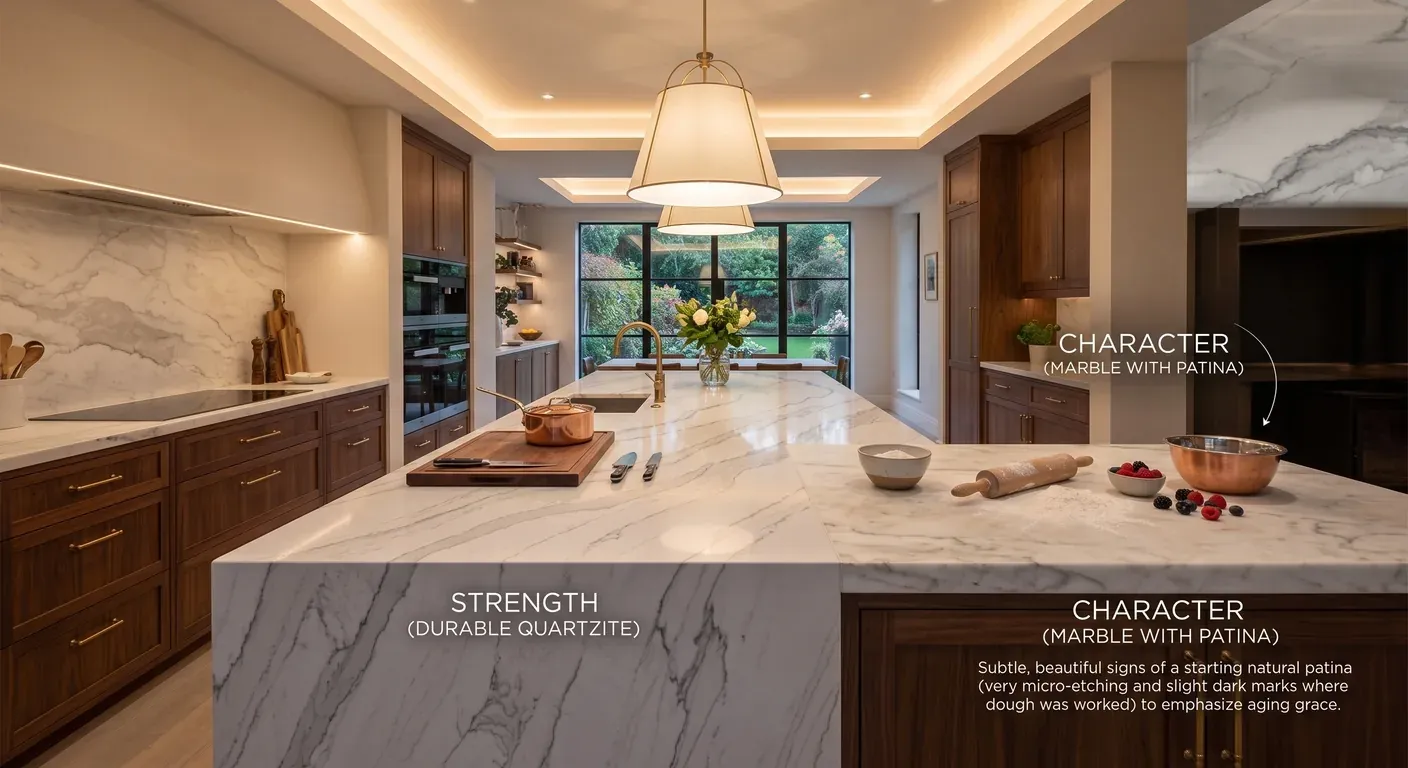
These three stones can sometimes look surprisingly similar, yet they behave very differently.
Geological family — Marble: metamorphic; Granite: igneous; Quartzite: metamorphic
Typical hardness — Marble: relatively soft; Granite: hard; Quartzite: very hard
Household acid sensitivity — Marble: high; Granite: generally low; Quartzite: very low when genuine
Scratch resistance — Marble: moderate; Granite: high; Quartzite: very high
Typical character — Marble: flowing veins; Granite: crystalline / mineral; Quartzite: flowing to dramatic veins
Kitchen suitability — Marble: yes, with patina; Granite: excellent; Quartzite: excellent
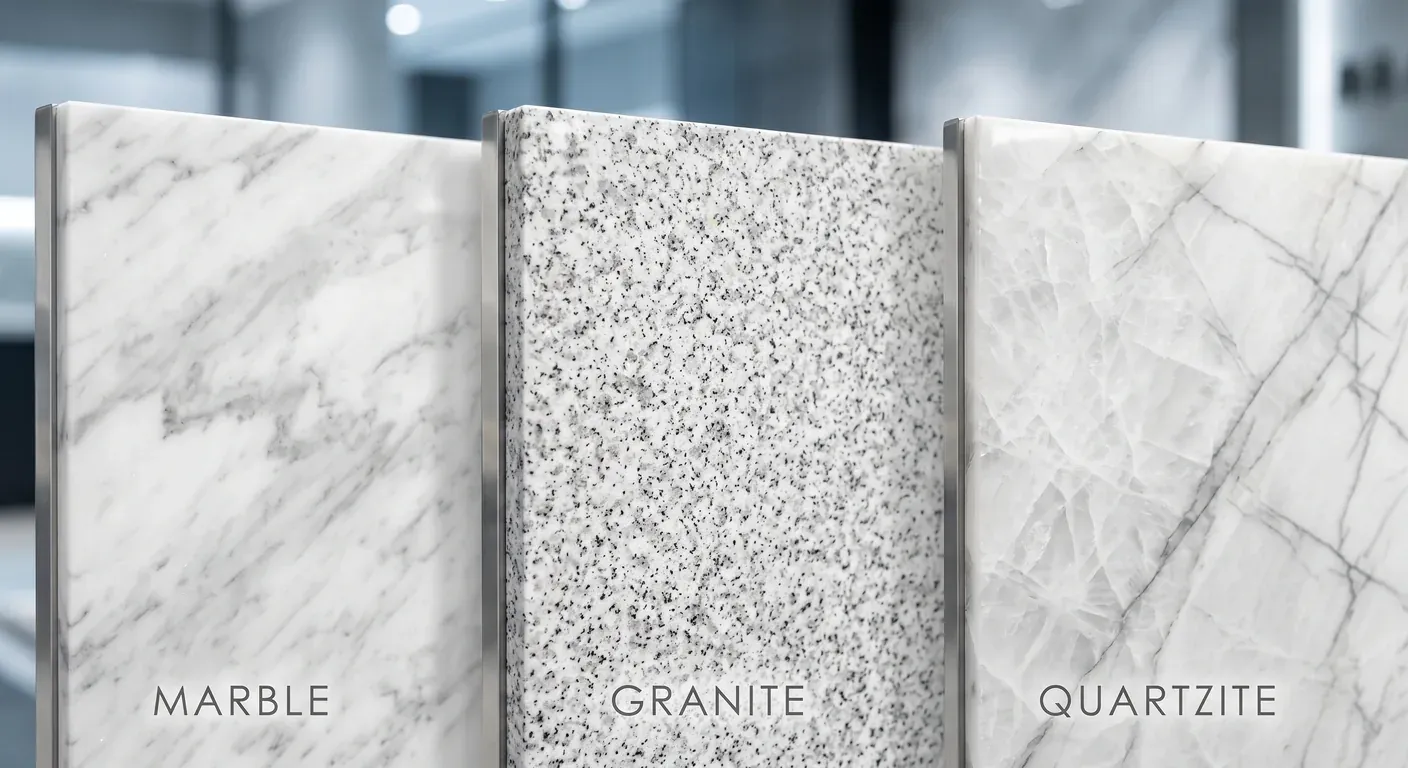
Marble is principally composed of calcite or dolomite and can therefore react with acids. Granite consists predominantly of harder silicate minerals and generally performs well in demanding environments. Quartzite originates from quartz-rich sandstone altered by heat and pressure. Genuine quartzite is sufficiently hard to scratch glass and should not etch from everyday acids.
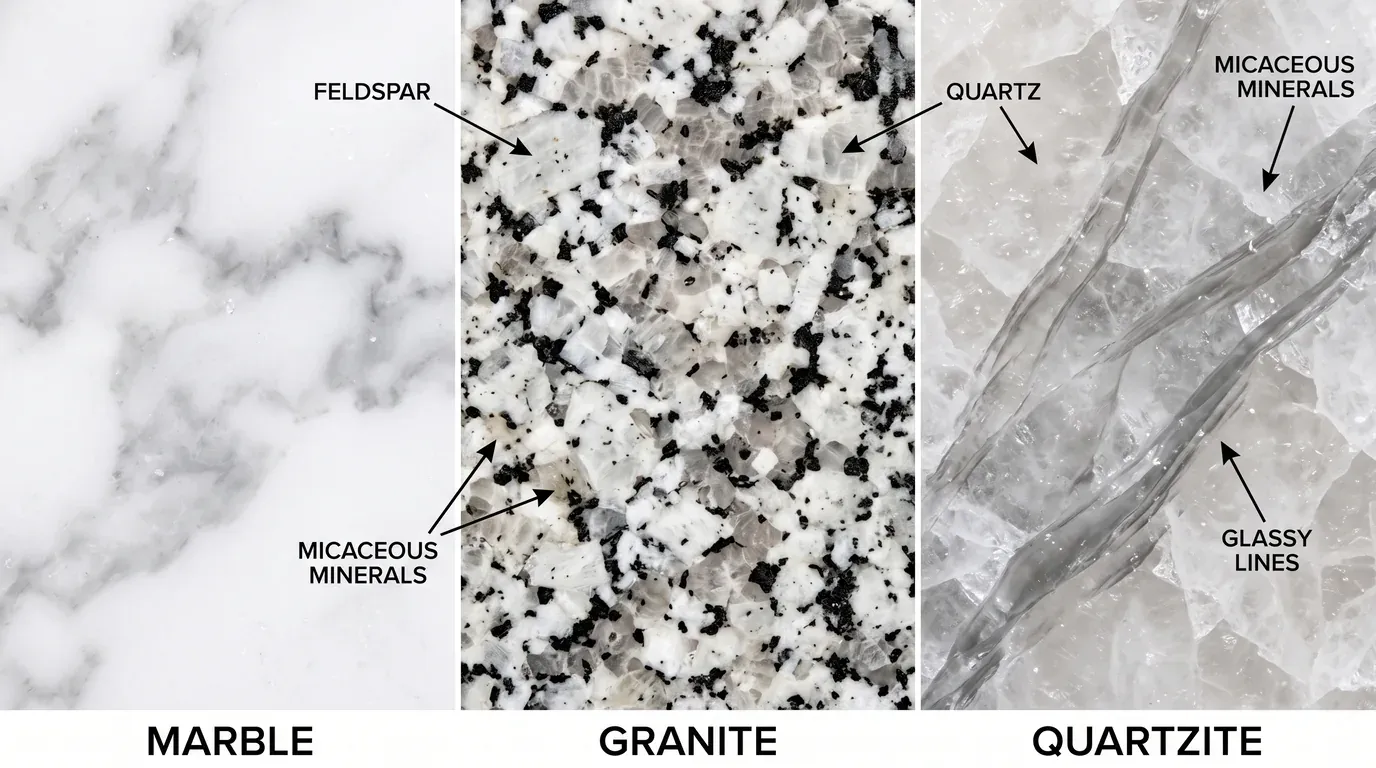
The difficulty is that commercial stone names are not always geologically accurate. A material’s label, country of origin and price cannot reliably determine its geological identity. Performance testing and informed inspection are considerably more useful.
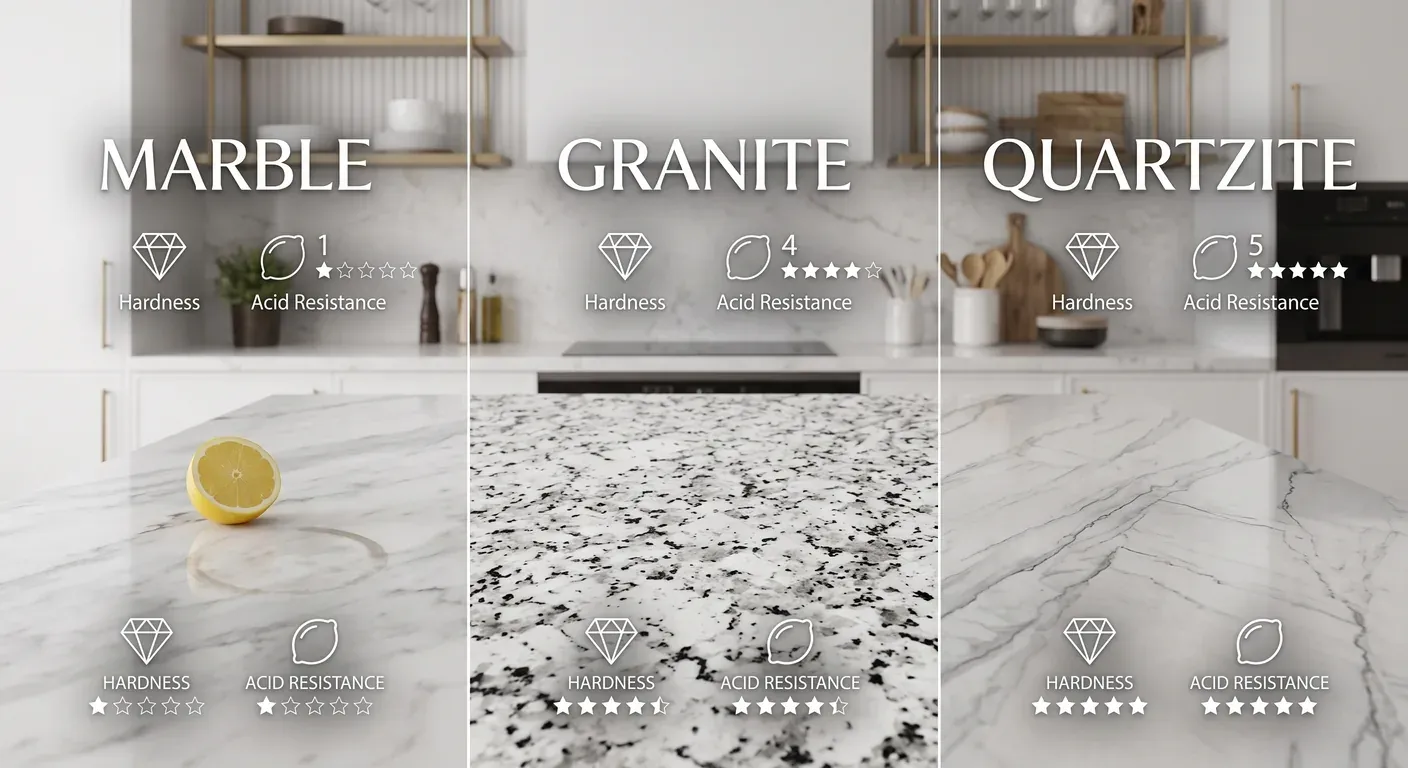
For a highly used kitchen, granite or genuine quartzite normally offers the easiest performance. For projects where expressive veining and natural patina are valued, marble remains difficult to replace.