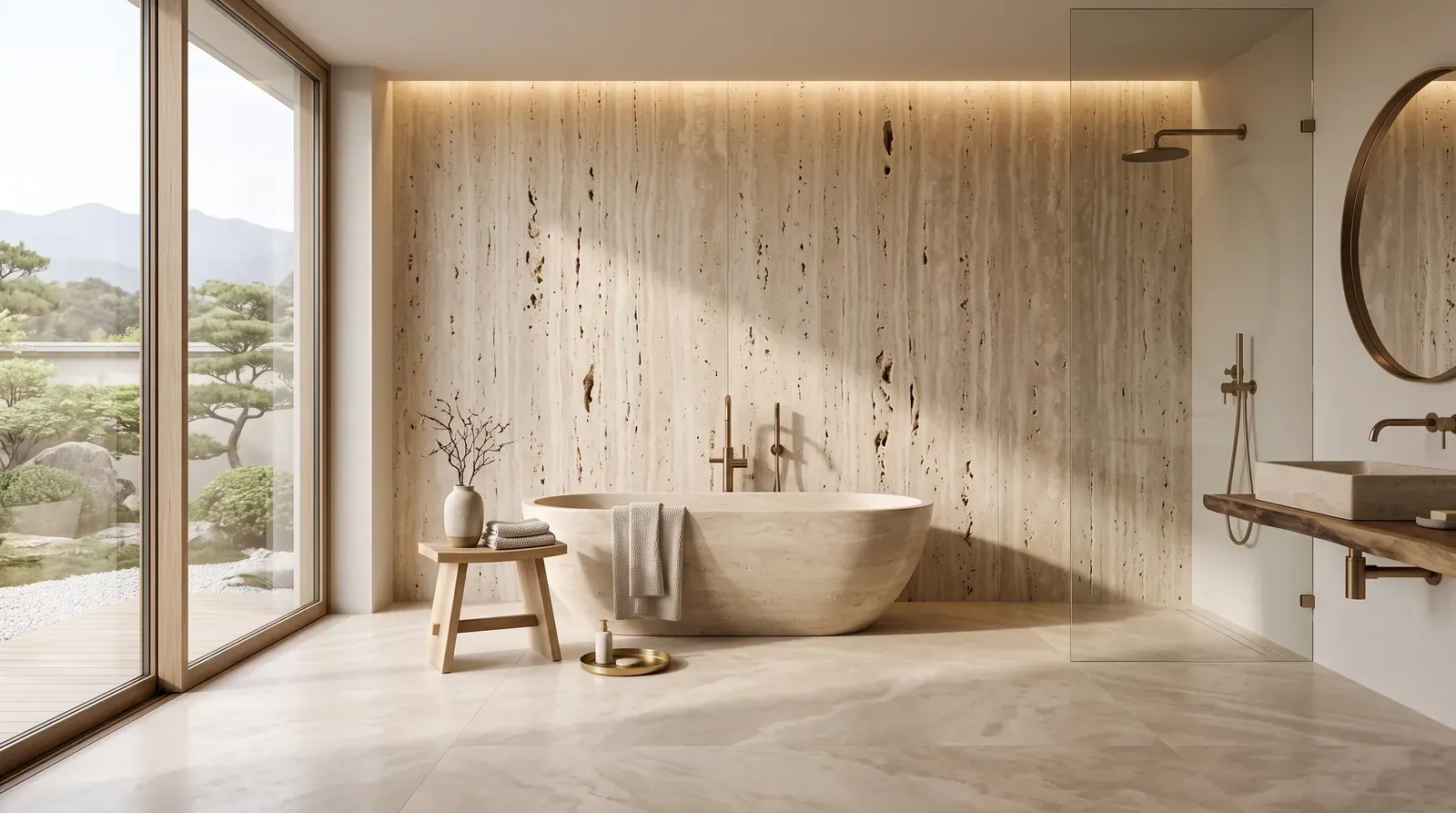
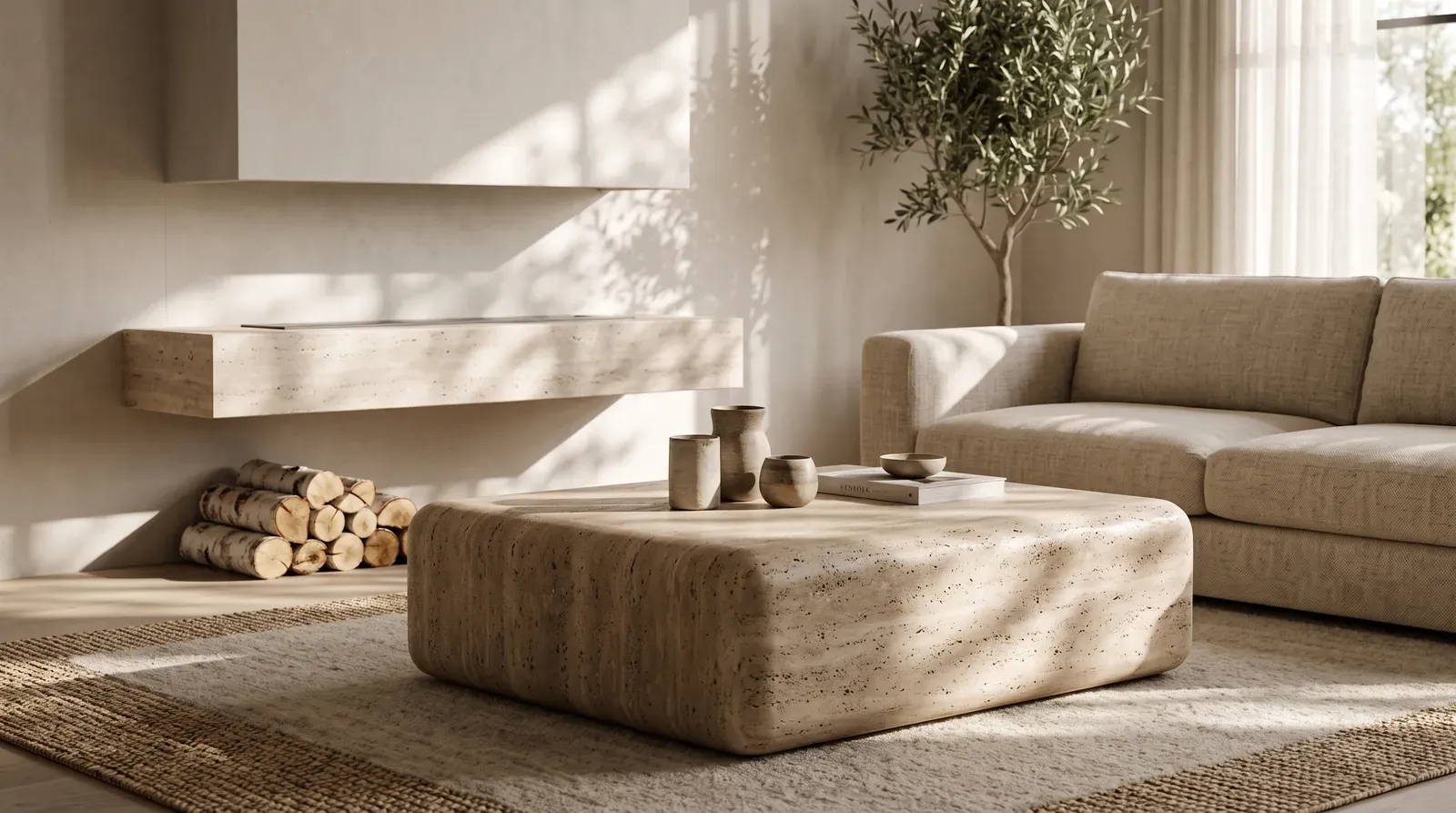
Travertine is one of architecture's most recognisable natural stones. Formed through mineral deposition around springs, its characteristic cavities and layered structure give it a visual identity unlike marble or granite. Travertine has also been used extensively in historic architecture, including major Roman monuments.
What many people do not realise is how dramatically its appearance changes according to the direction in which the block is cut.
Vein-cut travertine
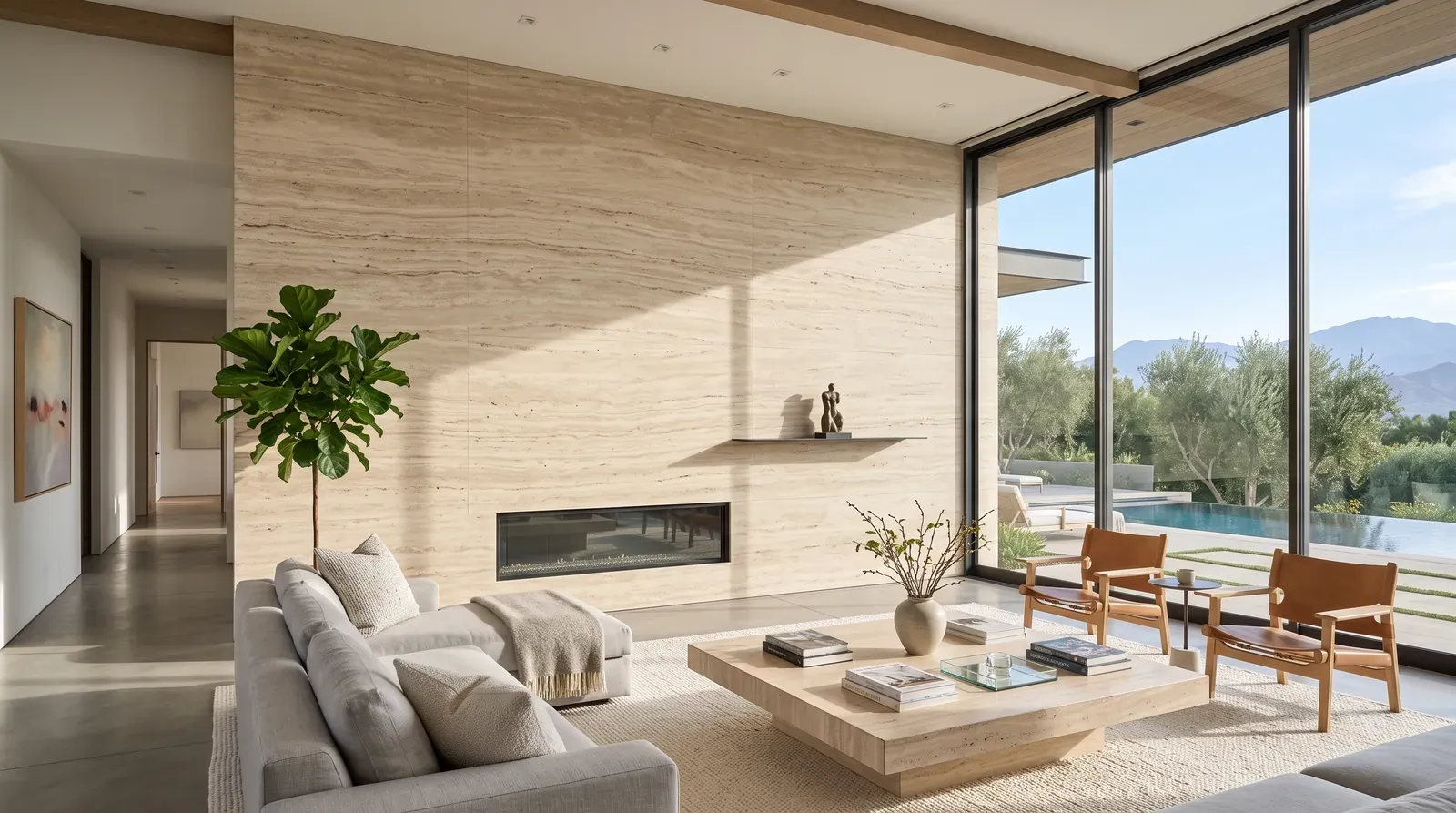
When the block is cut perpendicular to its geological layers, the bedding becomes visible as long horizontal or vertical bands. This is known as vein cut. It produces the linear appearance associated with many modern travertine facades and walls.
Cross-cut travertine
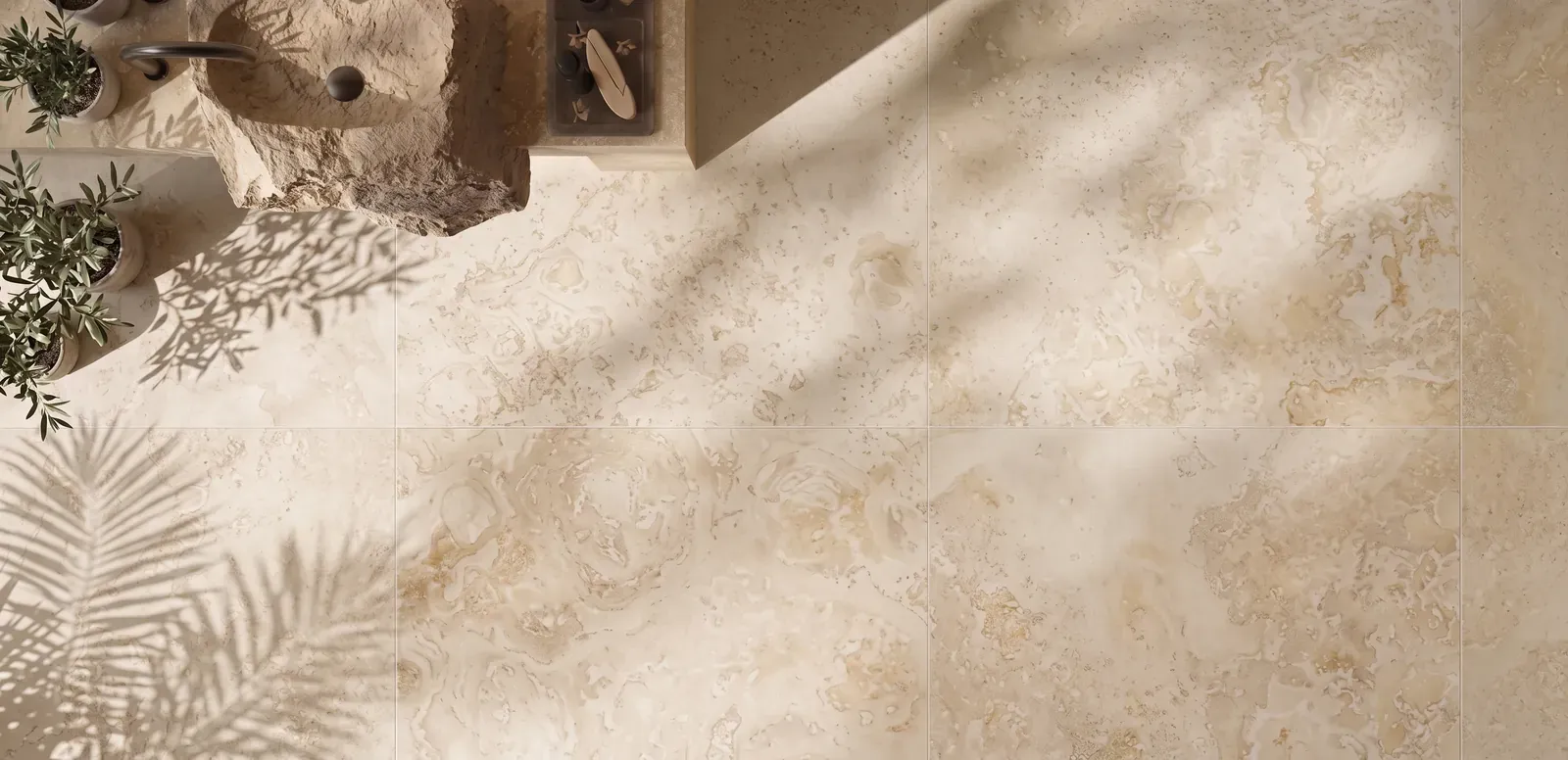
When the block is cut parallel to its layering, those veins are intersected rather than exposed longitudinally. The result is a cloudy, circular and considerably more randomised pattern known as cross cut. Cross-cut travertine often appears calmer across large floors because there is less directional movement.
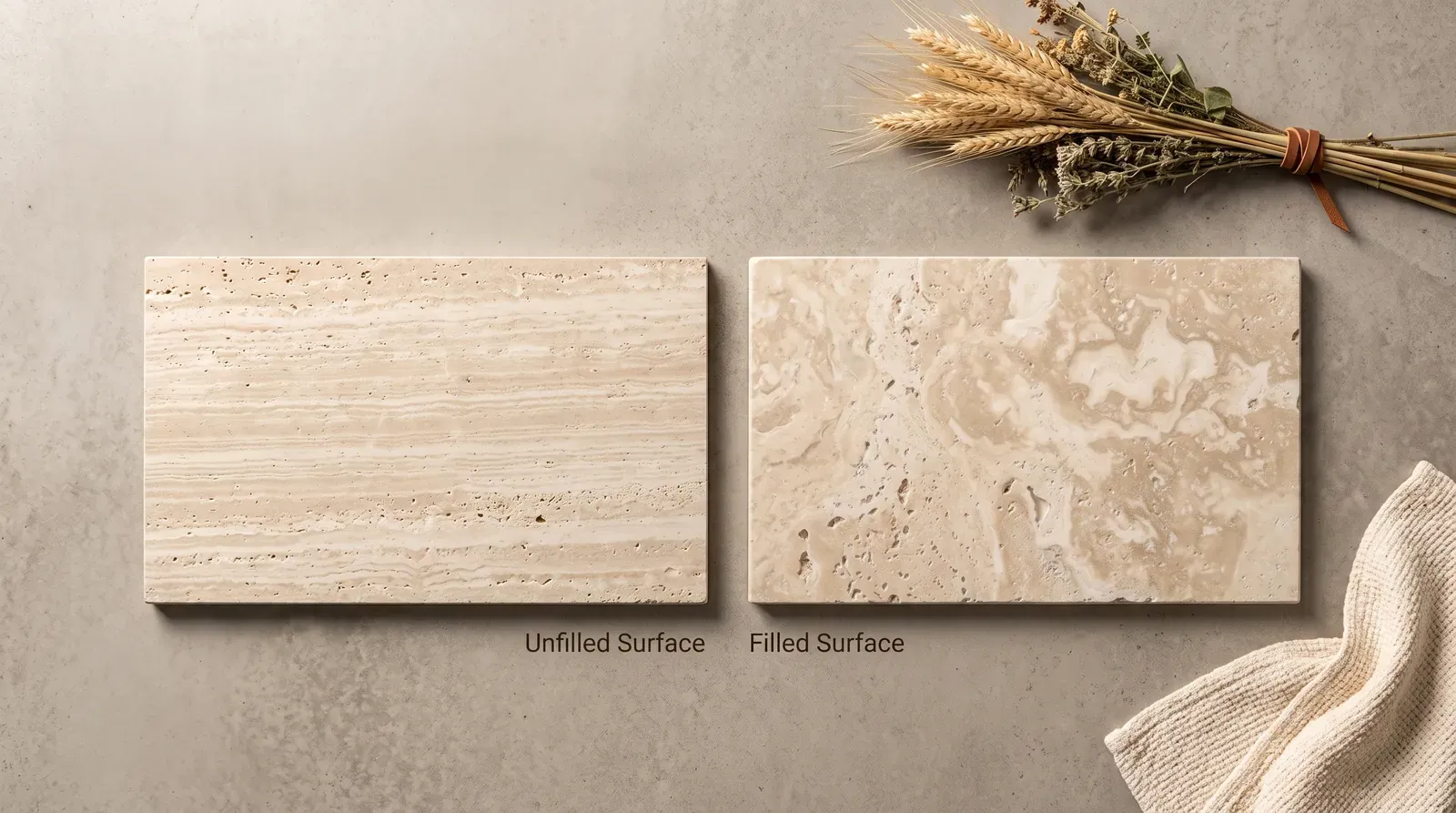
Filled versus unfilled
Travertine naturally contains cavities. These can be left open to emphasise its geological character or filled with compatible material to create a flatter surface. Filled travertine is generally more practical for frequently used horizontal surfaces. Unfilled stone can be extremely effective on vertical walls where its natural texture becomes part of the architecture.
Why travertine is relevant again
Travertine's warm palette and tactile quality align closely with the current move towards natural, imperfect and quieter materials. Designers are using it for flooring, vanities, basins, fireplaces, furniture and entire walls. It is less a revival than a rediscovery of one of architecture's oldest materials.