There is no single best natural stone for every kitchen. The correct choice depends on how the kitchen is used, how much maintenance the owner accepts and whether pristine appearance or natural ageing is preferred.
Quartzite: performance with marble-like movement
Genuine quartzite is one of the strongest options for kitchen worktops. Quartzite forms when quartz-rich sandstone undergoes intense heat and pressure. Because quartz is approximately 7 on the Mohs hardness scale, genuine quartzite is highly scratch resistant and is not normally etched by everyday kitchen acids such as lemon juice or vinegar.
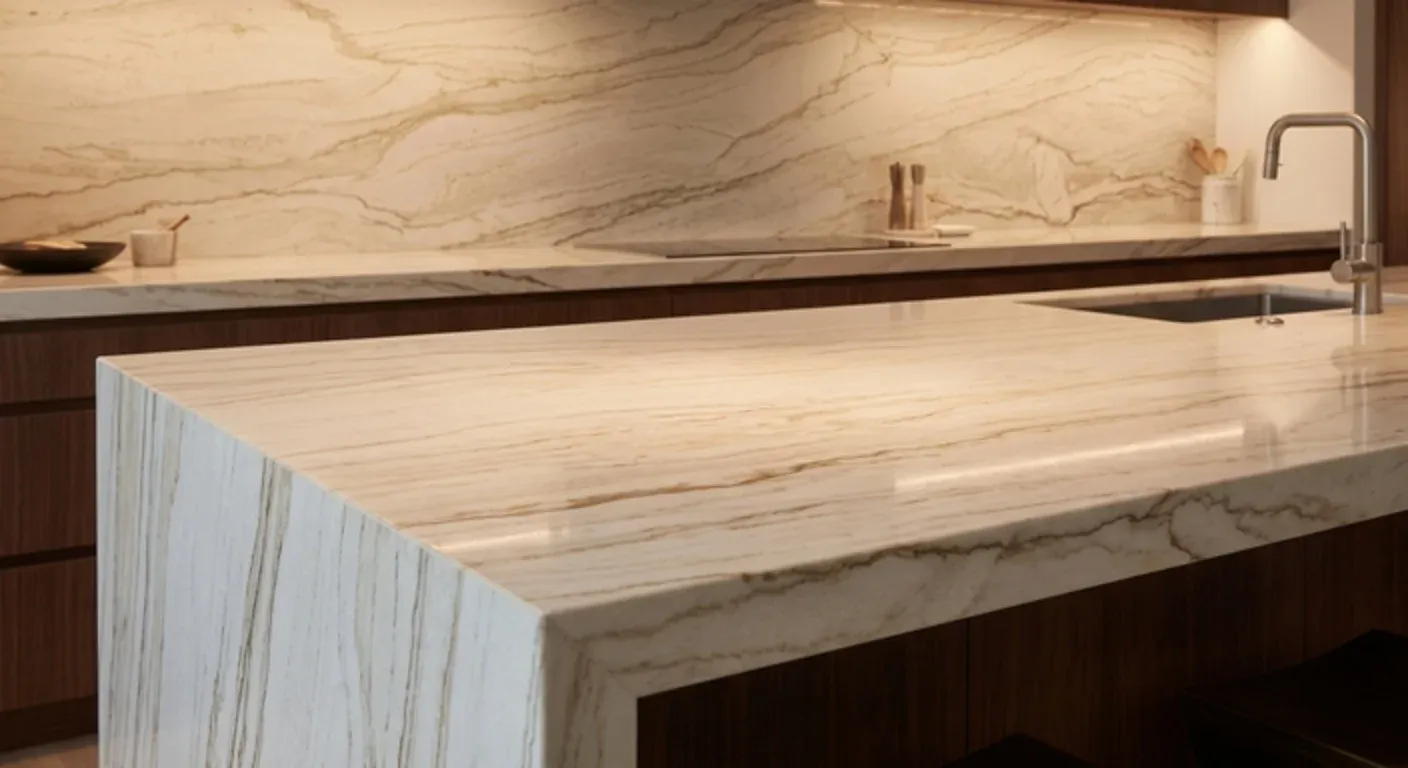
This combination of durability and expressive veining explains its continuing popularity in luxury kitchens. Warm cream, beige and gold-toned quartzites are especially relevant to current interiors.
However, commercial stone names are not geological classifications. Some materials sold as "quartzite" may actually be marble or dolomitic marble, so material verification remains important.
Granite: highly practical natural stone
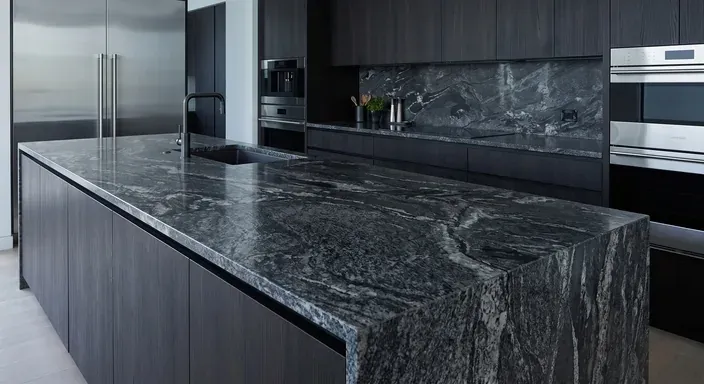
Granite remains one of the most dependable natural stones for heavily used kitchens. It is generally hard, abrasion resistant and relatively resistant to common household acids. Its appearance ranges far beyond the familiar speckled granites of previous decades; contemporary granites can offer dramatic movement, deep colours and subtle mineral structures.
Marble: beautiful, but understand the patina
Marble has been used in kitchens for centuries and remains one of architecture's most enduring materials. Its principal consideration is acid sensitivity. Lemon, wine, vinegar and other acids react with the calcium carbonate within marble and can create dull areas known as etching. Sealers help reduce absorption and staining but do not prevent etching.
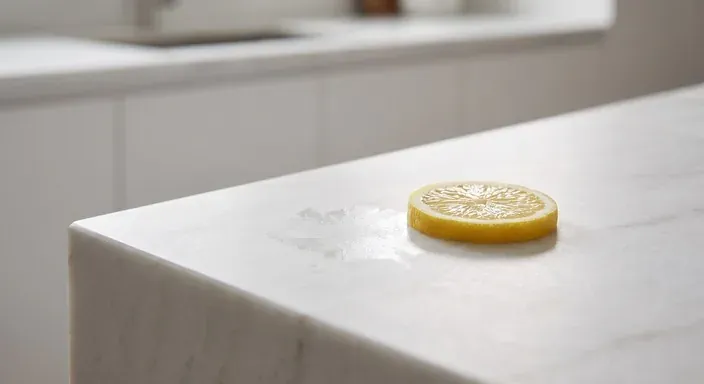
A honed finish can make these marks considerably less apparent than a high polish. Marble is therefore entirely appropriate for kitchens when the client understands that the surface will evolve.
The answer depends on the client
Choose quartzite or granite where high performance is the priority. Choose marble when its aesthetic quality outweighs the desire for a permanently immaculate surface. The important distinction is not between a "good" and "bad" stone. It is between a stone that is correctly specified and one that is not.