In northern Italy, near Lake Garda in the province of Brescia, there is a stone that holds the warm colours of the Mediterranean within it. Breccia Damascata stands out for its mix of coral red, dusty pink, soft orange, beige and ivory. Its surface is full of freely shaped fragments crossed by pale veins, giving an overall look like a mosaic that nature arranged by itself.
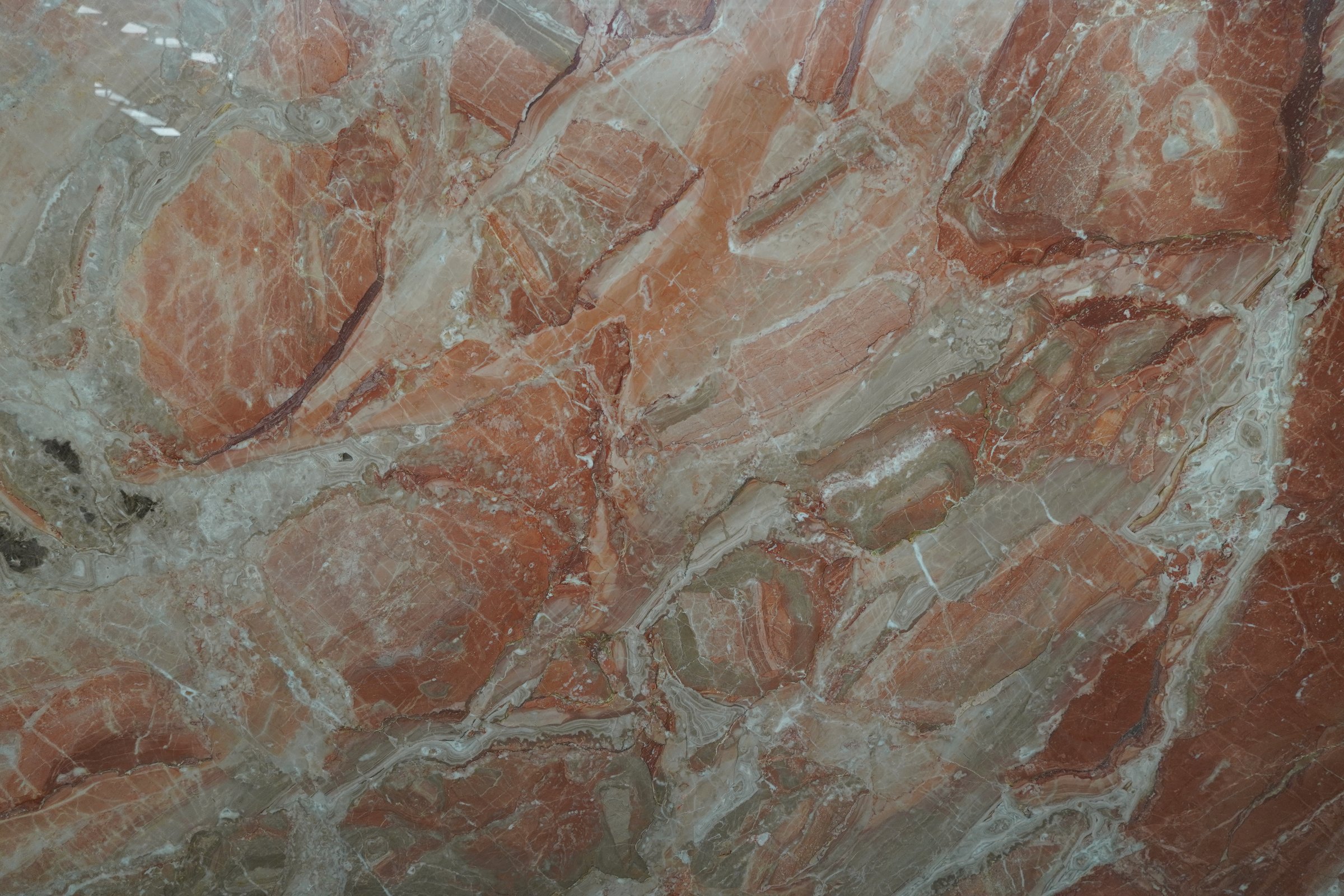
The word breccia tells the whole geological story. Original carbonate fragments fractured and were then cemented together again by natural minerals. This process creates angular fragments, intersecting lines and distinctive layers of colour. Unlike marble with continuous veining, the movement of Breccia Damascata is broken into sections and varies greatly from slab to slab.
Design
This stone suits spaces that call for warmth, colour and architectural weight. On large surfaces the fractured shapes join into one composition, and the geological structure naturally becomes part of the design.
Its warm tones pair well with walnut, warm woods, terracotta, bronze and brass. Set against crisp white, charcoal or restrained neutrals, the stone creates contrast and instantly becomes the focal point of the space. Where sequential slabs are available, pattern matching or bookmatching brings out the breccia structure even more on walls, bathrooms and large architectural surfaces.
Finishes
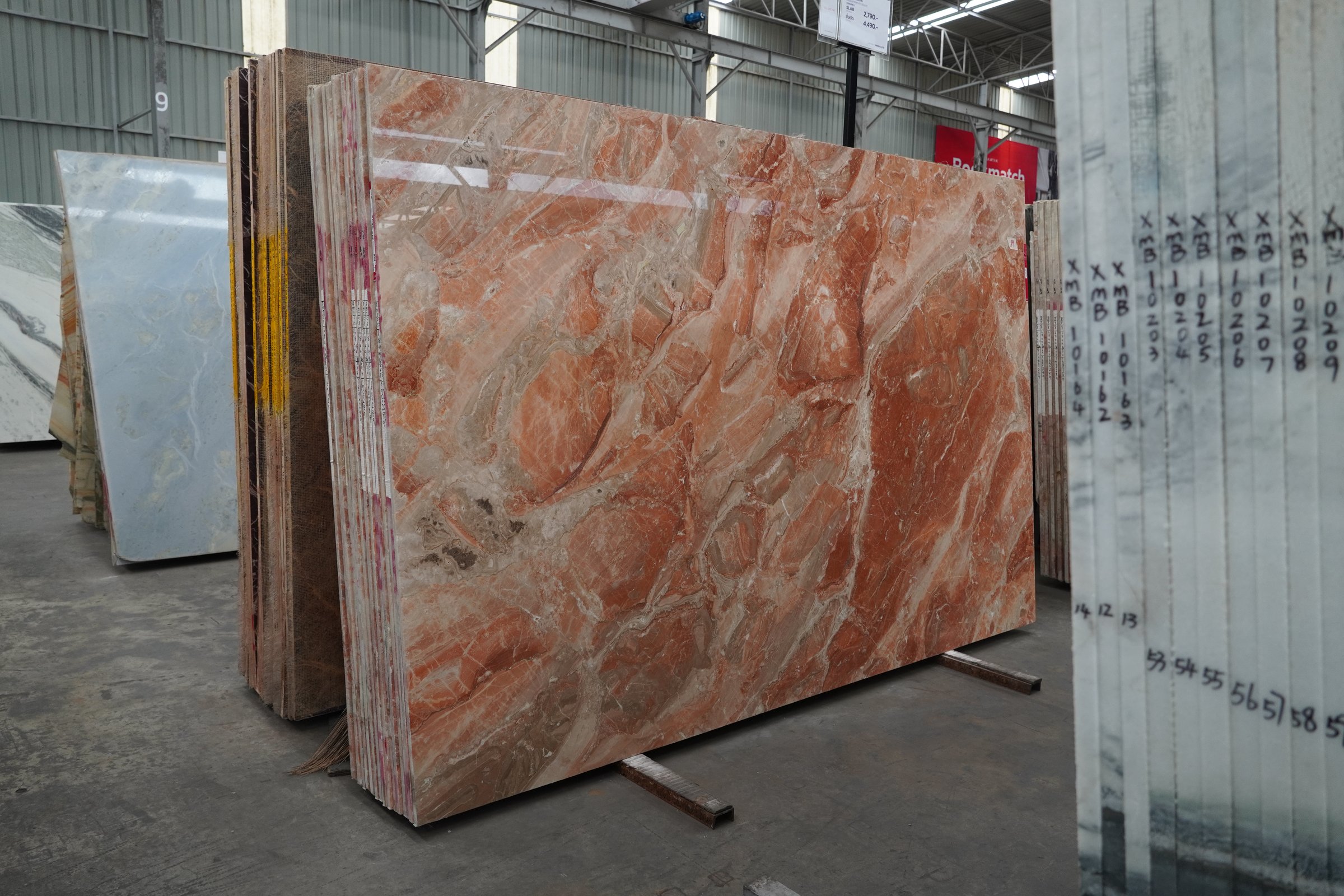
Polished, honed and brushed finishes all work. A polished finish makes the coral, pink and orange vivid and increases the contrast between the fragments and the pale veins. Honed gives a soft, calm look, and brushed adds texture and emphasises the natural variation.
Durability and Applications
As a carbonate-based stone, its care is similar to that of marble and limestone. The material is sensitive to acid and may develop etching, stains or a patina with use. The breccia structure may contain natural fissures and joints between fragments, so it must be processed carefully, and some slabs may need resin or structural reinforcement.
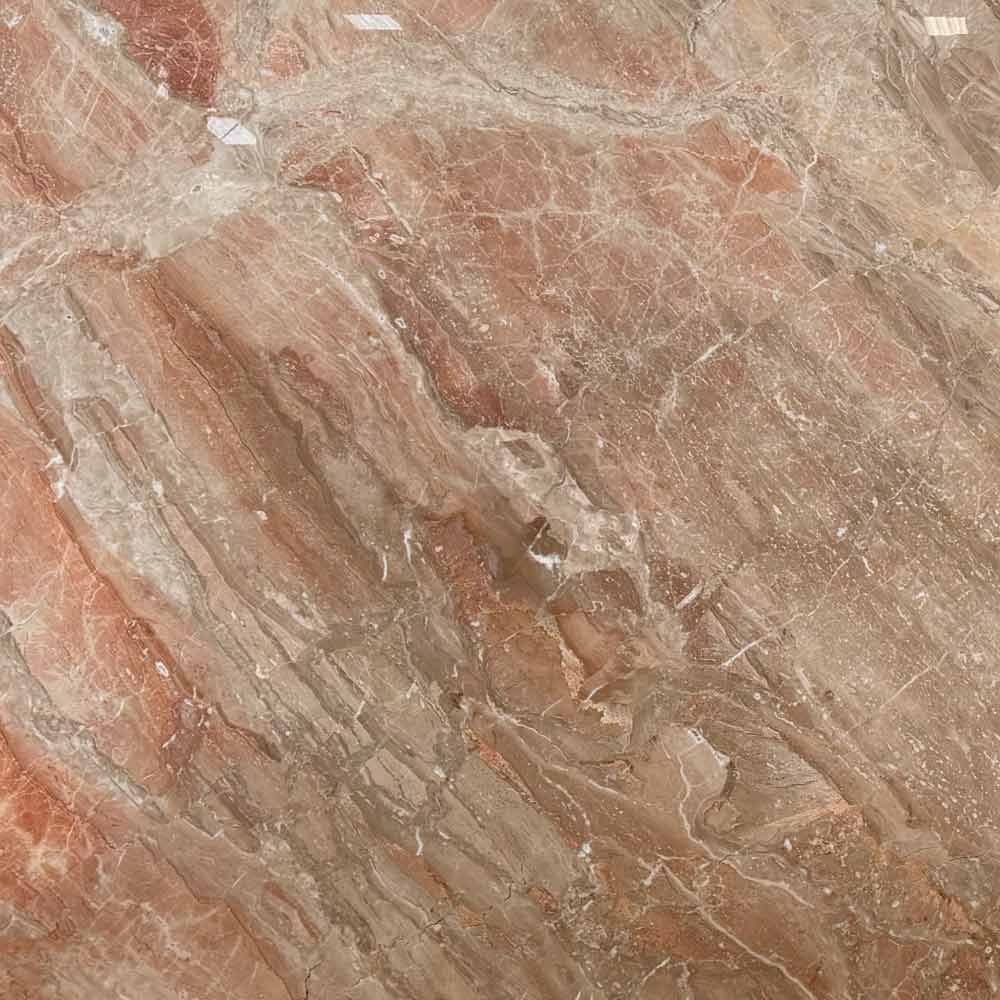
It suits feature walls, vanity tops, walls, interior floors, staircases, fireplaces, reception and bar counters, furniture, decorative work and some kitchen applications. Use pH-neutral products, and decide on sealing and its frequency according to the slab, the finish, the space and actual conditions of use rather than a fixed yearly rule.