If any material is bound up with the history of beauty, marble is near the top of the list. Behind the smooth surface and flowing veins we see lies a long geological journey that began as sediment on the bed of ancient waters.
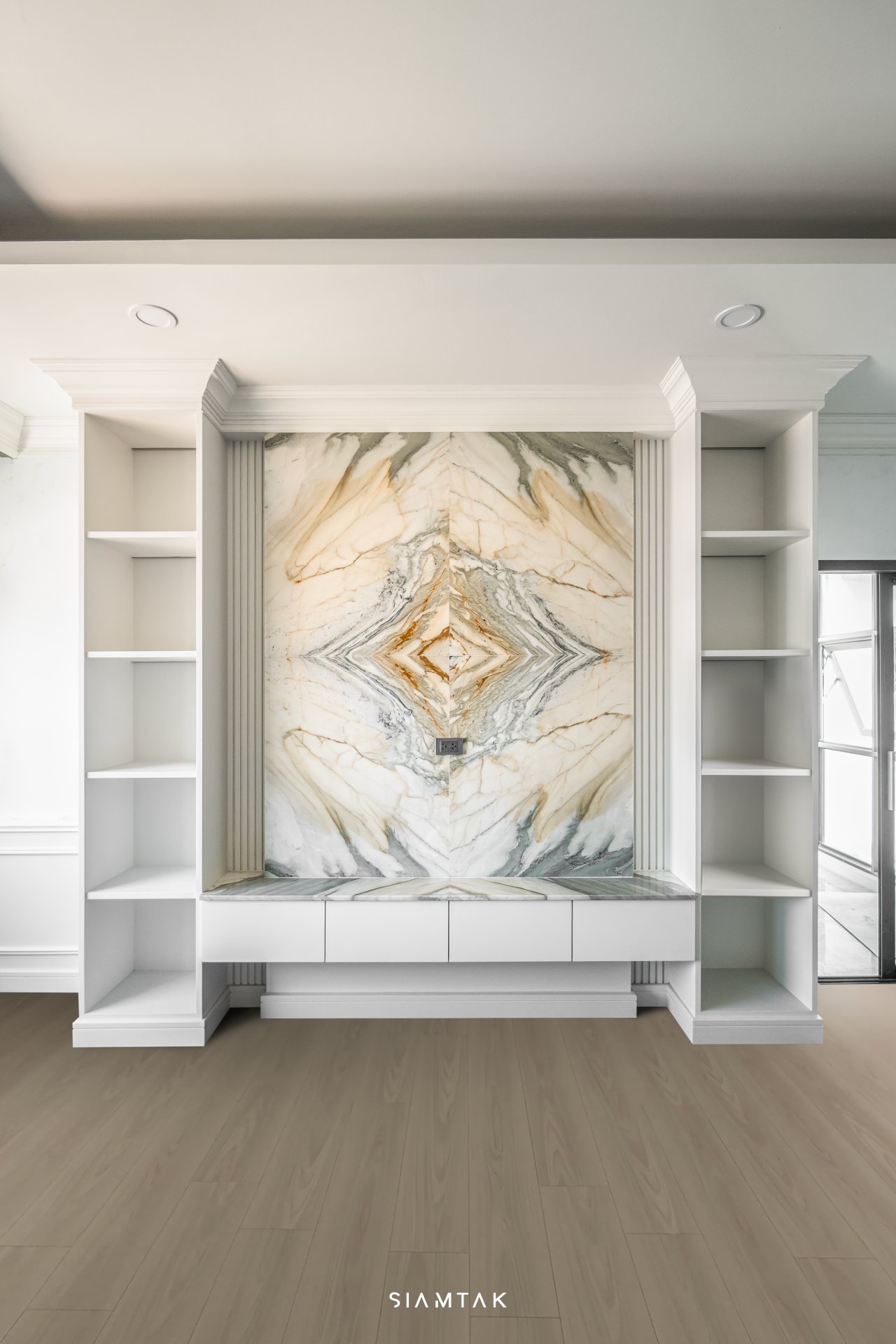
Formation
Marble forms over millions of years through the metamorphism of limestone under high heat and pressure. Its starting point is a calcium-rich sedimentary rock, whose mineral crystals gradually recrystallise into a denser, more luminous structure. This slow transformation is what gives marble its movement of pattern, depth of colour and distinctive natural elegance.
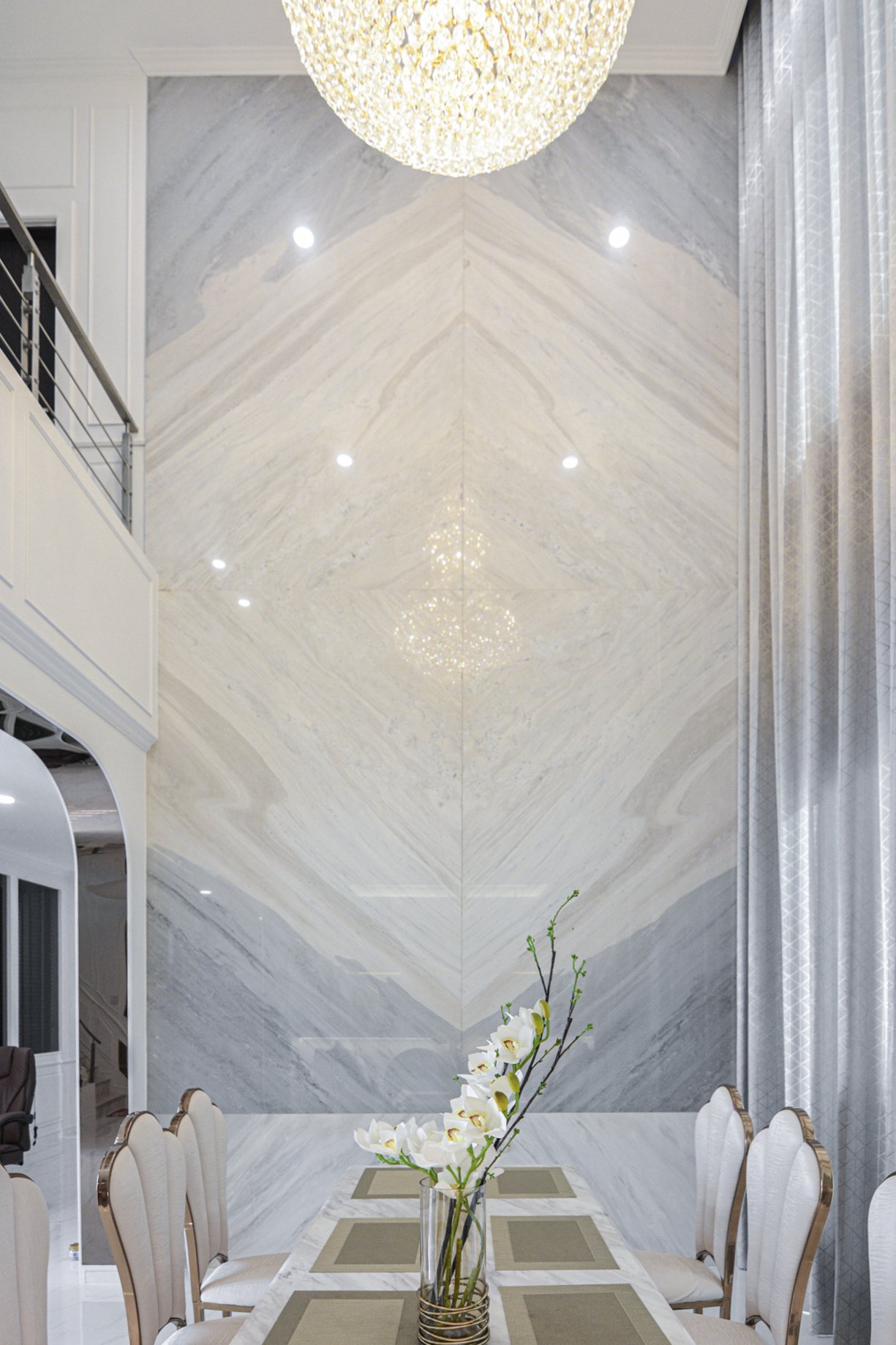
Composition
Marble consists mainly of calcite and may also contain clay, iron oxides, graphite, serpentine and other trace minerals. These were originally deposited in the limestone as layers of sediment, clay, silt or organic matter. During metamorphism, heat and pressure rearrange these minerals into veins, tones and patterns that are different in every slab, as if nature painted the picture anew each time.
Colour and Veining
The colour of marble is a record of its mineral composition. Calcite creates white, cream and soft tones that seem to glow from within. Iron-bearing minerals add gold, rust, brown and red; graphite and carbonaceous material give grey and black; and serpentine and magnesium-rich minerals bring shades of green.
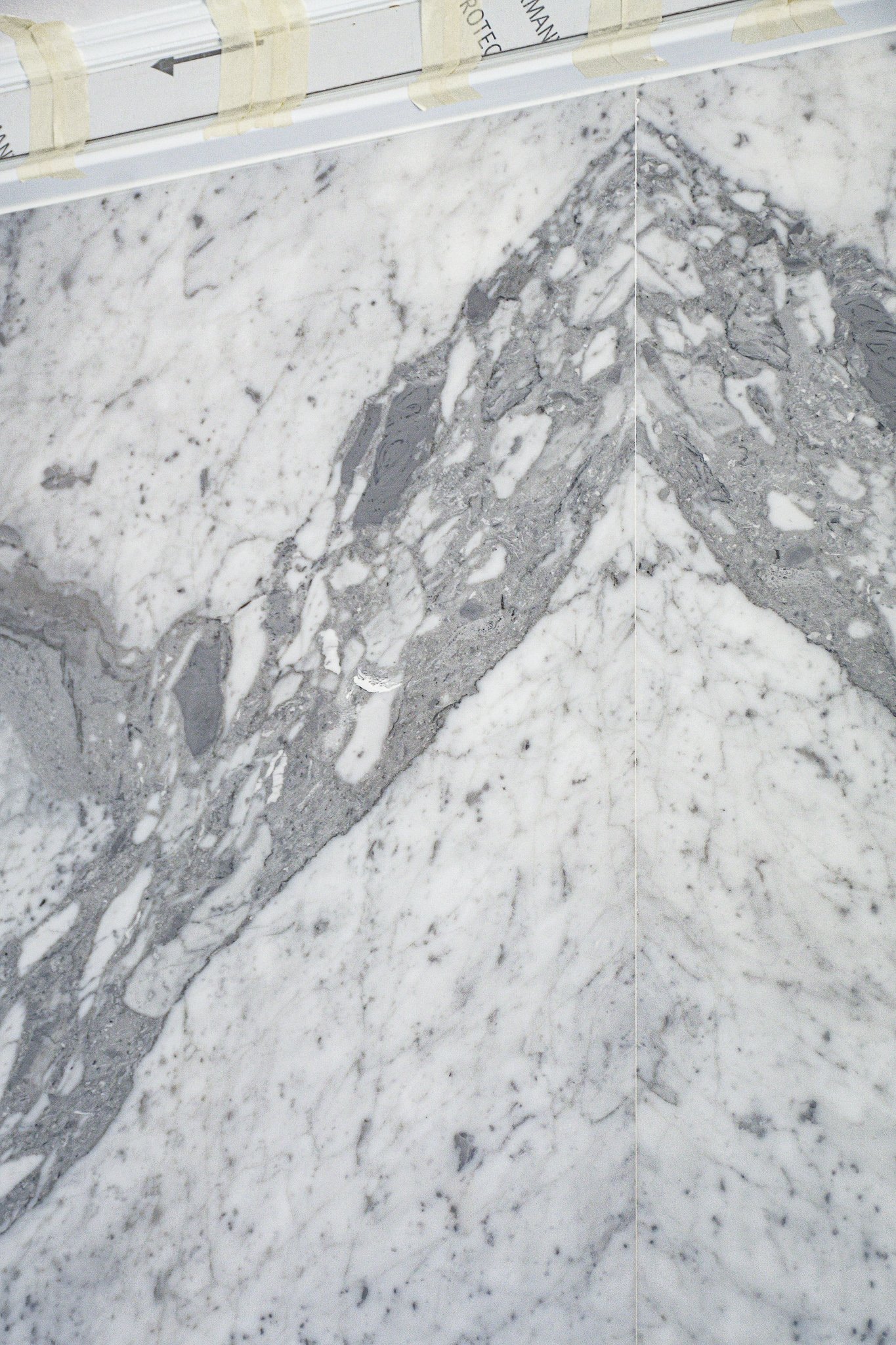
Hardness and Physical Properties
• Rock type: metamorphic
• Main mineral: calcite
• Mohs hardness: approx. 3–4
• Density: approx. 2.5–2.65 g/cm³
• Approximate weight: around 50 kg/m² at 20 mm thickness
• Porosity: varies with the variety, geological structure and finish
Compared with granite and true quartzite, marble is usually softer and more porous, so it should be chosen with care for areas regularly exposed to scratches, stains and wear.
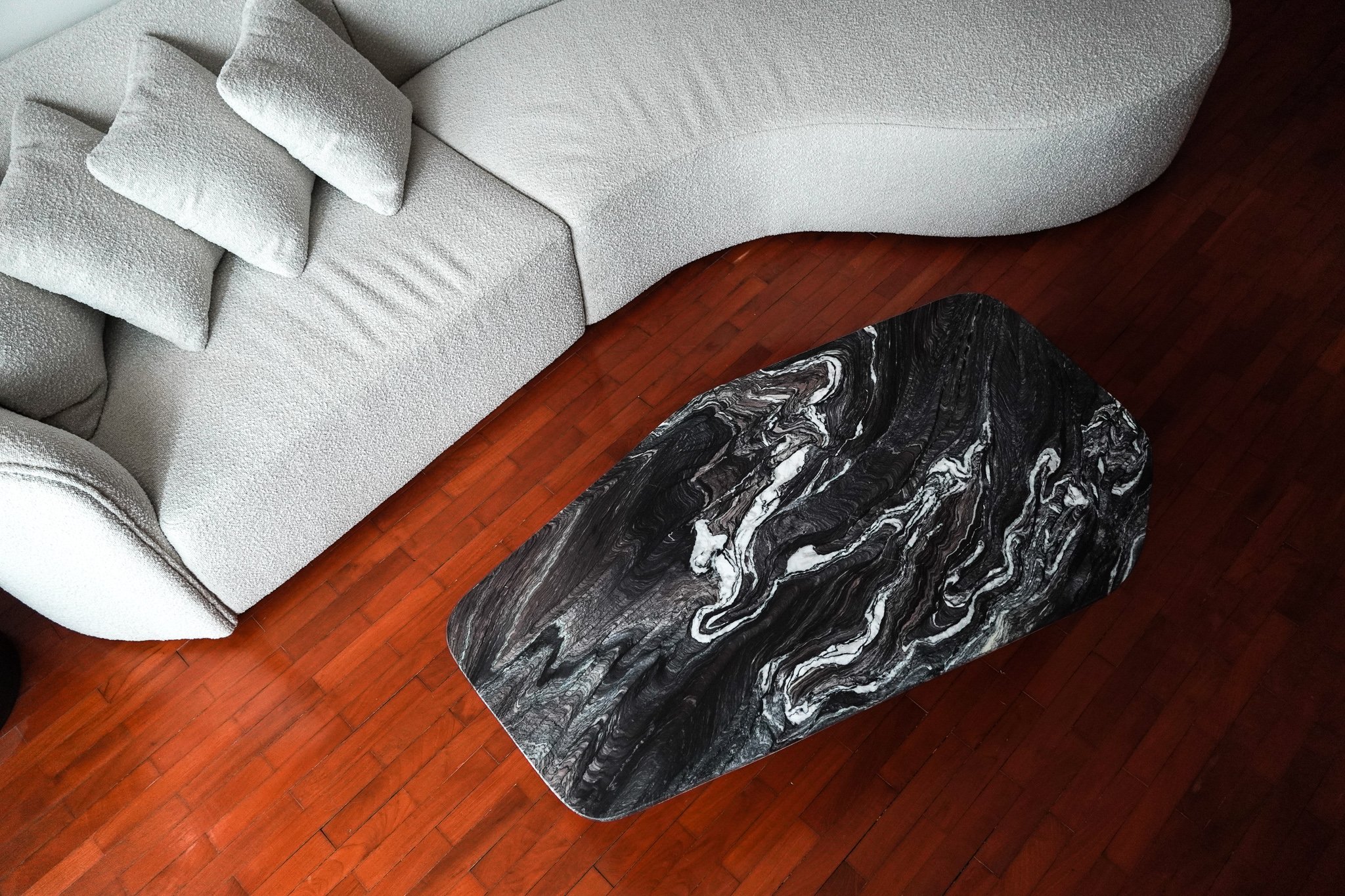
Even so, its visual refinement, natural translucency, flowing veins and the depth revealed by polishing have kept marble in the world's great architecture and art for centuries, from feature walls, bathroom surfaces and vanity tops to floors, staircases, furniture and architectural details.
Marble is a beautiful but delicate material that calls for the right selection, processing and care, especially in heavily used areas. Chosen with understanding, it gives back a balance of classic character, natural movement and architectural refinement that never goes out of style.