Yes - provided you understand what marble is. The controversy surrounding marble kitchens usually comes from unrealistic expectations rather than material failure.
Marble is a calcium-carbonate-rich stone. Acids such as lemon juice and vinegar react with its surface and can create a dull mark known as etching. Sealer cannot prevent this reaction.
Why do designers still use it?
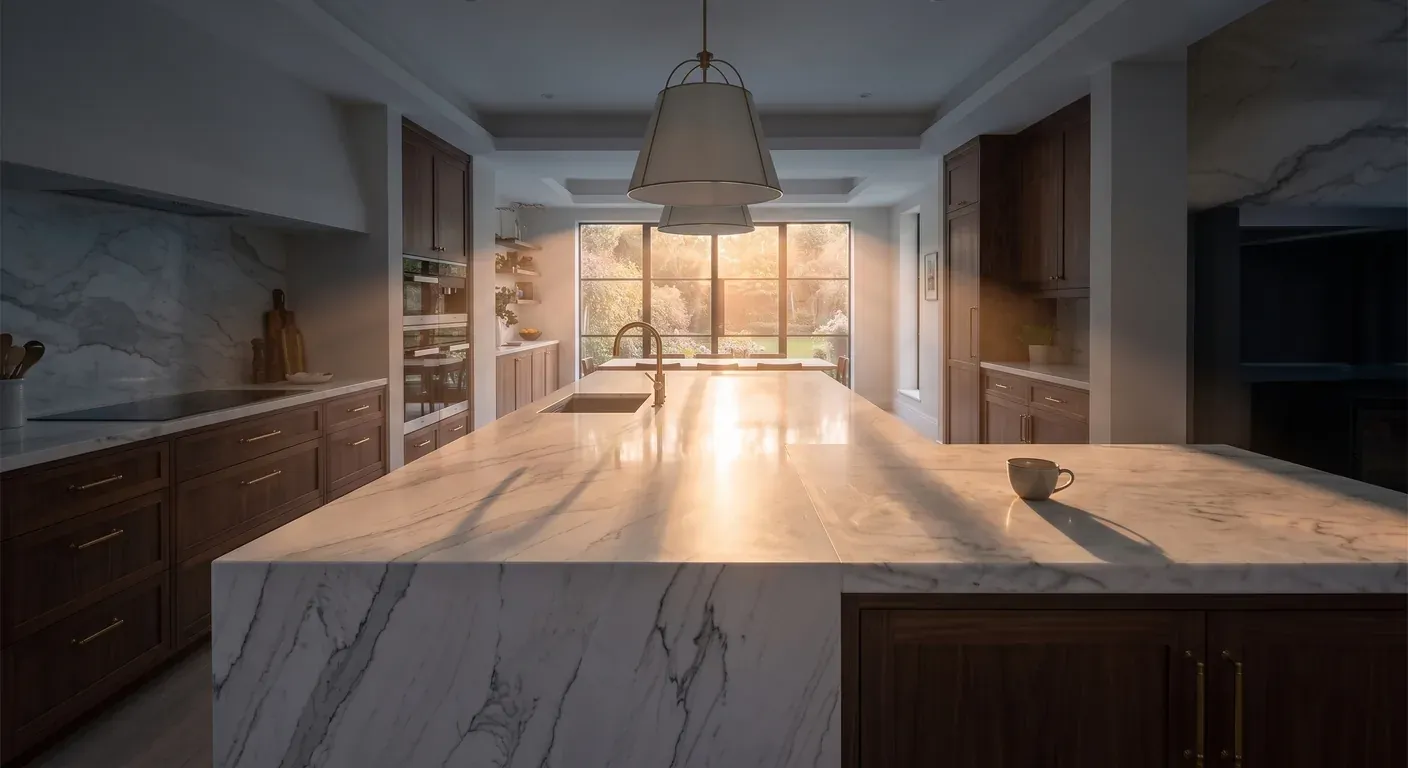
Because very few materials reproduce marble's natural depth, translucency and geological movement. Each slab is unique, and varieties such as Carrara, Calacatta, Statuario, Arabescato and coloured marbles create entirely different architectural expressions.
Honed or polished?
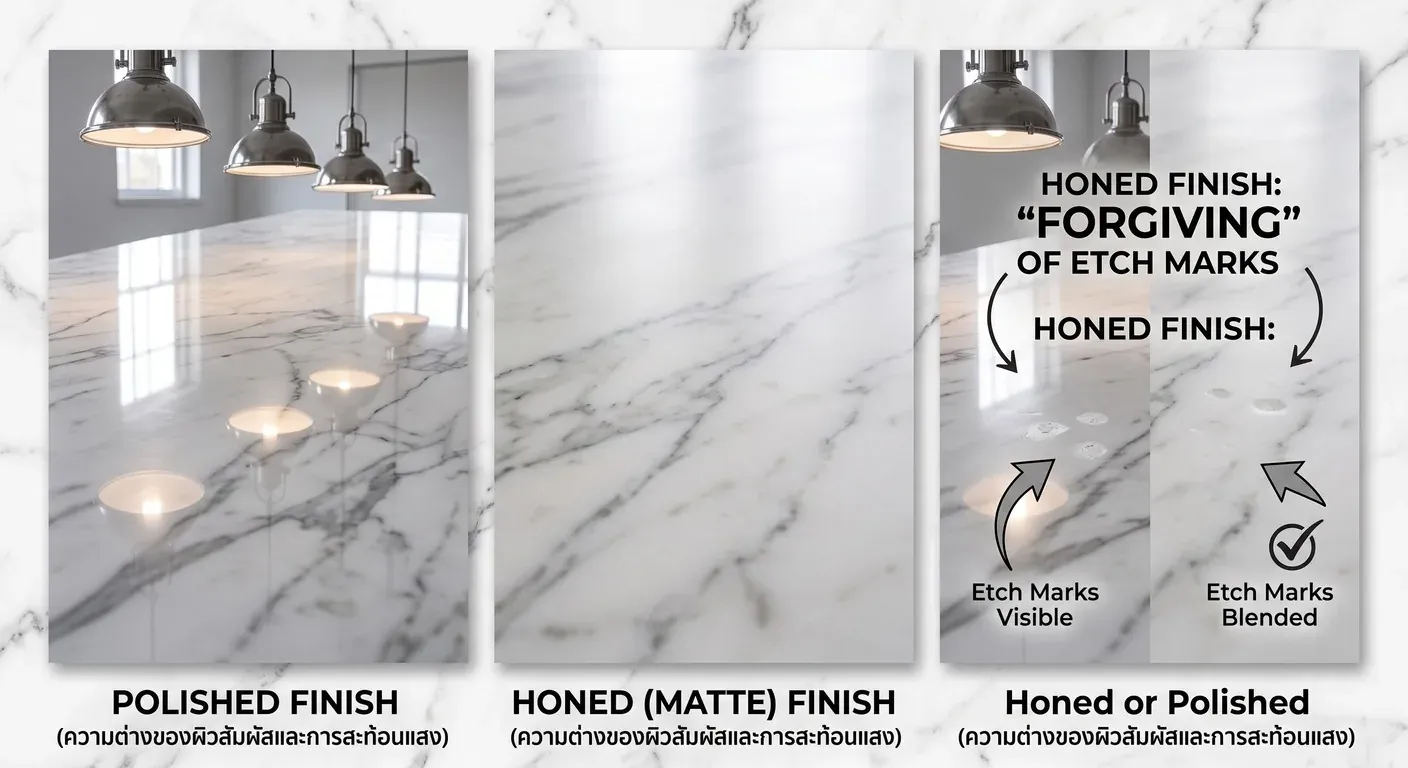
For active kitchens, honing is often the more forgiving finish. Etches alter the reflection of a polished surface and can therefore become particularly visible when light falls across it. A honed finish has considerably less reflection, allowing gradual wear to blend more naturally into the surface.
Patina versus damage
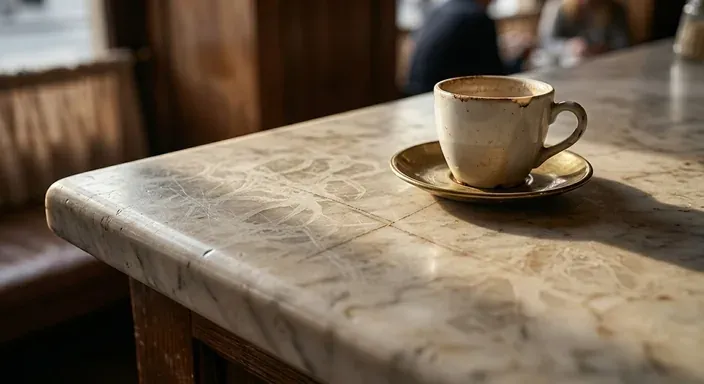
An important distinction should be made between structural damage and patina. Fine scratching, subtle etching and gradual softening of the surface are not necessarily indications that marble has failed. European cafes, historic houses and old hotels demonstrate how marble can remain functional long after its original polish has evolved.
The question is therefore not simply "Can marble be used in a kitchen?" It is: do you want a natural material that will record the way the kitchen is used? For the right client, that quality is part of marble’s appeal.