Natural stone can transform a bathroom from a functional space into an architectural one. Marble, limestone, travertine and quartzite can all be used successfully, but wet areas require more careful detailing than ordinary interior surfaces.
Bathroom floors
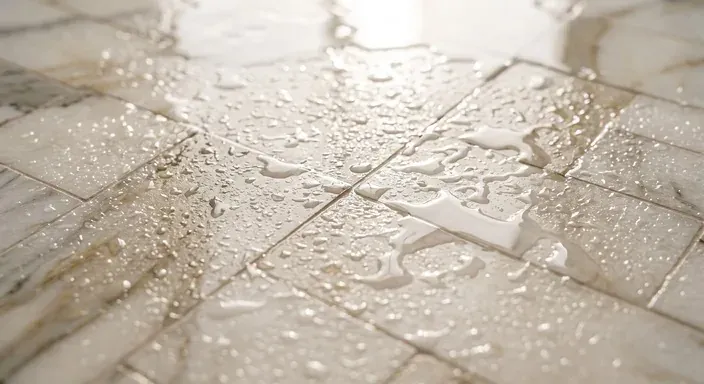
The finish matters almost as much as the stone. Highly polished surfaces may become slippery when wet. Honed, brushed or lightly textured finishes are generally preferable where additional grip is required. Shower floors often benefit from smaller-format pieces because the additional joints help accommodate the falls required for drainage.
Shower walls
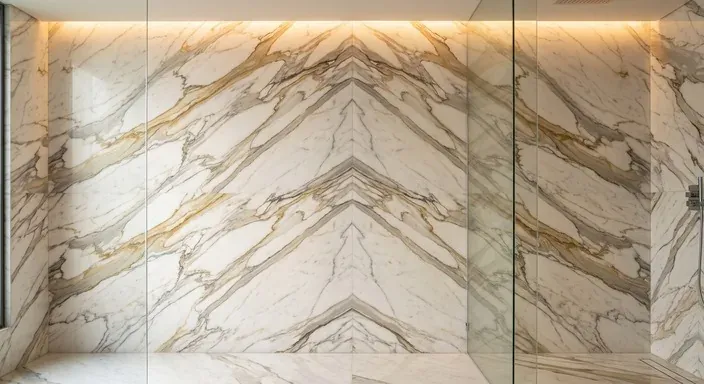
Large-format marble or quartzite can create remarkably continuous shower surfaces with comparatively few joints. This is also where dramatic vein matching or bookmatching can be particularly effective. Travertine provides a softer alternative. On vertical applications, its natural cavities can sometimes be deliberately retained to emphasise texture, while horizontal surfaces are generally more practical when filled.
Vanity tops
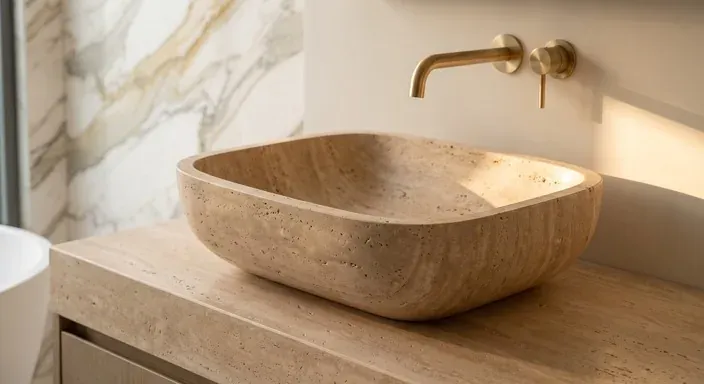
Marble remains one of the most elegant bathroom vanity materials because bathrooms typically involve fewer food acids than kitchens. Quartzite offers greater resistance where performance is prioritised, while travertine and limestone create a quieter, more architectural expression.
The contemporary bathroom direction
Bathrooms are increasingly being designed as restorative spaces rather than purely functional rooms. Warm natural materials, honed stone and tactile finishes support a more personal, spa-like atmosphere. Designers are also combining different marbles, limestones and surface finishes rather than covering every surface with one identical material.
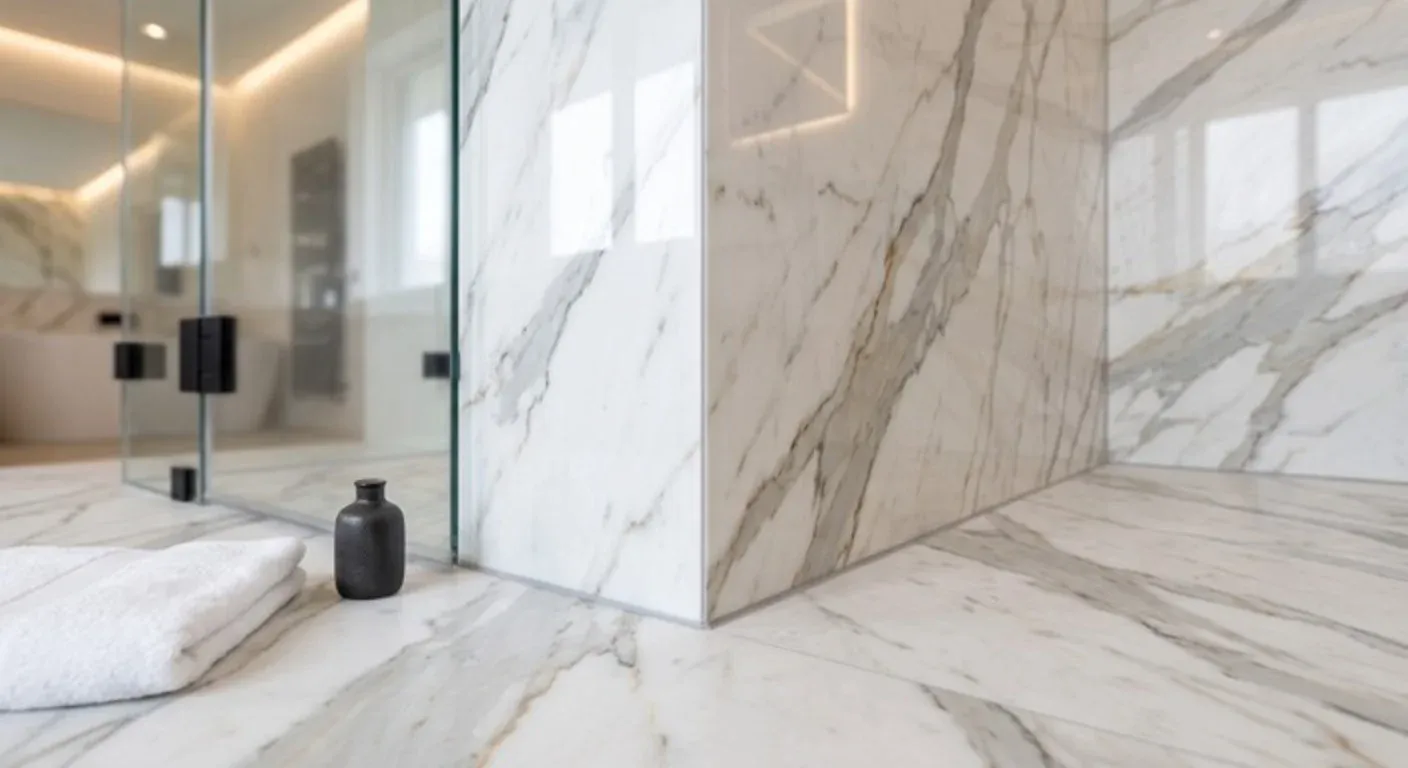
For natural stone bathrooms, the strongest results come from combining material character with correct waterproofing, drainage, substrate preparation and installation detailing.