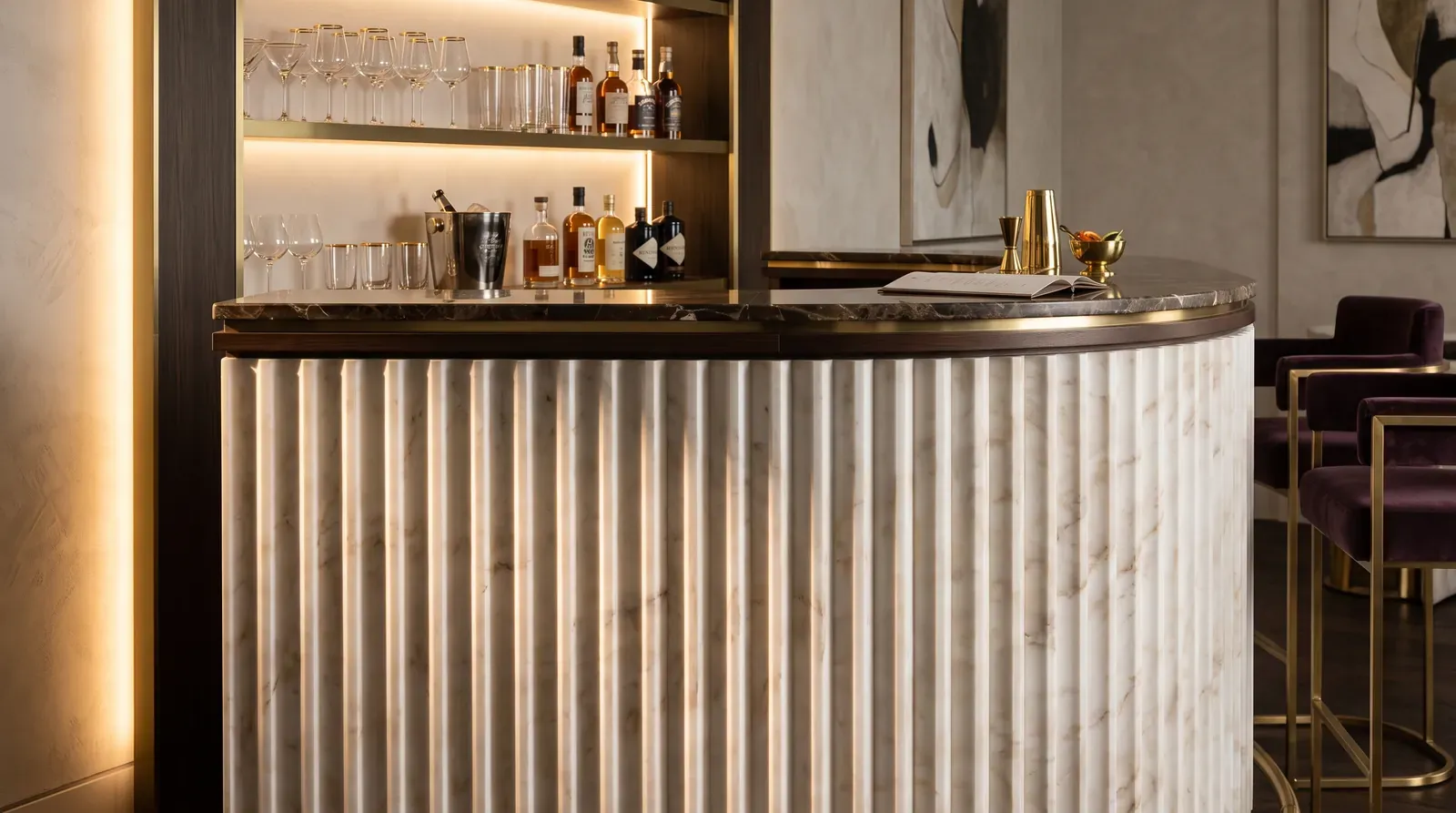
Choosing the stone is only half of the specification. The finish changes colour, reflection, texture, maintenance and even how the material feels within a room.
Polished
Polishing creates a highly reflective surface and reveals the deepest colour and contrast within a stone. It can be particularly effective on dramatic marbles, onyx and quartzites. The downside is that scratches and acid etching can become more noticeable because they interrupt the reflection.
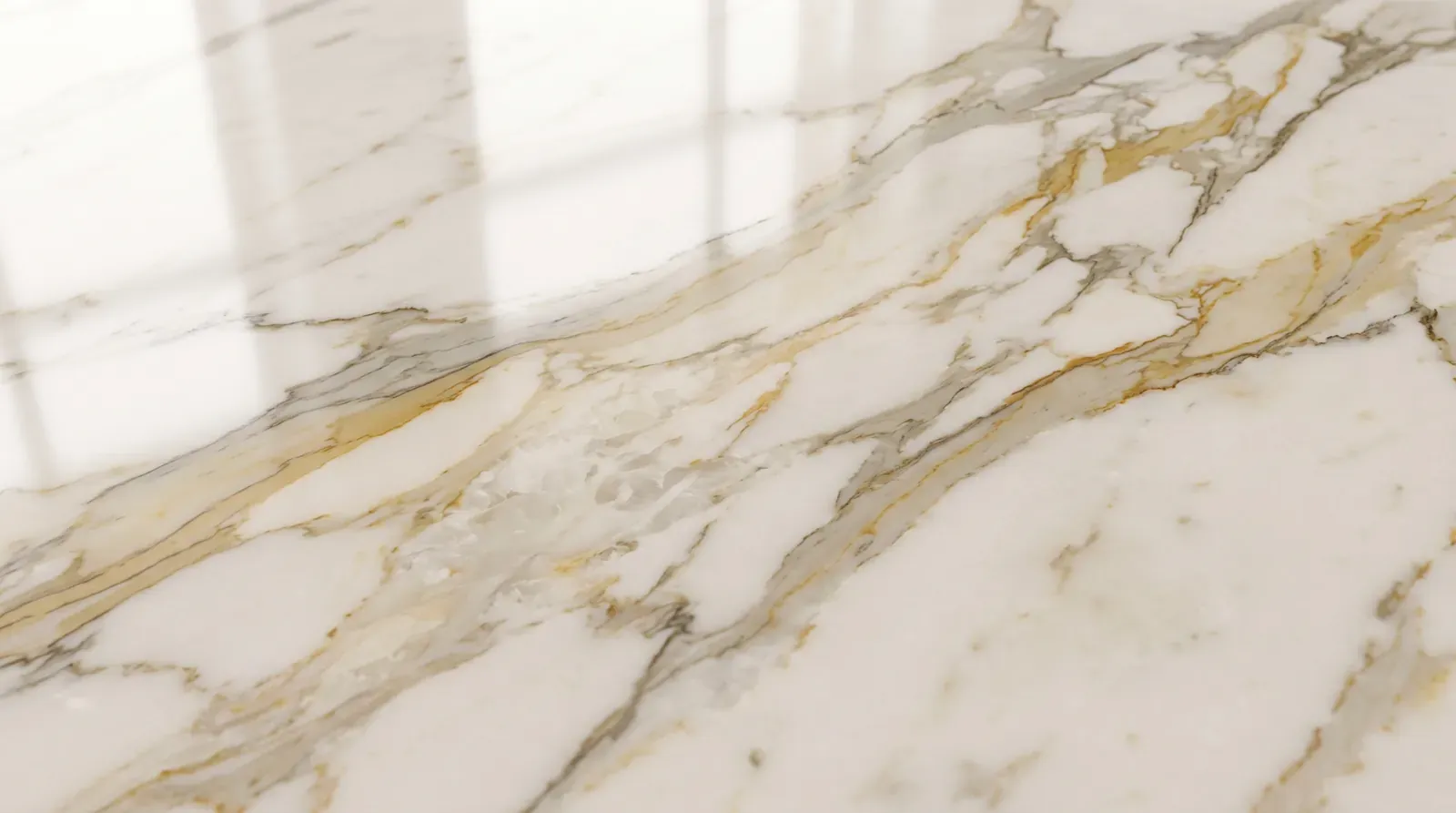
Honed
Honing creates a smooth matt or satin surface. Colours usually appear slightly softer and the stone takes on a more architectural character. It is particularly effective for marble floors, bathroom surfaces and kitchen countertops where a less reflective surface is preferred.
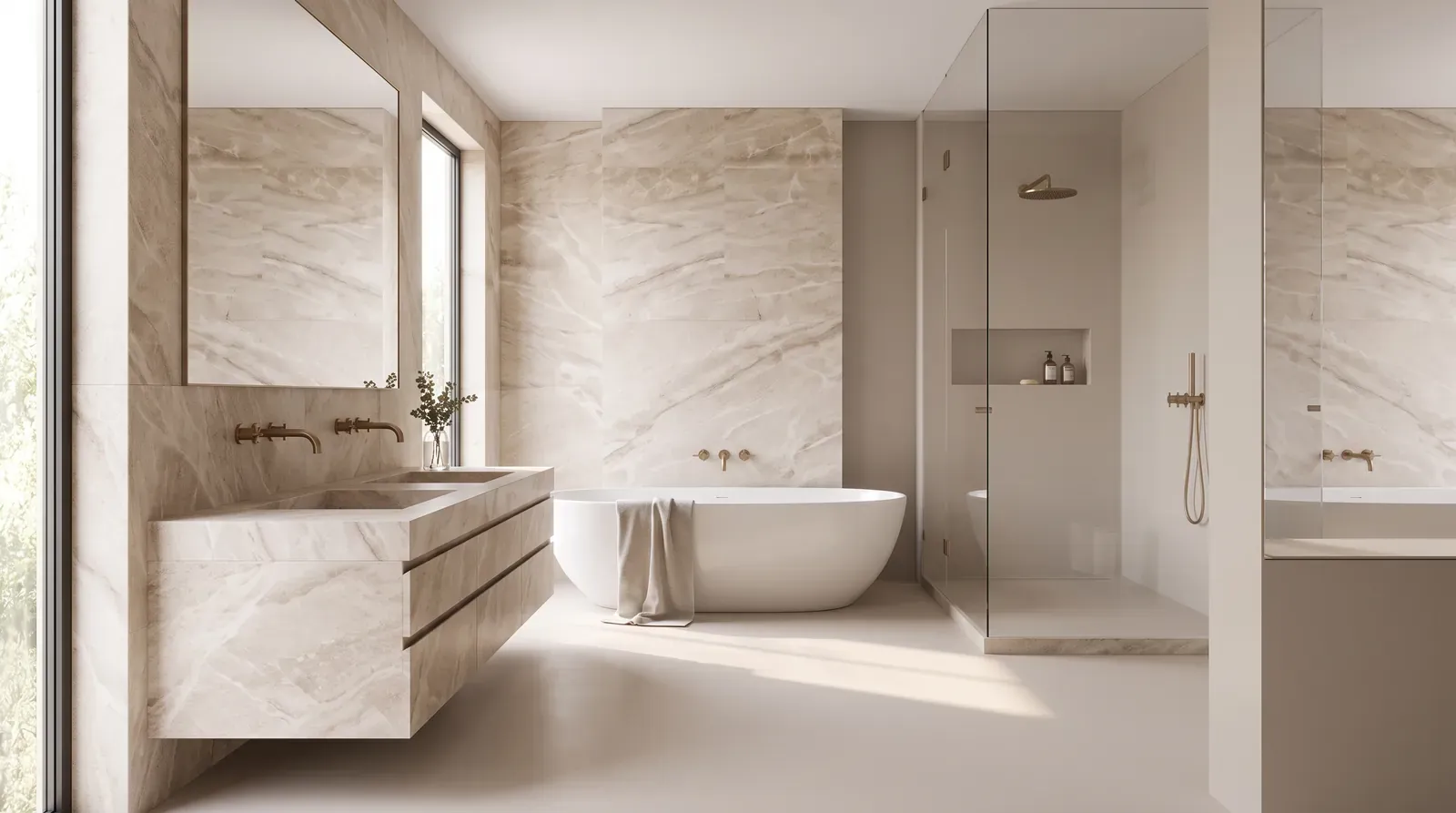
Brushed
Brushing gently textures the softer components of the stone. The result sits somewhere between honed and heavily textured and can give limestone, travertine and marble a subtle aged quality.
Leathered
Leathering produces a tactile low-sheen surface while retaining more colour depth than conventional honing. It is particularly popular with granites and certain quartzites.
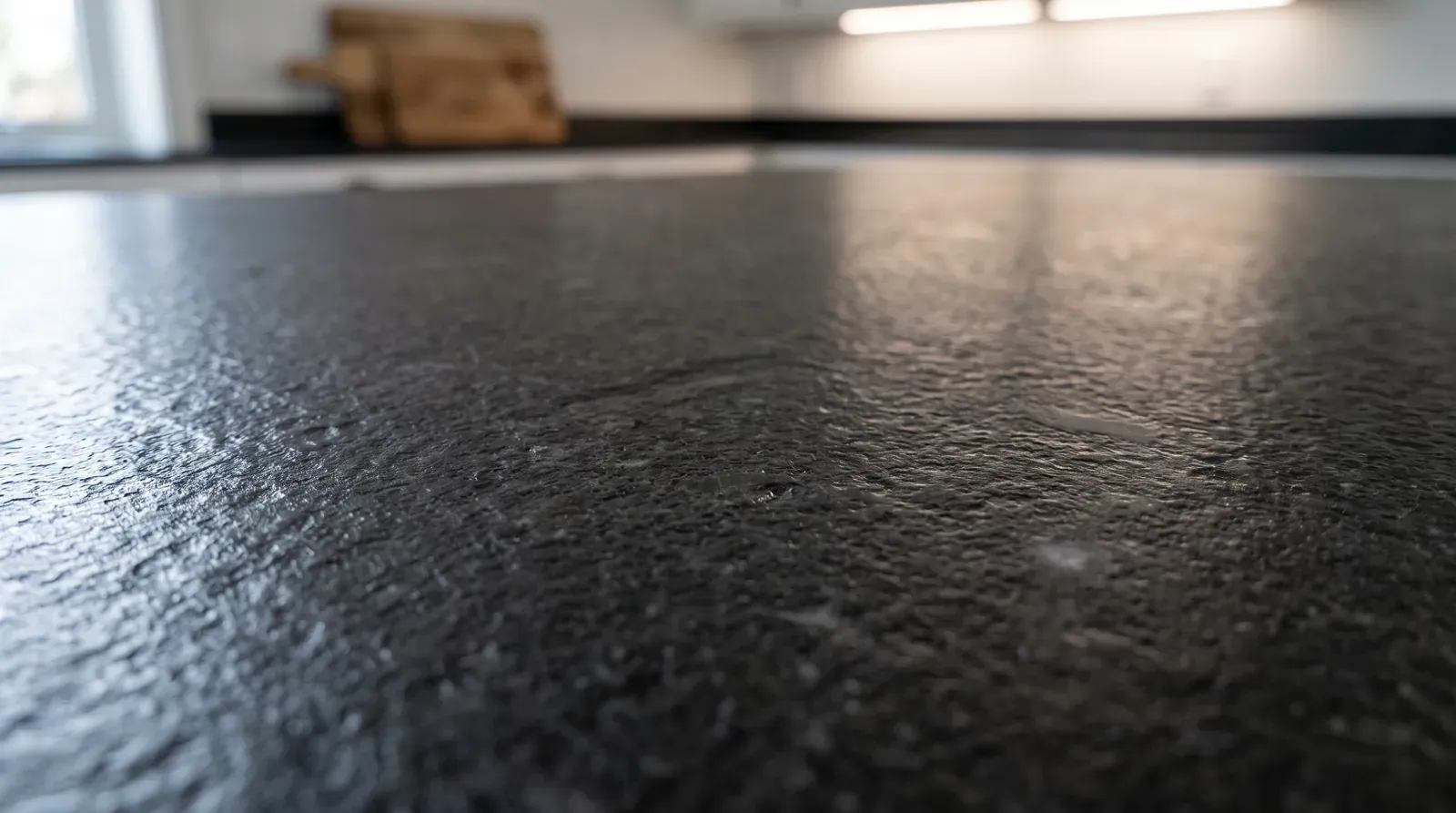
Flamed, bush-hammered and sandblasted
These more aggressive treatments create textured surfaces generally associated with floors, facades, landscapes and external applications. They can dramatically change how a familiar stone appears.
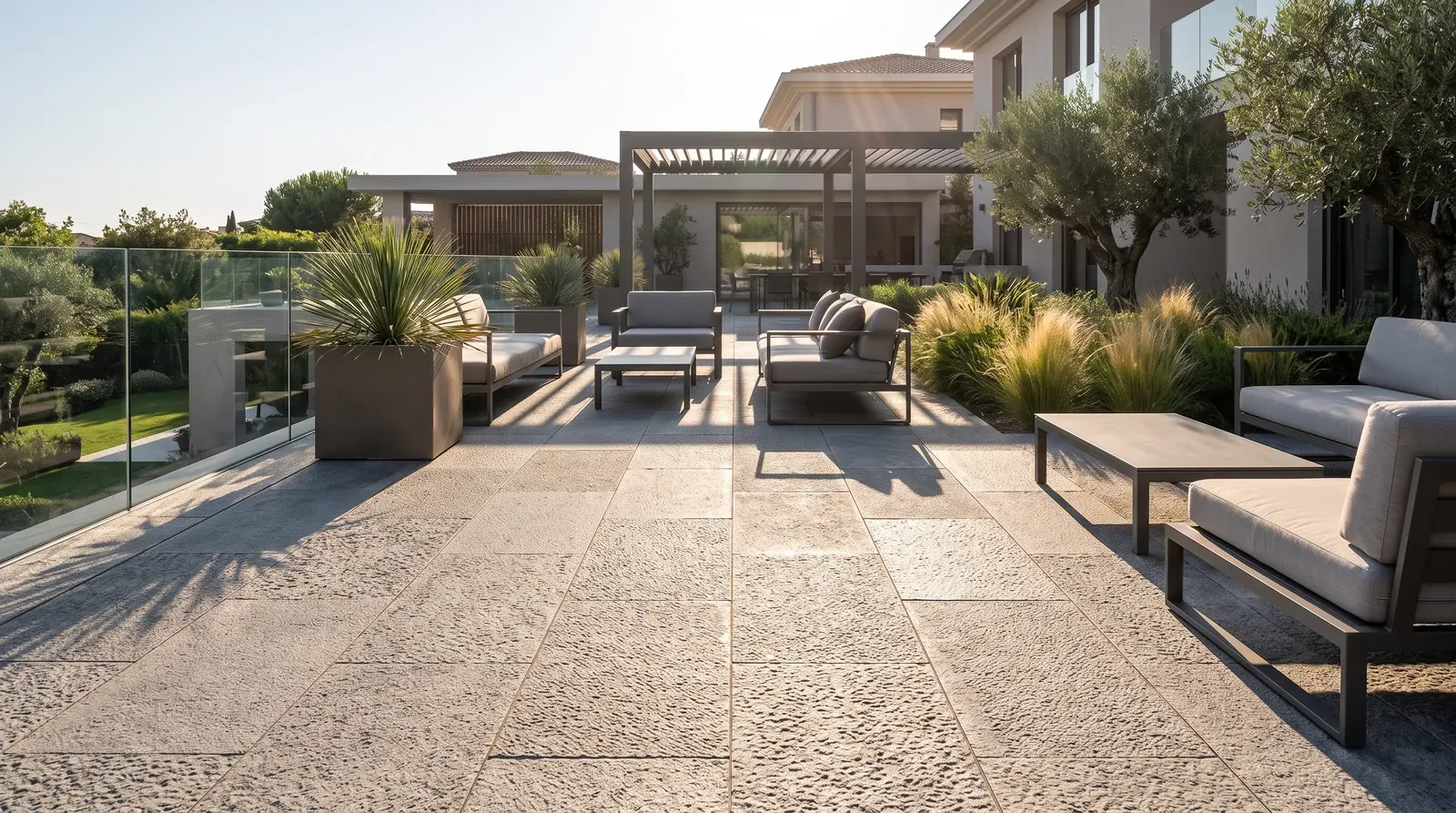
Current stone design is moving noticeably towards honed, leathered and other muted finishes as designers seek natural surfaces with greater tactile character. The finish should therefore never be specified independently of the application.