Stone flooring can survive generations, but different spaces place very different demands on it. A private bedroom, hotel lobby, restaurant and luxury retail store should not automatically receive the same stone specification.
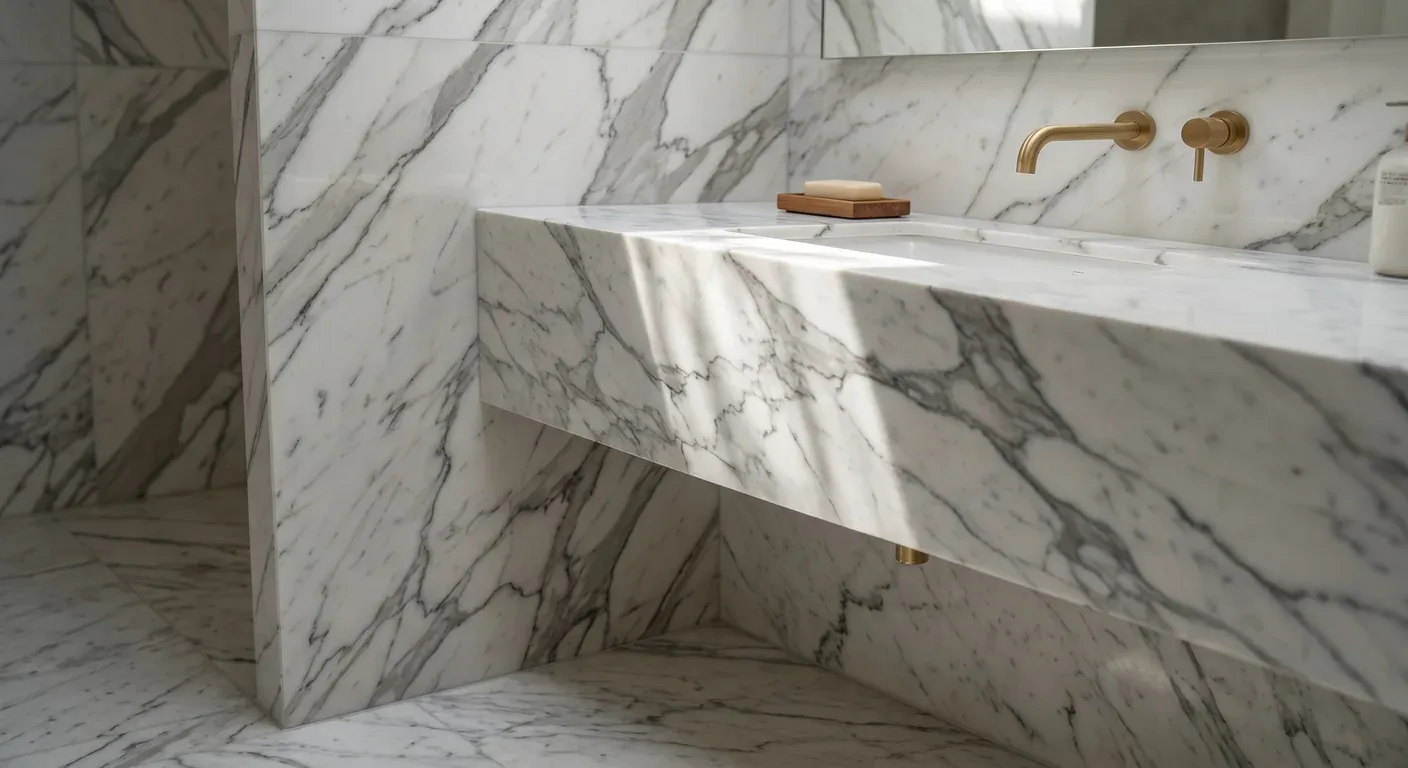
Marble
Marble offers an extraordinary range of colours and veining and can produce exceptionally refined floors. Its relative softness means high-traffic areas will gradually develop wear and patina. Whether that is desirable depends on the project. Historic buildings demonstrate that worn marble can remain beautiful for centuries; the aim should therefore be to establish the client's expectation before specification.
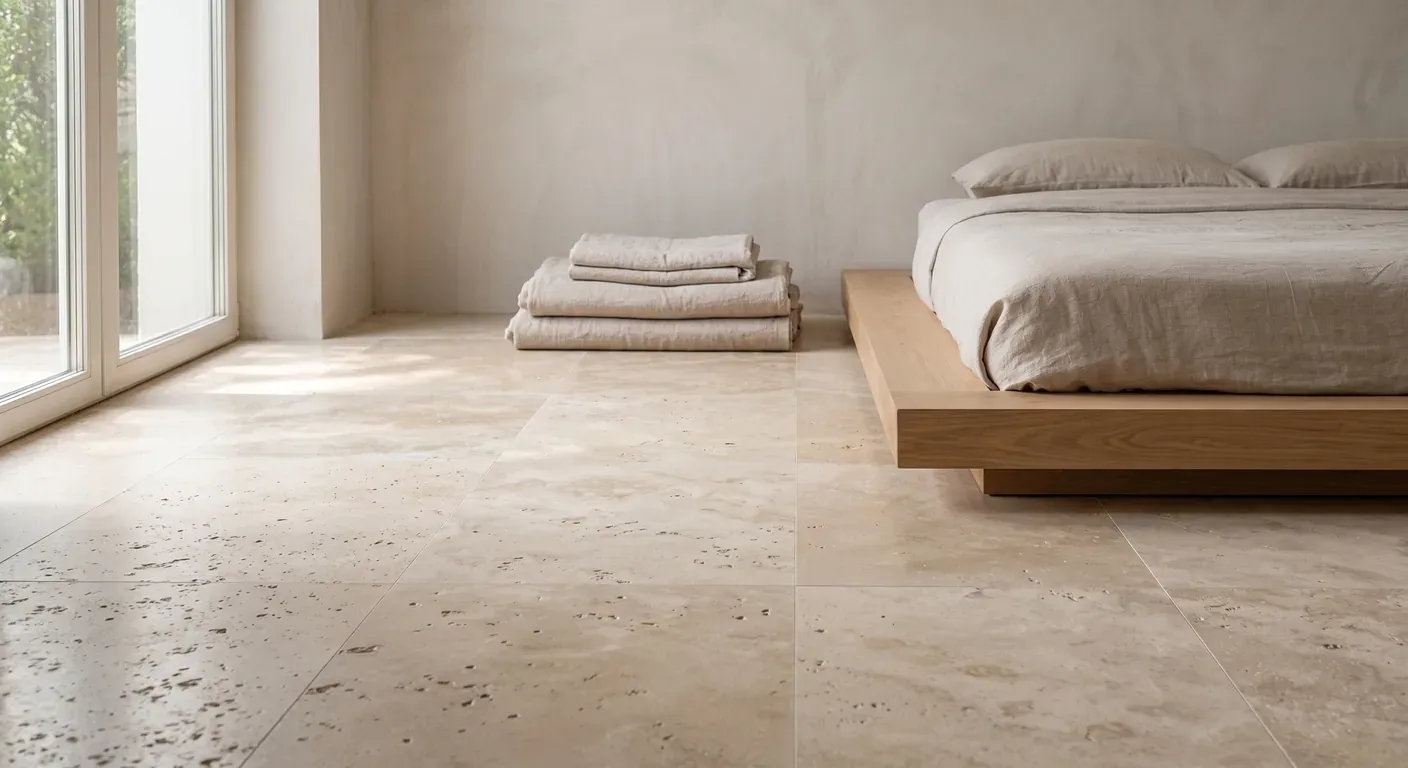
Travertine and limestone
Both materials are particularly effective where a softer, quieter architecture is desired. Travertine can range from highly linear vein-cut material to cloudy, organic cross-cut patterns. Limestone often creates a restrained surface that works particularly well with timber, plaster and other natural finishes.
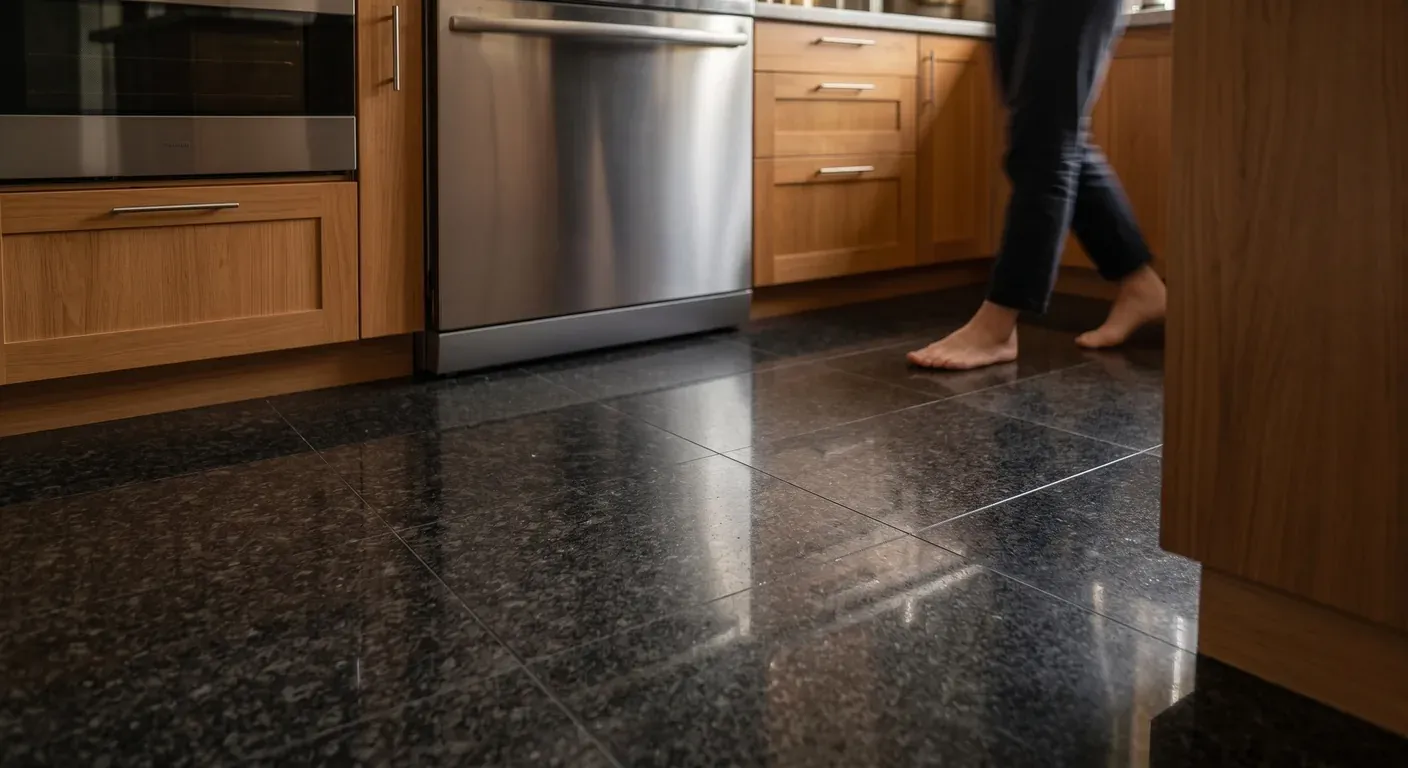
Granite
For airports, commercial foyers and other heavily trafficked spaces, granite's hardness and abrasion resistance can provide a significant advantage.
Finish and maintenance
Polishing intensifies the colour of stone but also makes surface scratching and etching more visible. Honed or brushed surfaces tend to develop a softer patina and are increasingly preferred in contemporary interiors.
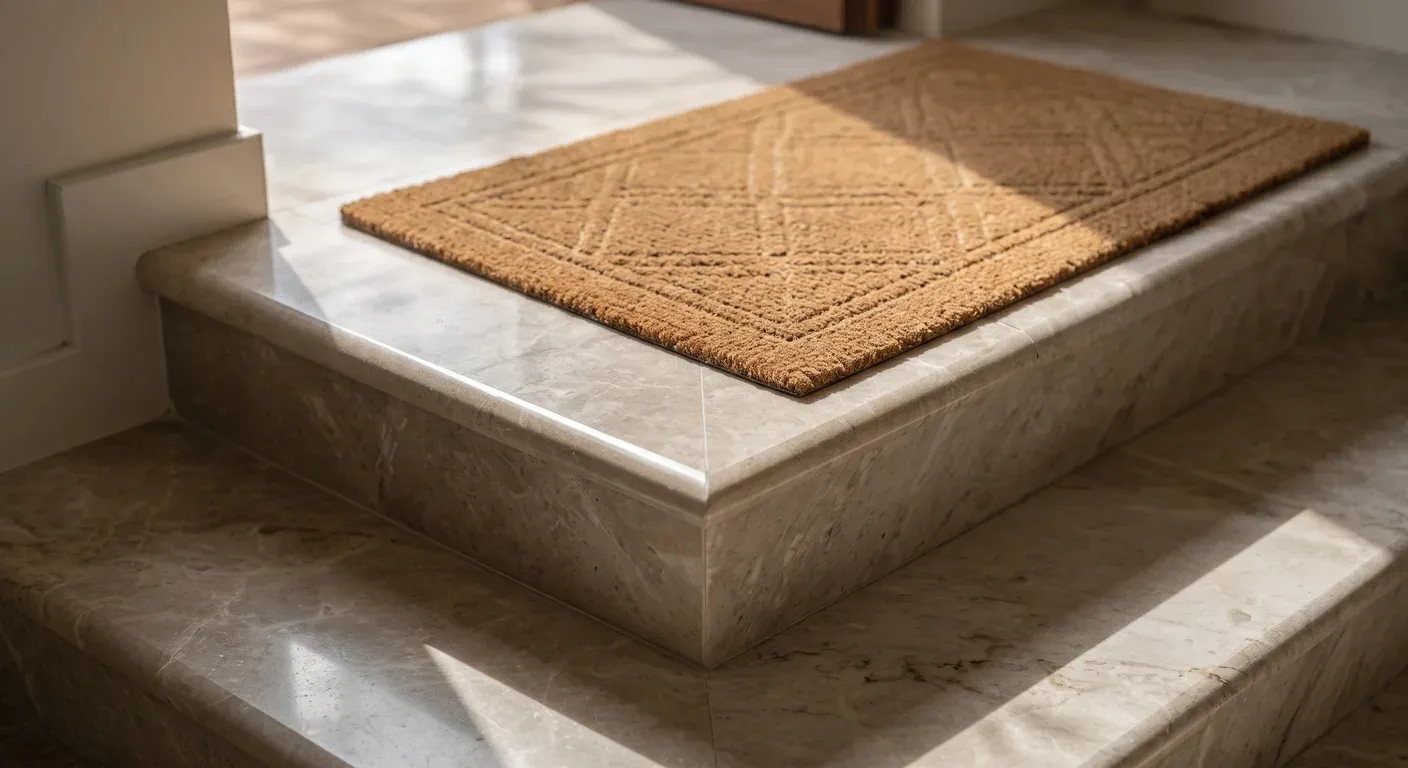
Routine maintenance matters. Sand, dirt and grit are abrasive, so regular dust mopping and entrance mats help reduce wear on interior stone floors.
Stone flooring should consequently be specified as an entire system: stone type, thickness, finish, module, substrate, joints and anticipated traffic all matter.