Natural stone is moving in an interesting direction. For several years interiors were dominated by uniform white and grey surfaces. In 2026, designers are increasingly embracing materials that show their natural origin.
1. Warm stone
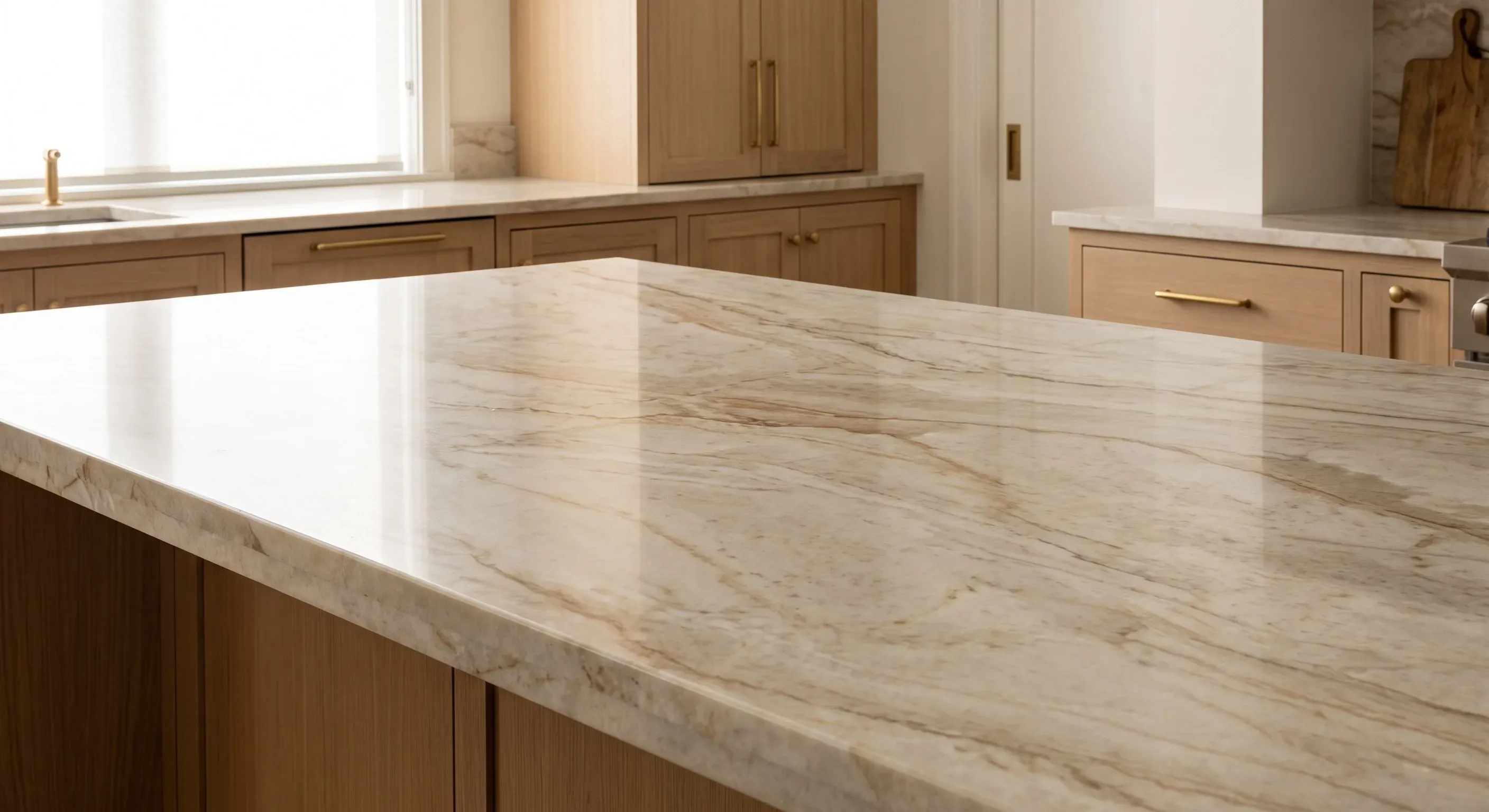
Cream, ivory, beige, caramel, brown and warm gold are replacing many of the cool greys that dominated the previous decade. Warm quartzites are particularly relevant because they combine light backgrounds with soft beige and gold movement.
2. Travertine
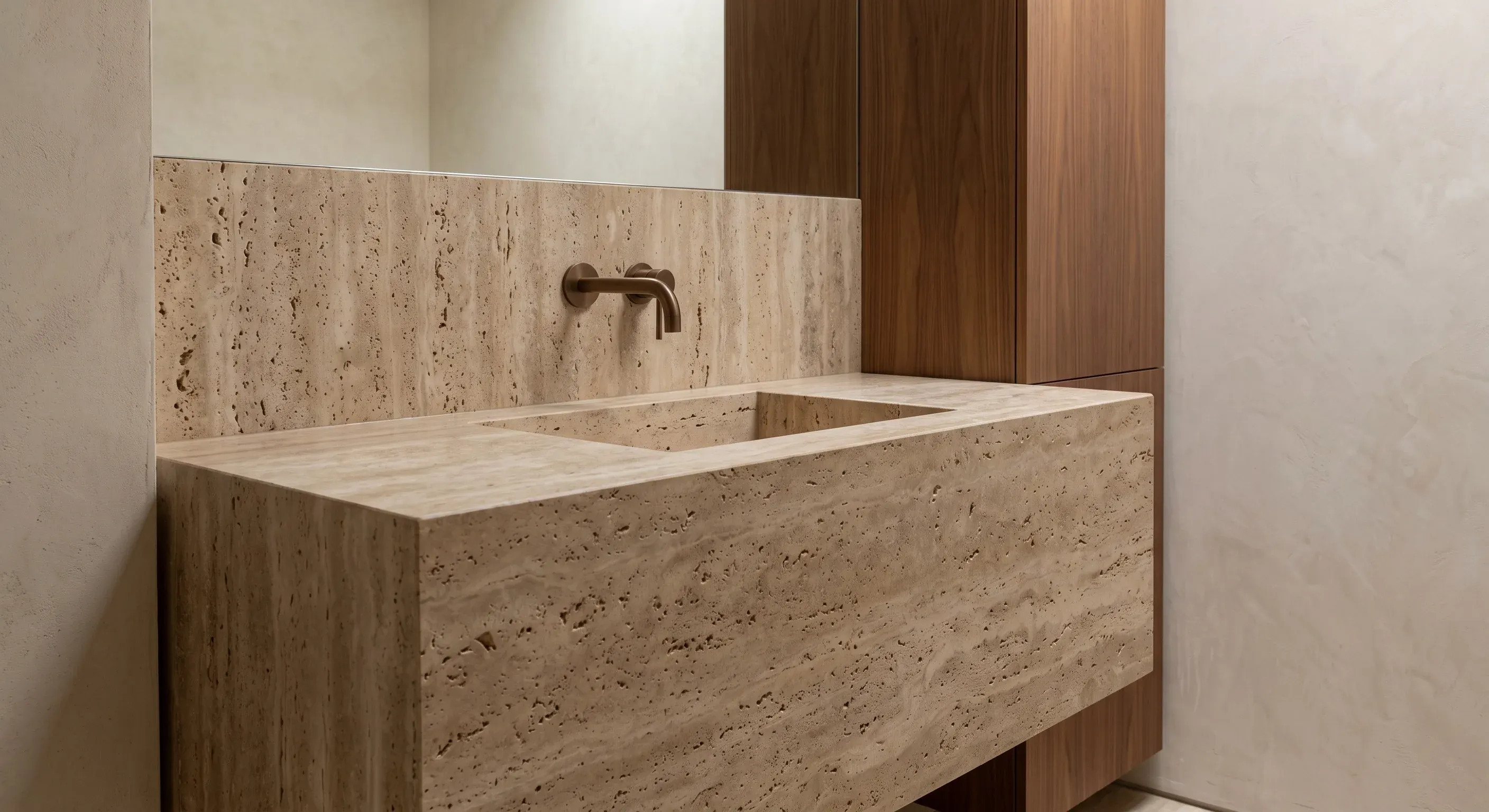
Travertine continues to move beyond flooring. Designers are using it for vanities, basins, fireplaces, furniture, monolithic walls and entire bathrooms. Its quiet variation works particularly well with timber, bronze and textured plaster.
3. Coloured stone
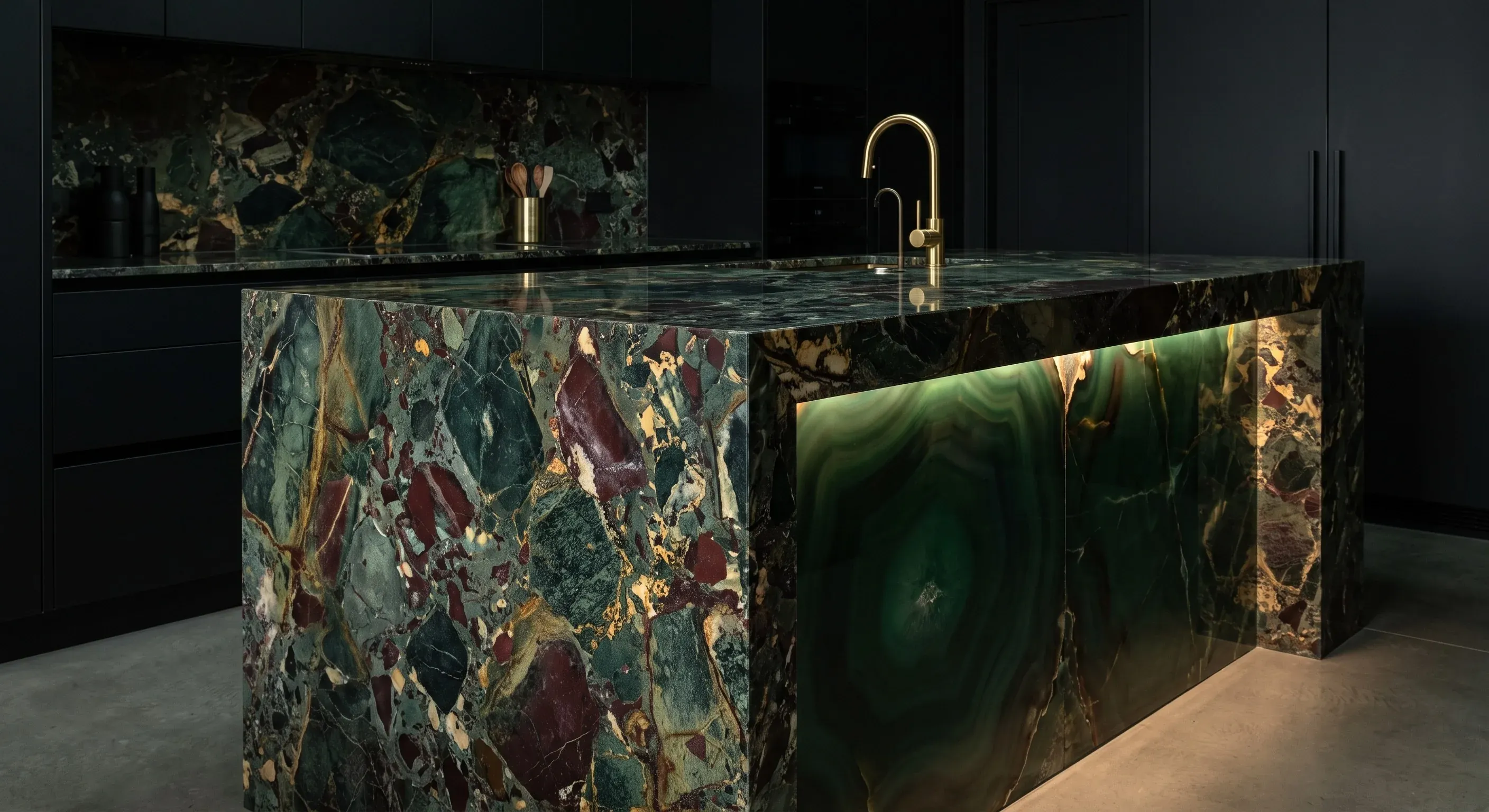
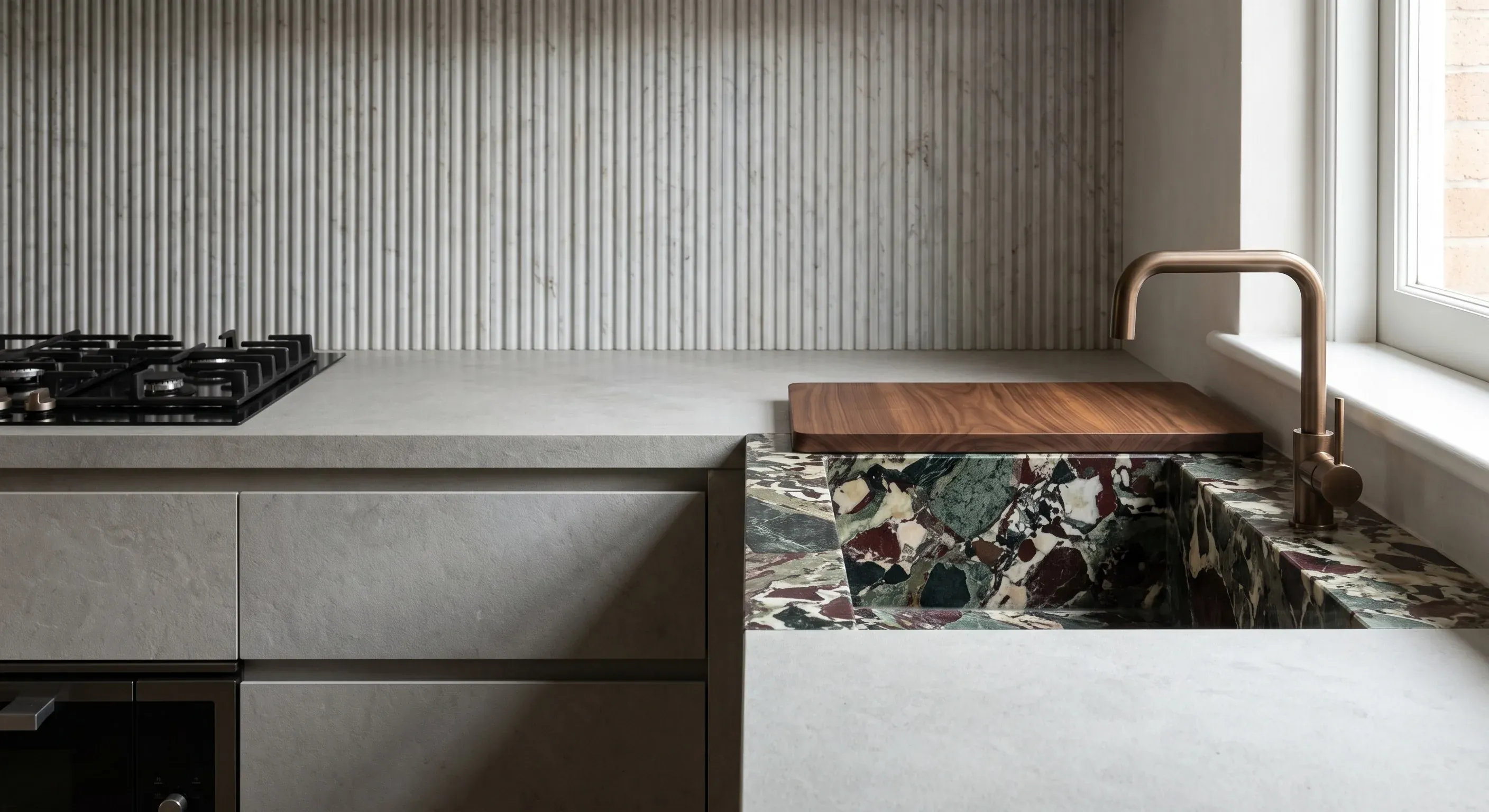
Natural stone is also becoming considerably more expressive. Deep greens, burgundy, blue, red and richly patterned breccias are increasingly appearing on islands and feature surfaces.
4. Honed and tactile finishes
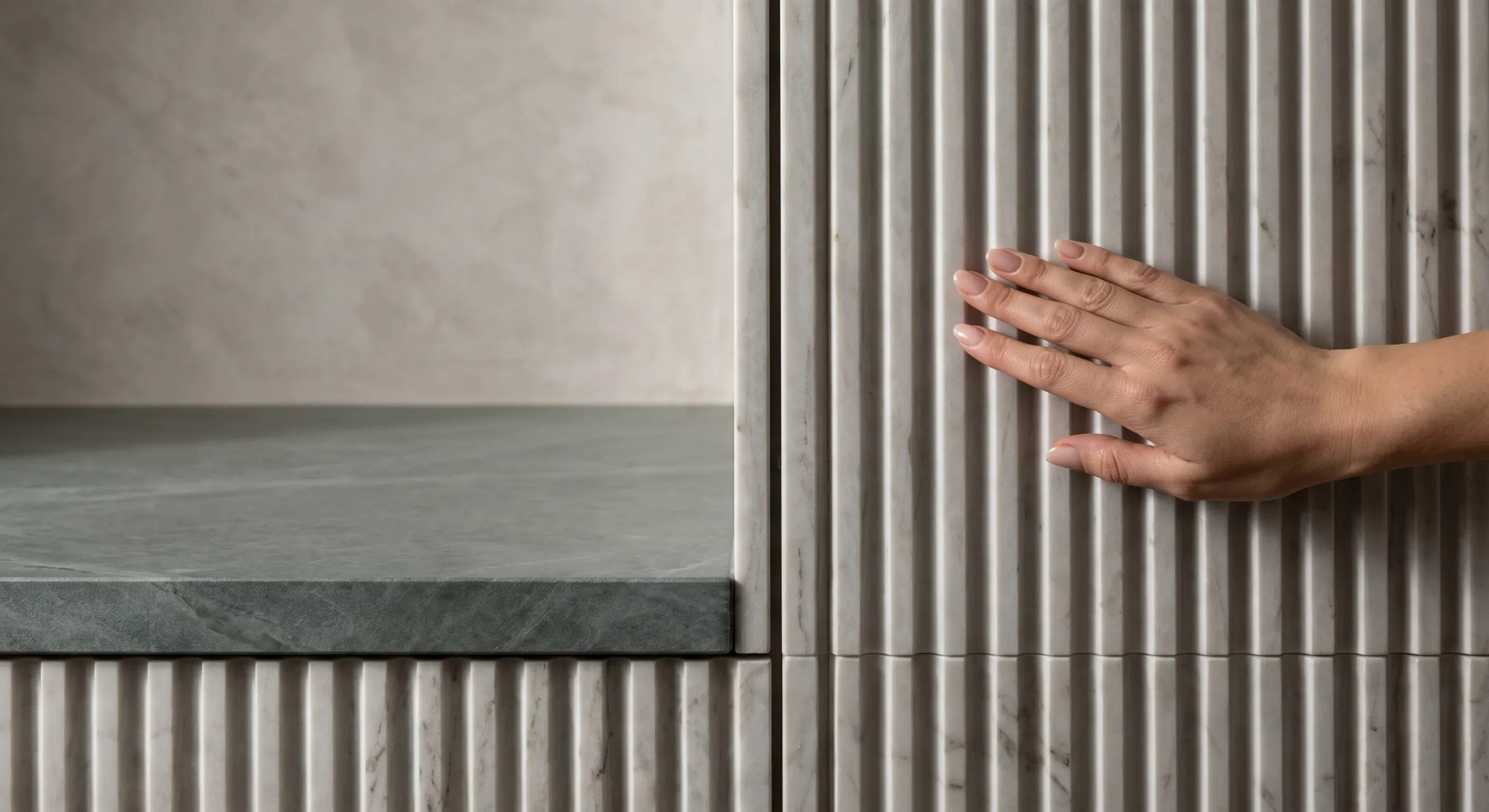
High gloss is no longer the automatic luxury finish. Honed, brushed and leathered surfaces create a softer appearance and allow the physical texture of stone to become more evident.
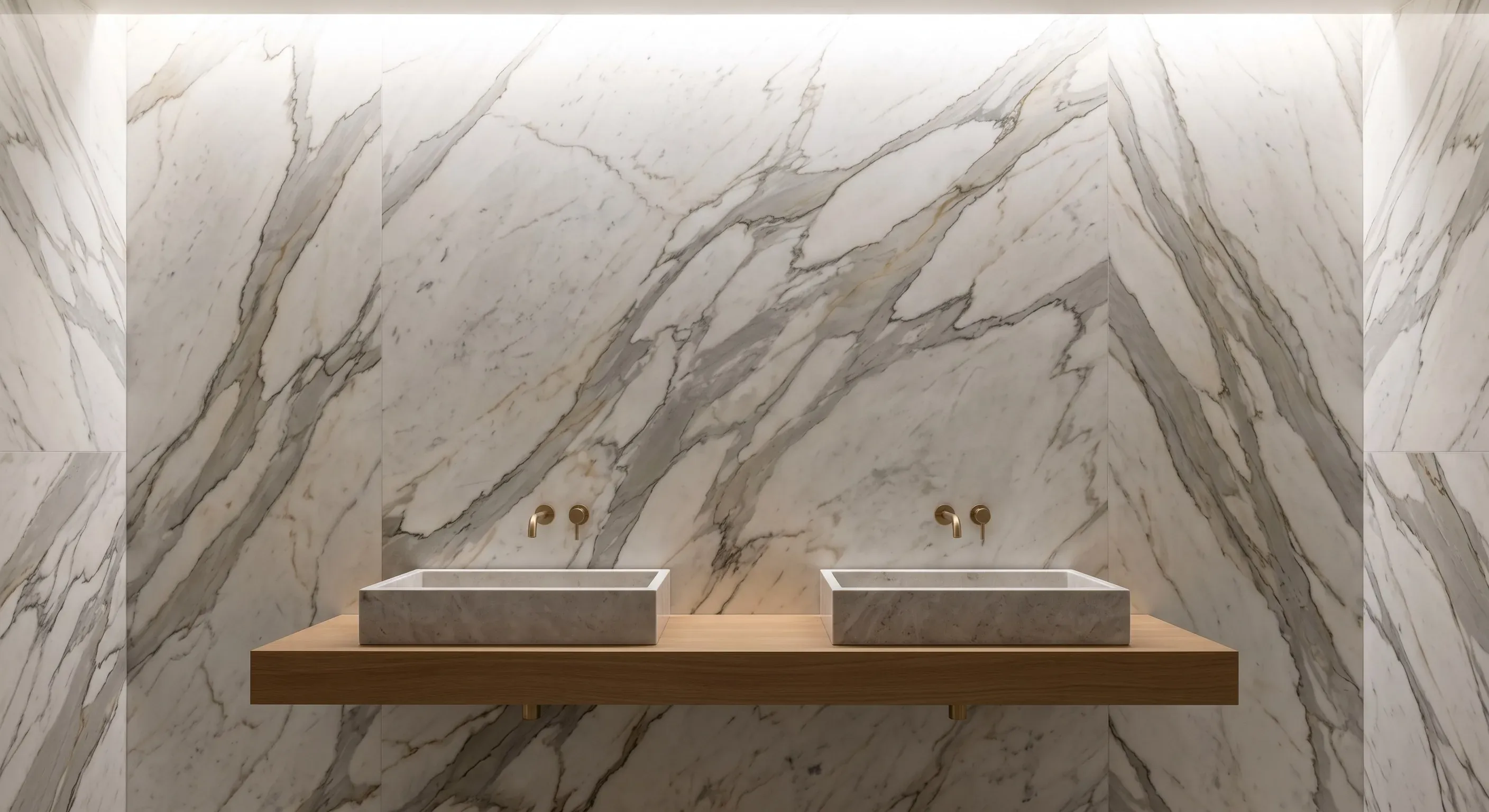
5. Organic vein matching
Perfectly mirrored bookmatches remain spectacular, but designers are becoming interested in less symmetrical compositions. Veins can continue naturally through several surfaces without creating an obvious central mirror line.
6. Mixed stone
One of the most interesting directions is the use of several natural stones within one interior. Different marbles, limestones and finishes can create rooms that feel collected rather than perfectly coordinated.
7. Stone that is allowed to age
Perhaps the broader shift is philosophical. Designers increasingly want interiors that feel lived in rather than immaculate. Natural variations, subtle patina and materials that become richer through use are being celebrated rather than engineered away.
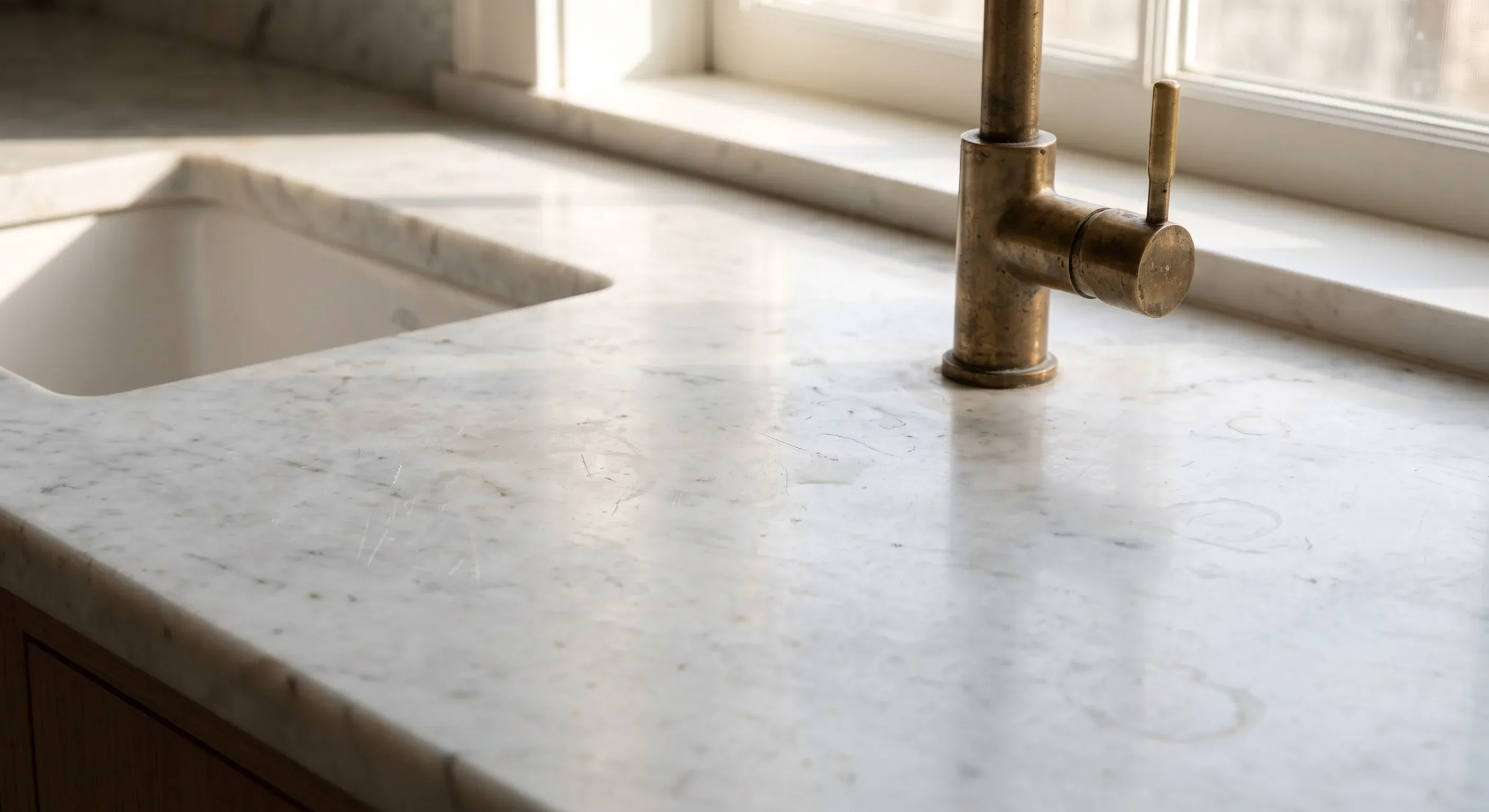
This makes 2026 less about one fashionable marble and more about a renewed appreciation of stone as a natural material.