In the Ossola Valley near Domodossola in northern Italy, a single quarry at Crevoladossola is the home of Palissandro, an Italian marble instantly recognised by its fine banding and a colour range from white, beige and bronze to bluish grey. The name Palissandro, Italian for rosewood, comes from its linear structure, which recalls the grain of natural wood.
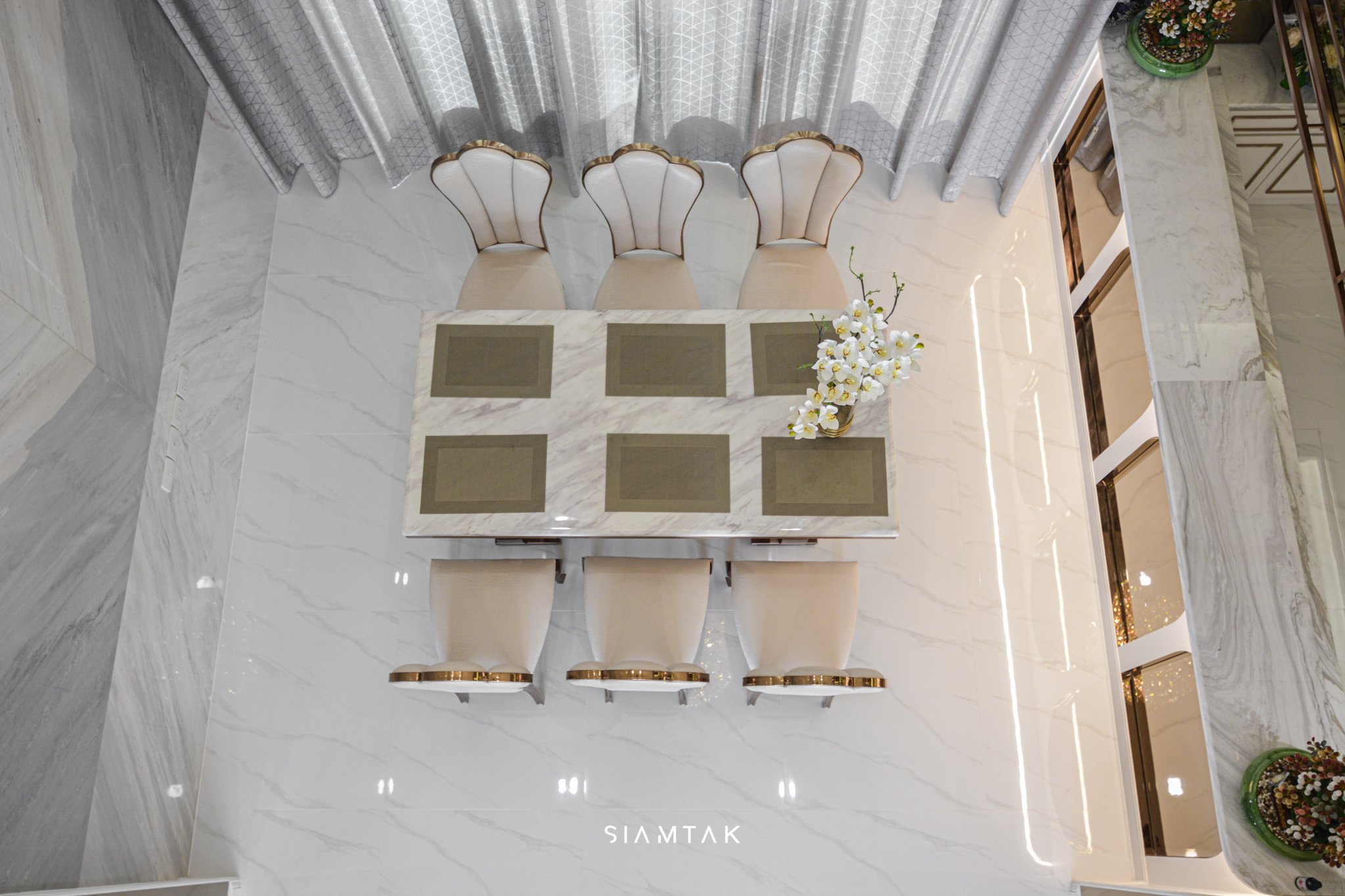
Geologically, Palissandro is a metamorphic marble composed mainly of dolomite, together with calcite and other minerals that create its colour and crystal movement. Differences in mineral concentration within a single deposit allow this historic quarry to produce several selections, each with its own character.
History
Palissandro has been quarried and used in the architecture of northern Italy for centuries, with evidence of its use in the Domodossola area dating back to the Middle Ages.
The quarry supplied stone for important monuments, including the Duomo di Pavia, begun in 1488, so that it became known as the Cava di Pavia. In Milan, stone from Crevoladossola was also used extensively in the Arco della Pace, for both its large monolithic columns and its sculptural elements. Looking at a slab of Palissandro is like looking at the history of Italian architecture at the same time.
Design
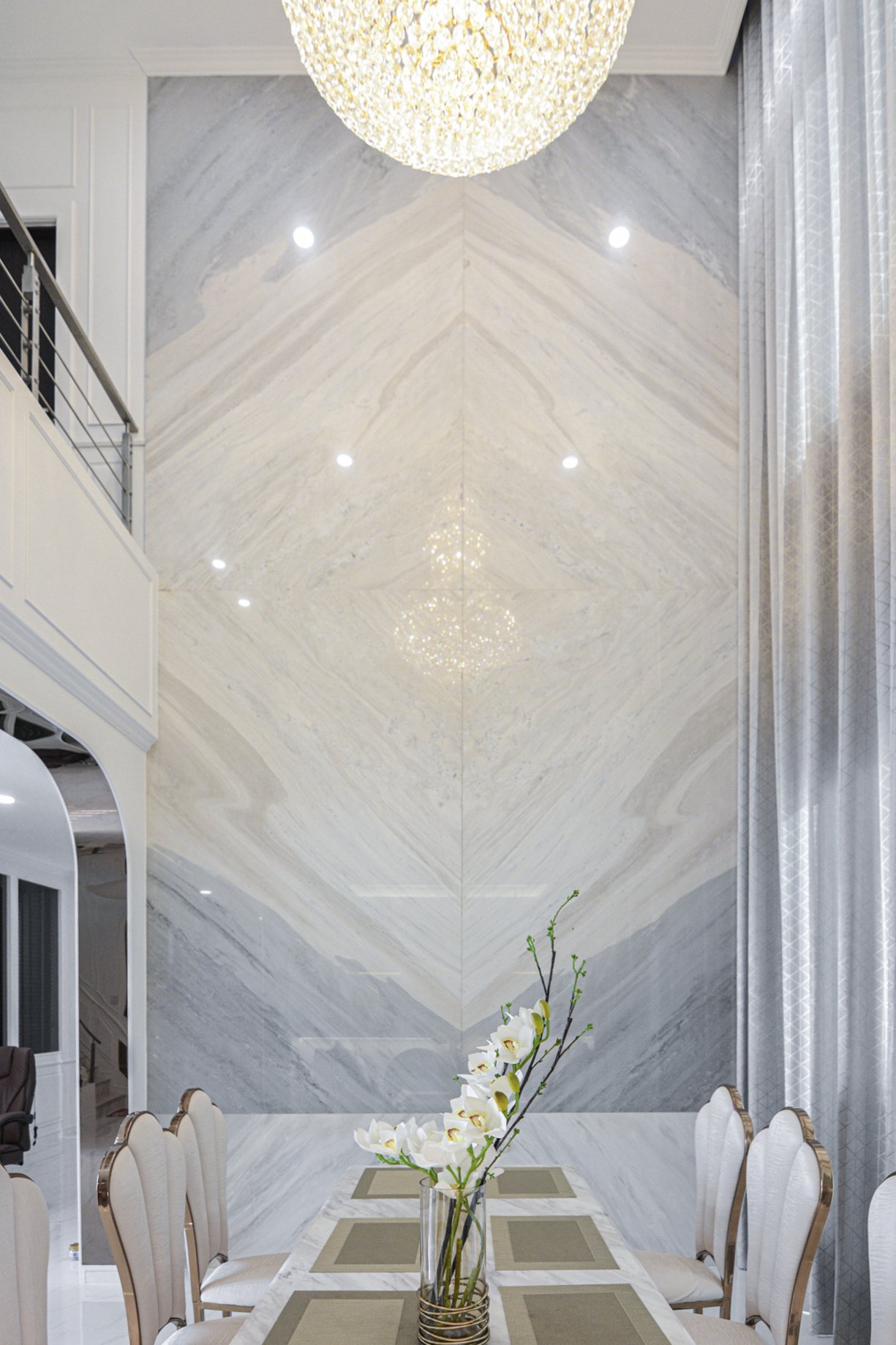
What sets Palissandro apart is its strong linear banding rather than the branching veins of classic Italian marbles. Its clearly directional structure works well on large surfaces and in bookmatched installations.
In Thailand, Palissandro is one of the most popular natural stones for feature walls and bookmatching, with the banding aligned continuously across several slabs to create powerful architectural surfaces.
Palissandro Classico is the most traditional variety, combining white, cream and light beige with layers of grey, gold and ochre.
Palissandro Bronzo is a step warmer, with bronze, beige and brown layered in depth. It is ideal with warm woods, bronze, brass and earth-tone palettes.
Palissandro Bluette ranges from fine, pale bluish grey to intense deep bluish grey, with layers of silver, white and cool-toned minerals. This wide range lets Bluette play roles from light and understated to strongly expressive architecture.
Finishes
Polished and honed finishes are popular. A polished finish brings out the brightness of the crystals, the contrast of colour and the layered mineral structure, while honed gives a softer, calmer look. Textured finishes may be chosen to suit the project.
Durability and Applications
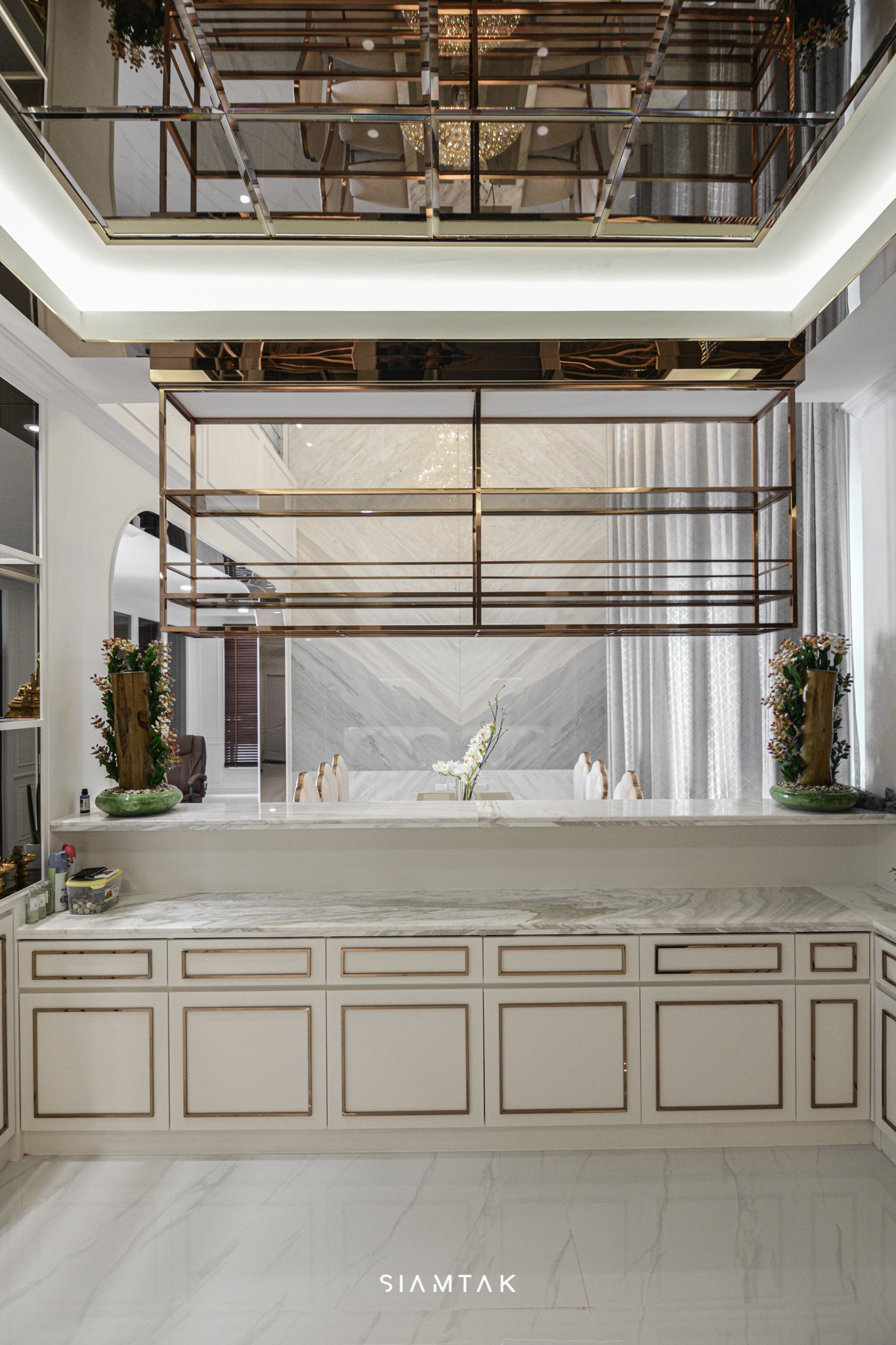
It suits feature walls, bookmatched installations, walls, interior floors, bathrooms, vanity tops, staircases, fireplaces, reception counters, furniture and decorative elements.
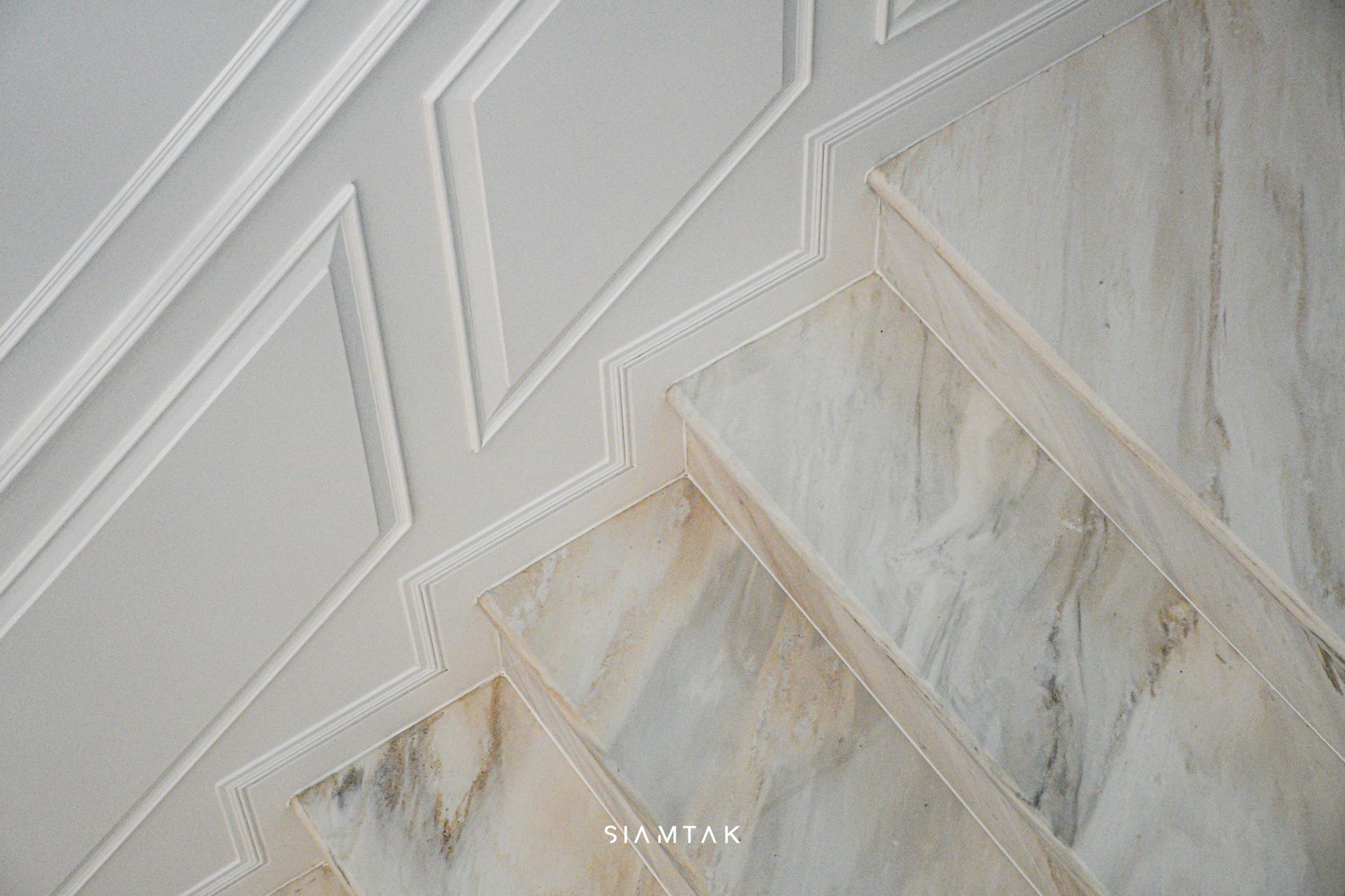
As a natural marble, its mineral structure and the direction of its pattern vary from slab to slab. For heavily used surfaces, consider acid sensitivity, absorption and the type of finish. Use pH-neutral products and plan sealing according to the material, the finish and the actual area of use.