The story of quartzite begins with ordinary sandstone. Deep beneath the earth's surface, enormous heat and pressure over millions of years gradually compact and recrystallise each grain of quartz into a dense, interlocking structure. The result is an exceptionally hard material that still keeps all the movement, depth and variation of natural stone.
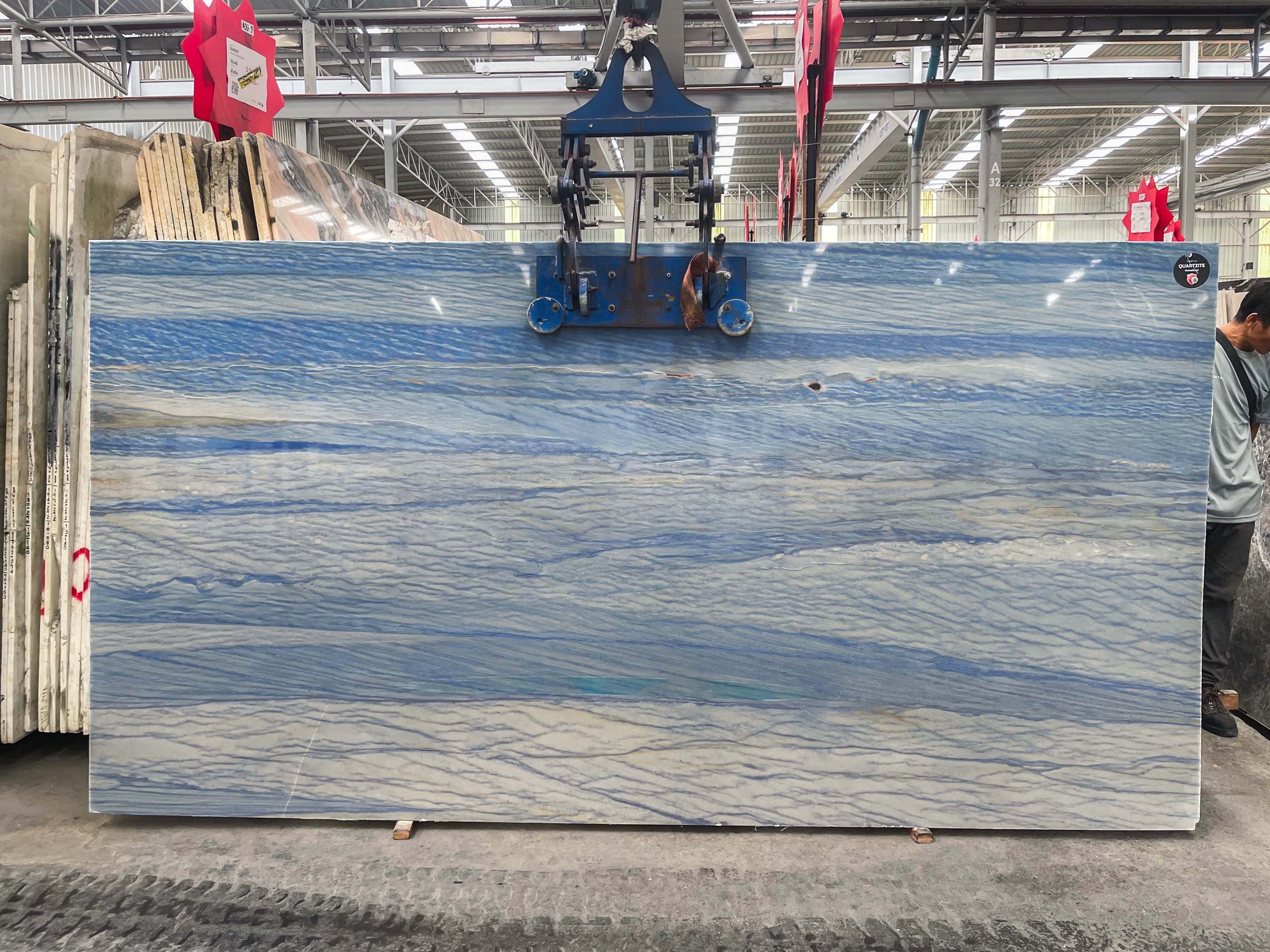
Although quartz itself is usually colourless to milky white, quartzite may contain feldspar, mica, iron oxides and other trace minerals that add colour. Iron oxides give gold, red, rust and brown; mica adds a silvery sparkle or reflective depth; feldspar softens the overall look with cream, pink or bluish grey; and other minerals may create greens, blues and dark veins. Quartzite therefore ranges widely, from calm neutrals to powerful exotic stones.
Quartzite has a Mohs hardness of around 7 and a density of typically about 2.6–2.8 g/cm³, or around 60 kg/m². Its porosity is usually low, depending on the type, mineral composition, fissures, finish and sealing system.
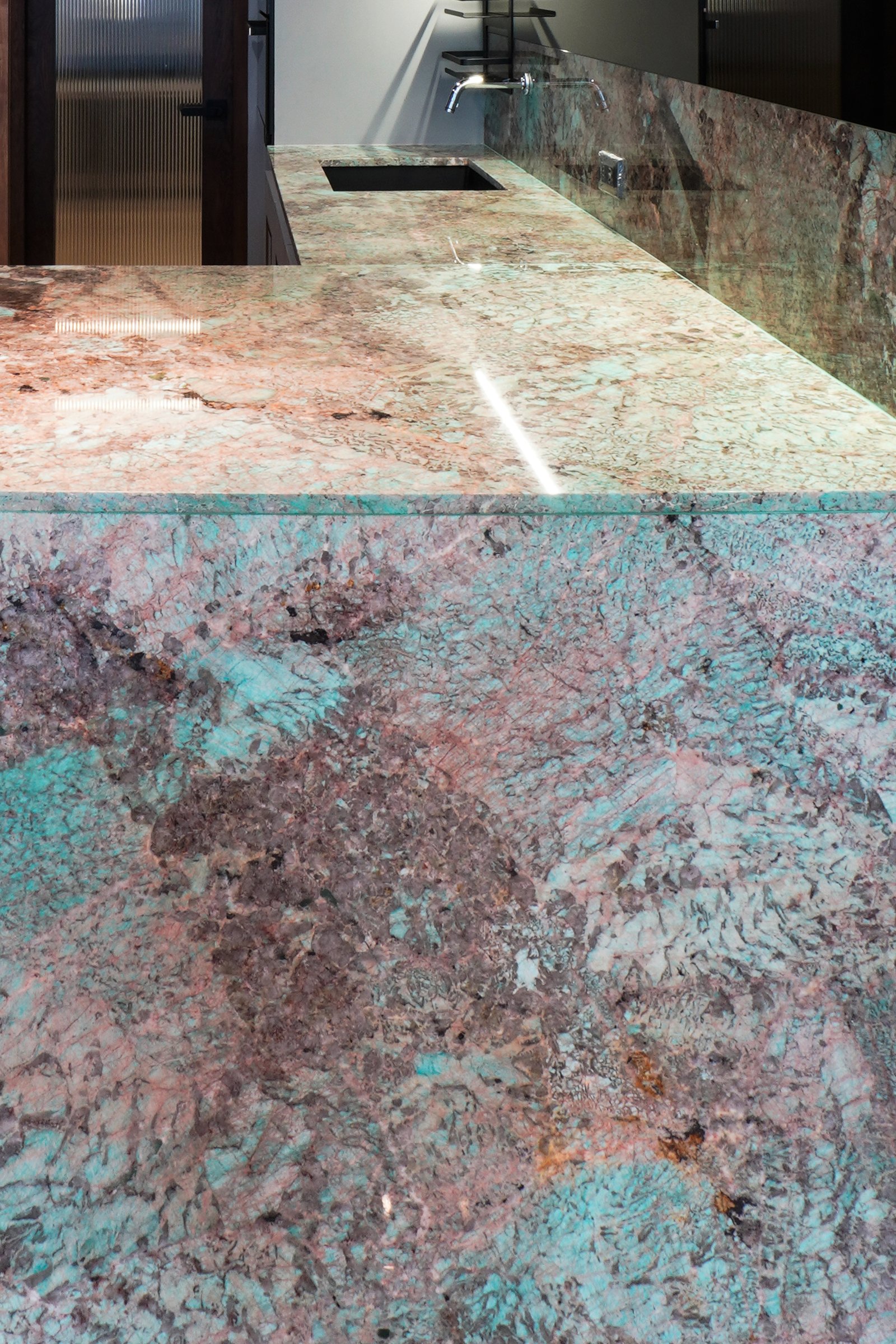
With this level of strength, quartzite usually resists scratching and abrasion better than marble, and in many applications may outperform granite. Its balance of durability and beauty makes it suitable for kitchen counters, bathroom surfaces, feature walls, floors and some exterior applications.
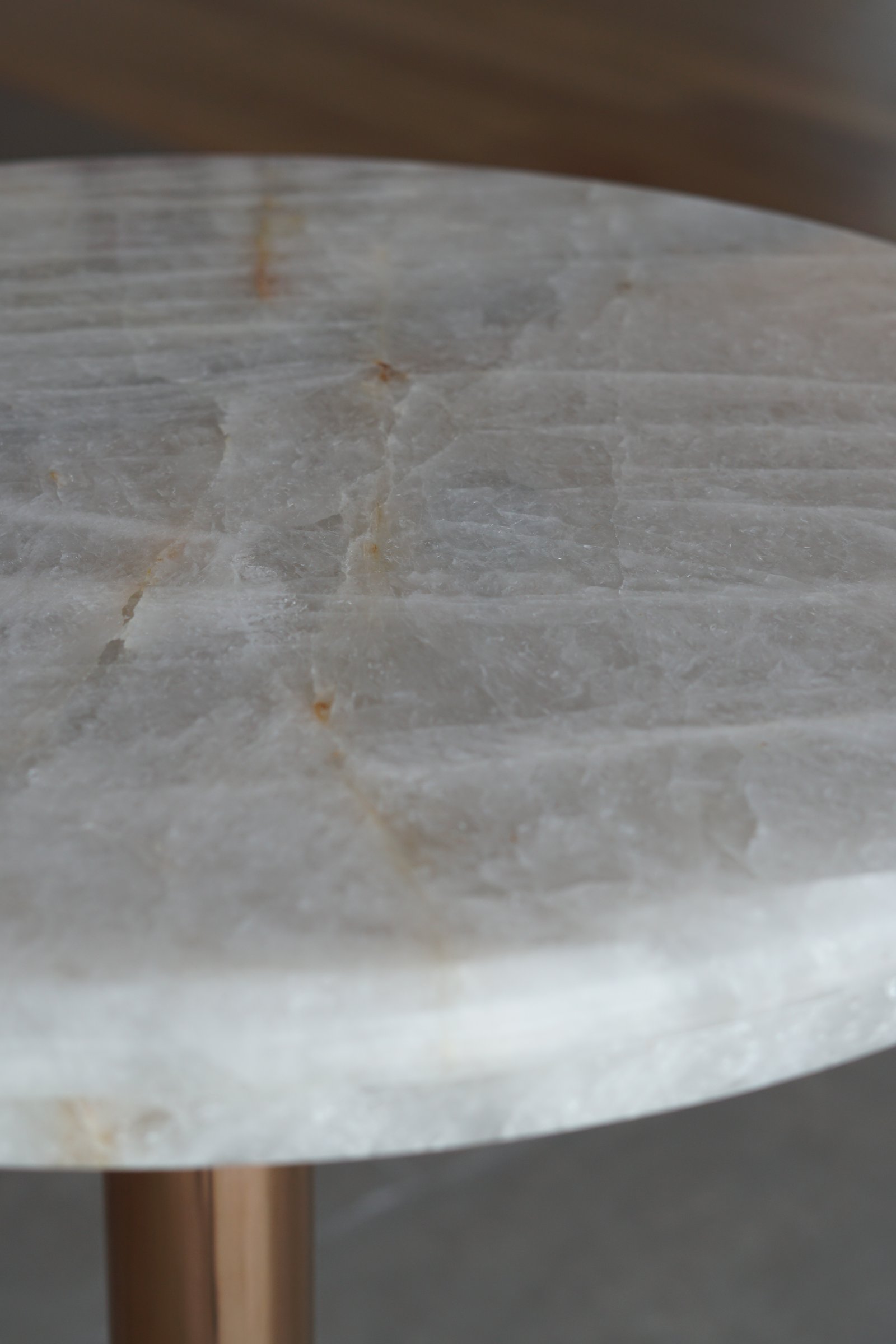
For all its high performance, quartzite is still a natural material, and each slab has its own geological characteristics, so it should be selected, processed and maintained with care. Used appropriately, it offers a rare balance of lasting durability and timeless material expression.