If marble is the luxury of the palace, travertine is the warmth of homes and ancient cities. This natural sedimentary stone forms from mineral deposits left by hot springs, rivers and lime-rich waters. Its earthy tones, layered movement and naturally porous structure give it a calm architectural character, and it has been used in buildings, baths, monuments and interiors for thousands of years.
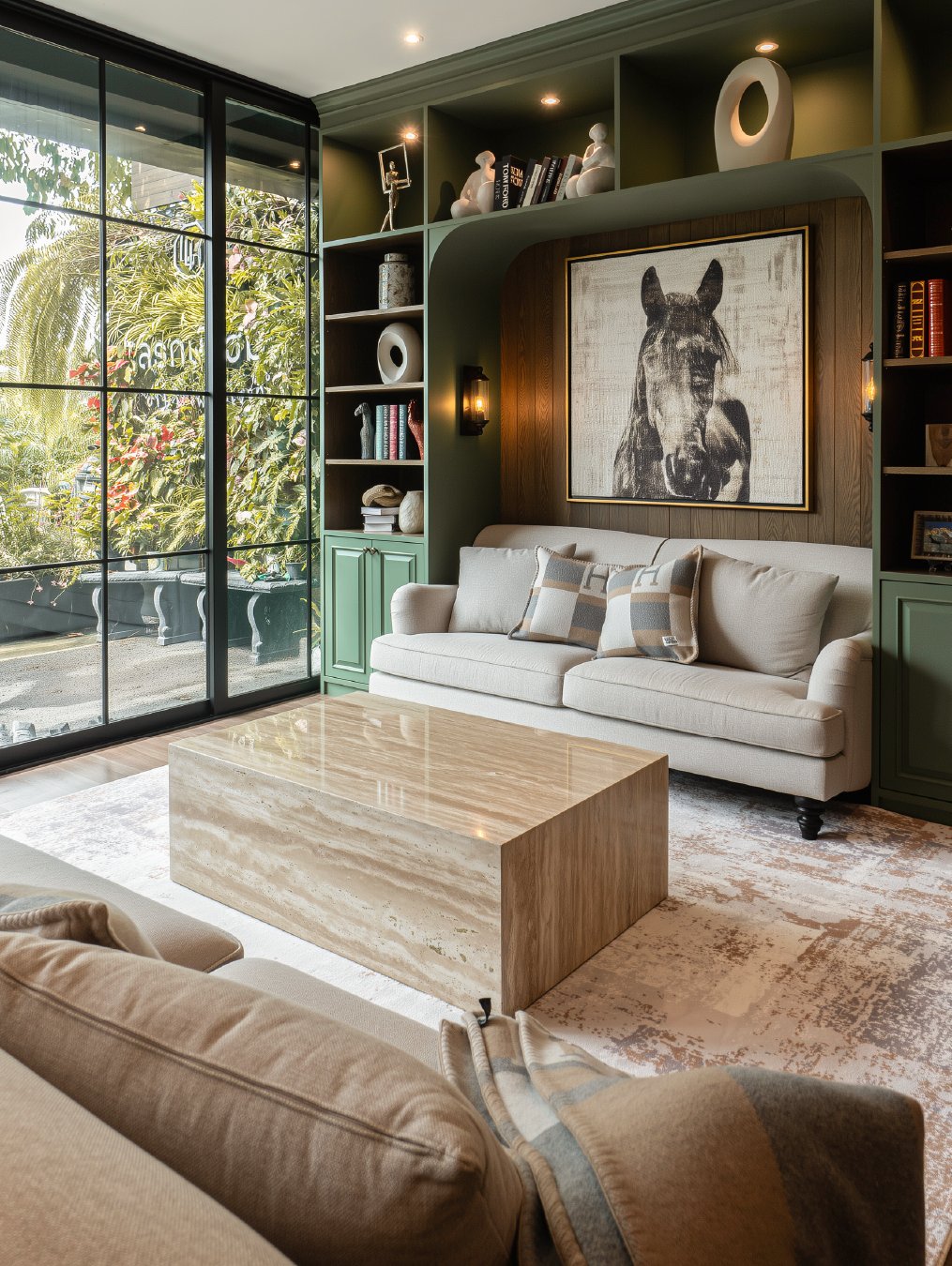
Unlike marble, which is transformed by heat and pressure, travertine keeps a more natural geological structure. Its pores, veins and linear bands come from calcium carbonate settling slowly over time. The result is a stone with a depth, texture and warmth that perfectly smooth materials cannot offer.
Travertine is found in many regions of the world. Its colour, density, porosity, banding and overall character depend on its geological origin. A broad palette from ivory, beige and walnut to silver, red and dark brown lets it sit comfortably in classic, Mediterranean, contemporary and minimalist designs.
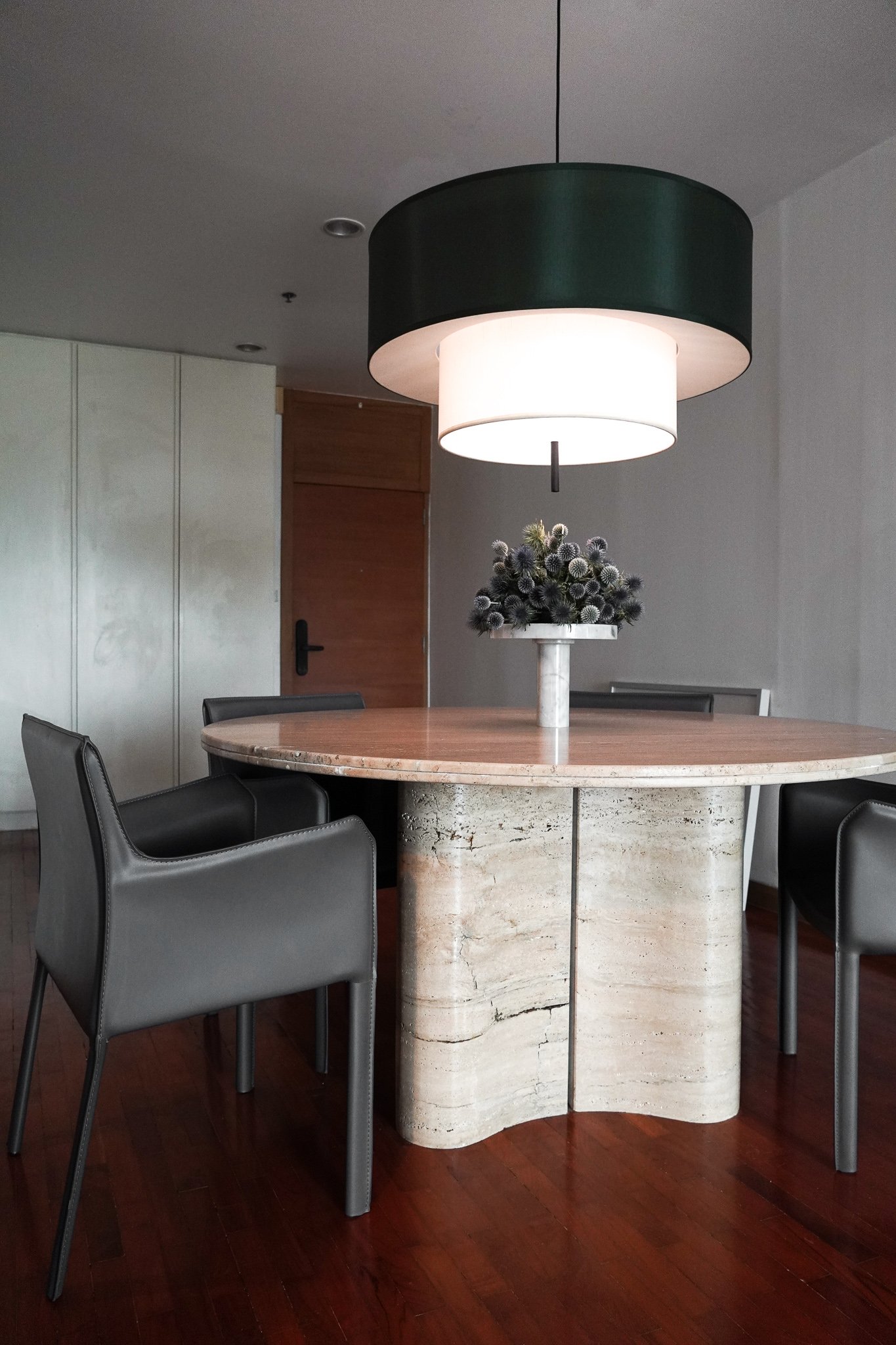
As a calcium carbonate stone, travertine is softer than granite and quartzite, with a Mohs hardness of around 3–4 and a density of about 2.4–2.7 g/cm³, depending on its origin, porosity, minerals, natural cavities, filling method, finish and sealing system. Dense, low-porosity varieties usually cope better with heavily used areas, while very open varieties may need filling, sealing and extra care.
In design terms, travertine can be filled or left unfilled, and finished honed, polished, brushed or tumbled. A filled finish gives a smooth, refined look, while unfilled, brushed or tumbled finishes keep more texture and architectural depth. Because of its porous structure and layered pattern, etching, small chips or light wear tend to blend into honed, brushed, tumbled or unfilled surfaces, but may show more on a polished finish.
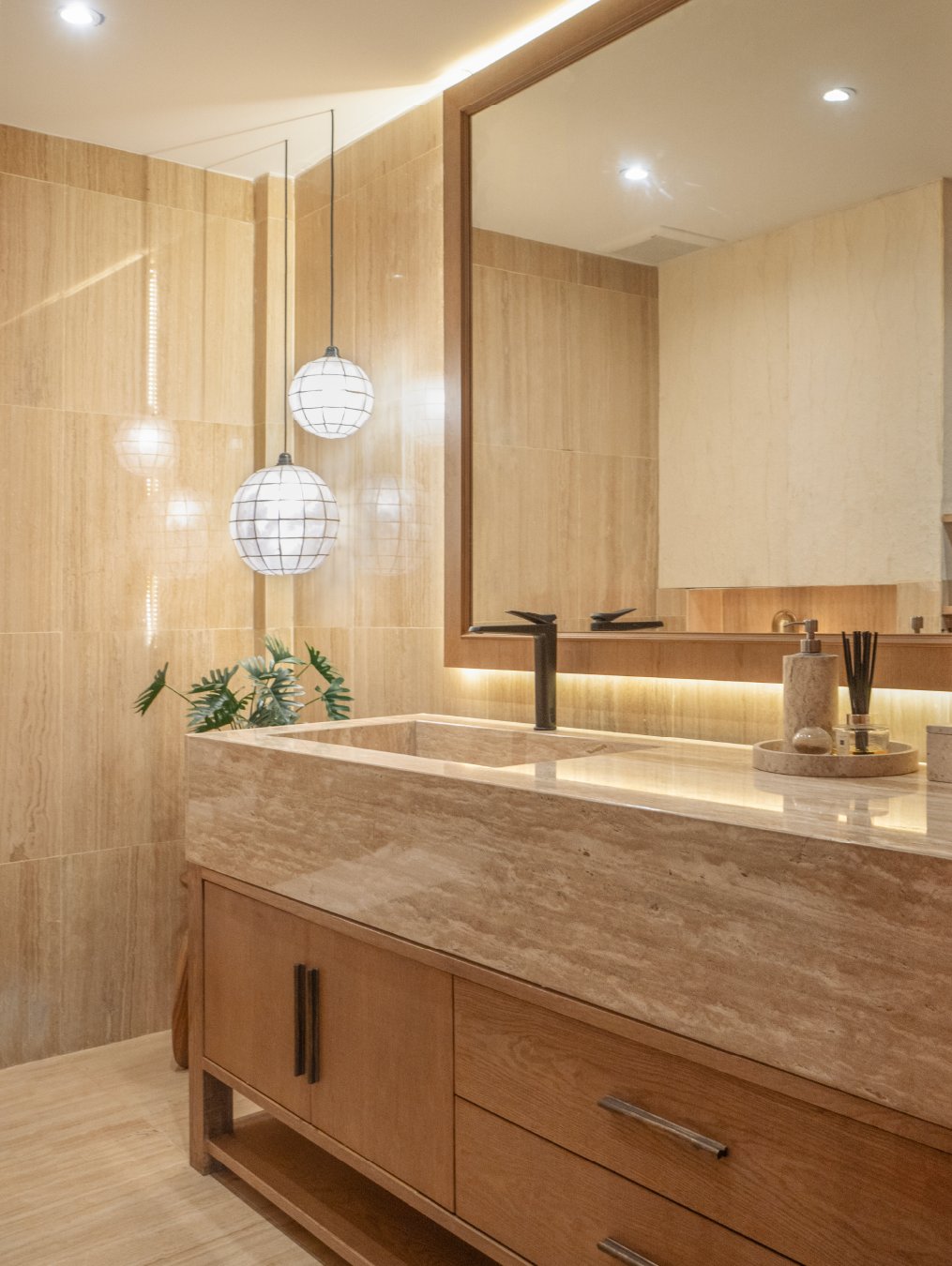
Use a high-quality penetrating sealer to reduce staining and moisture absorption, bearing in mind that sealing adds protection but does not make the stone acid-resistant. Clean with pH-neutral products and reseal periodically. Chosen and cared for properly, travertine rewards you with a warm, textured surface of lasting architectural value.