More than two thousand years ago, Roman stonemasons climbed the Apuan Alps in Tuscany to quarry white stone, unaware that they were beginning the legend of one of the most historically significant marbles in the world. White Carrara was used in the restoration of the Pantheon in Rome under Emperor Hadrian, and later Michelangelo chose it for his Renaissance sculptures. It went on to become a key material of classical architecture, sculpture and contemporary interiors to this day.
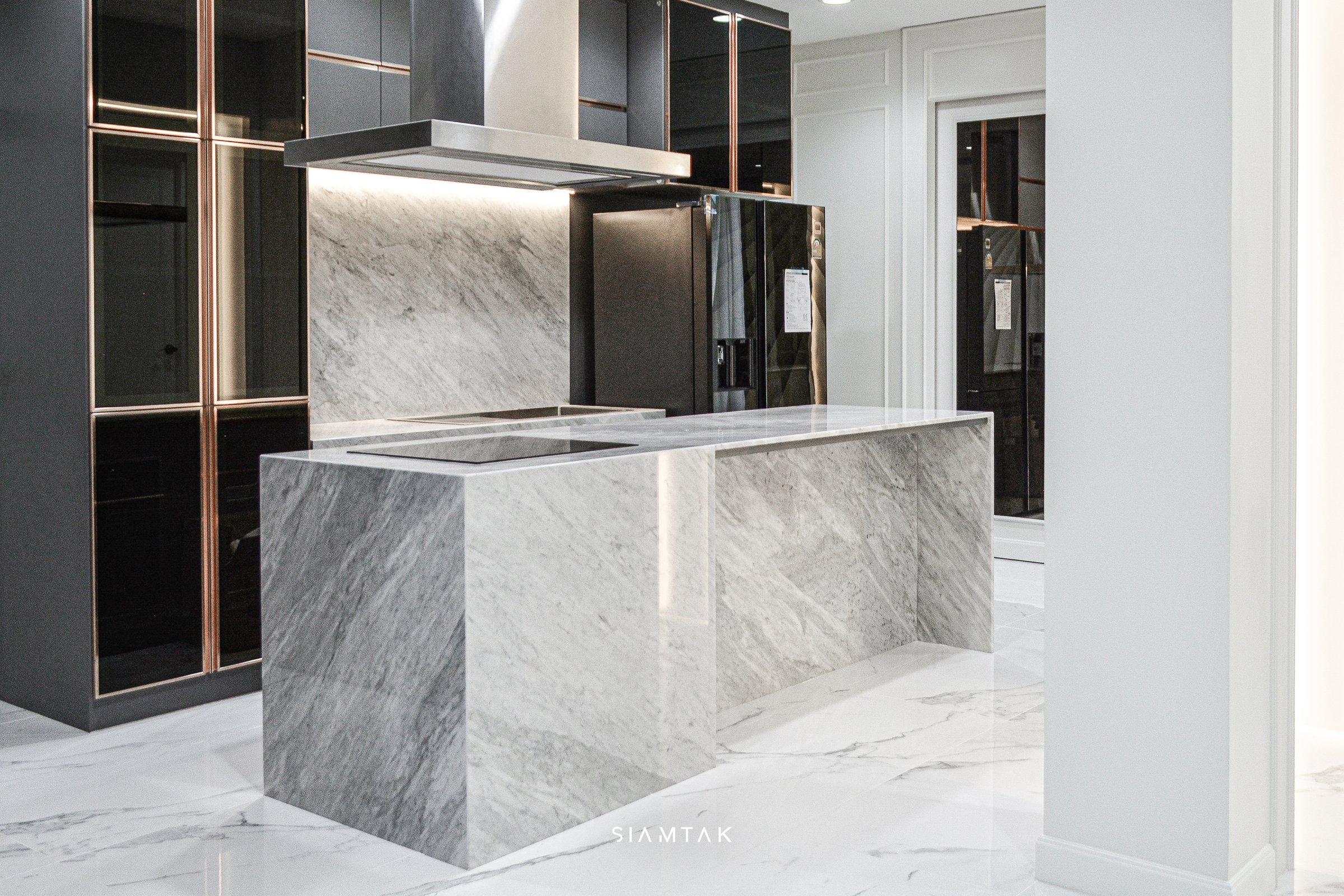
The charm of White Carrara lies in its effortless beauty. A soft white to light grey ground is layered with gentle smoky grey veins, giving it a calm, balanced character that adapts to a wide range of settings, both traditional and modern.
Behind that beauty is limestone transformed by heat and high pressure into metamorphic marble. The stone is calcium carbonate in the form of recrystallised calcite. Its white ground comes from the purity of the original limestone, while the grey and bluish grey veins come from natural mineral impurities such as mica, quartz and iron oxides.
Design
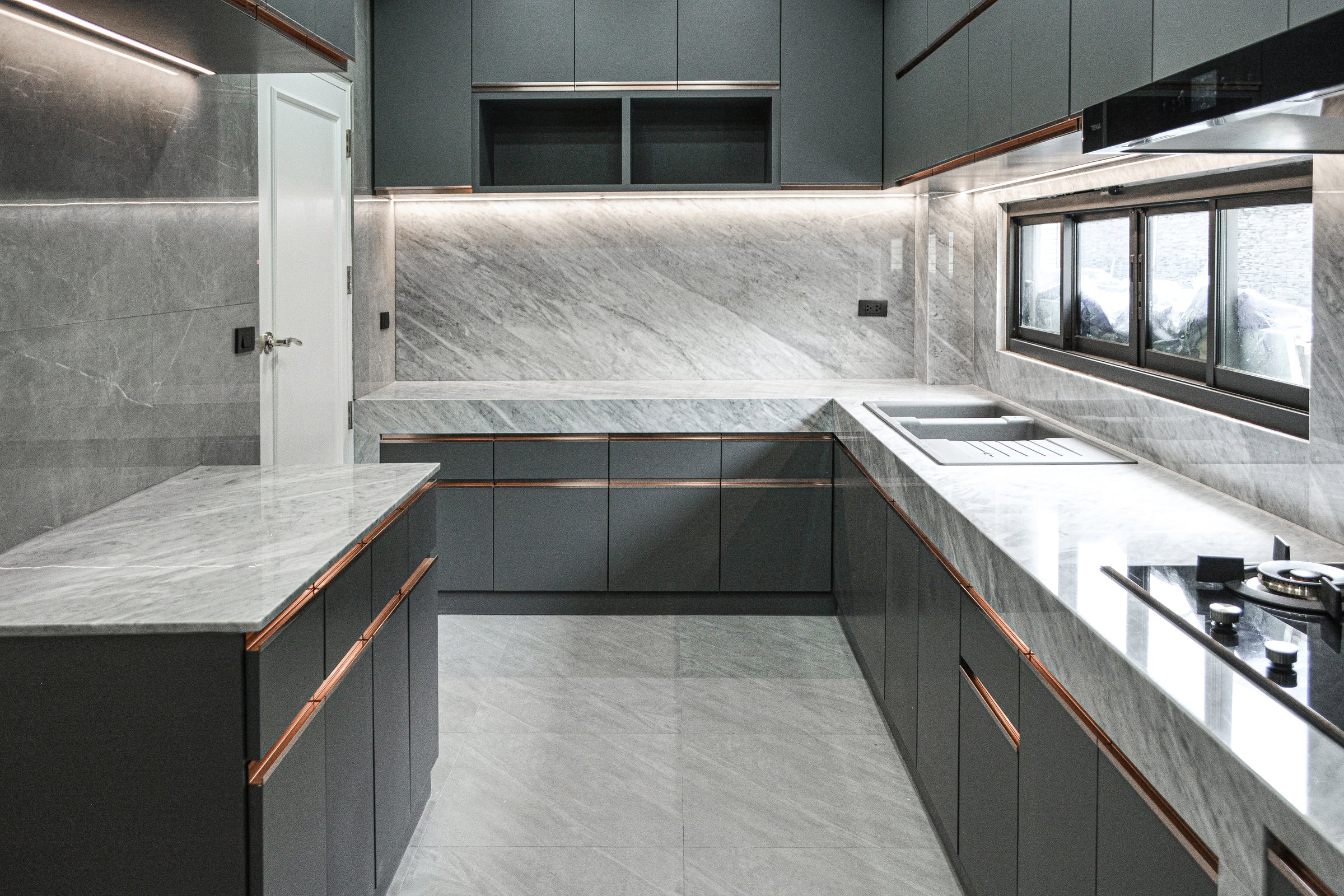
Imagine a room where daylight falls softly across a stone wall all day long. That is the atmosphere White Carrara creates best. Its white tones, which shift subtly between warm and cool, suit a wide range of styles, from classical to contemporary spaces.
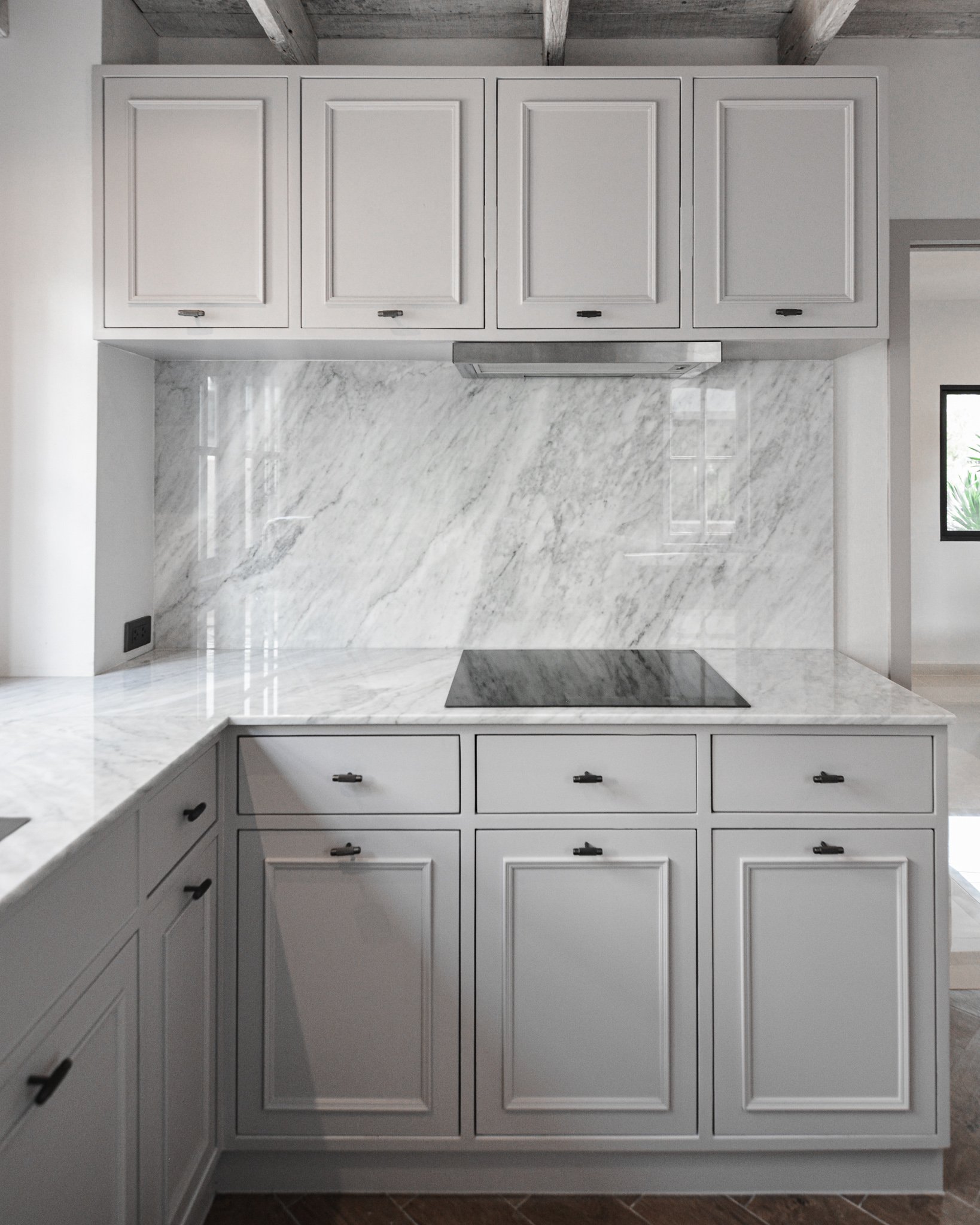
Within the Carrara family, Bianco Carrara usually has a softer, more muted white ground with less defined grey veins, while Carrara Gioia is generally regarded as a finer grade, with a clean white ground and thin, crisp, refined grey veining.
Finishes
Both polished and honed finishes are popular. A polished finish adds brightness and makes the veins stand out, while a honed finish gives a soft, calm feel that suits contemporary interiors where little reflection is wanted.
Durability and Applications
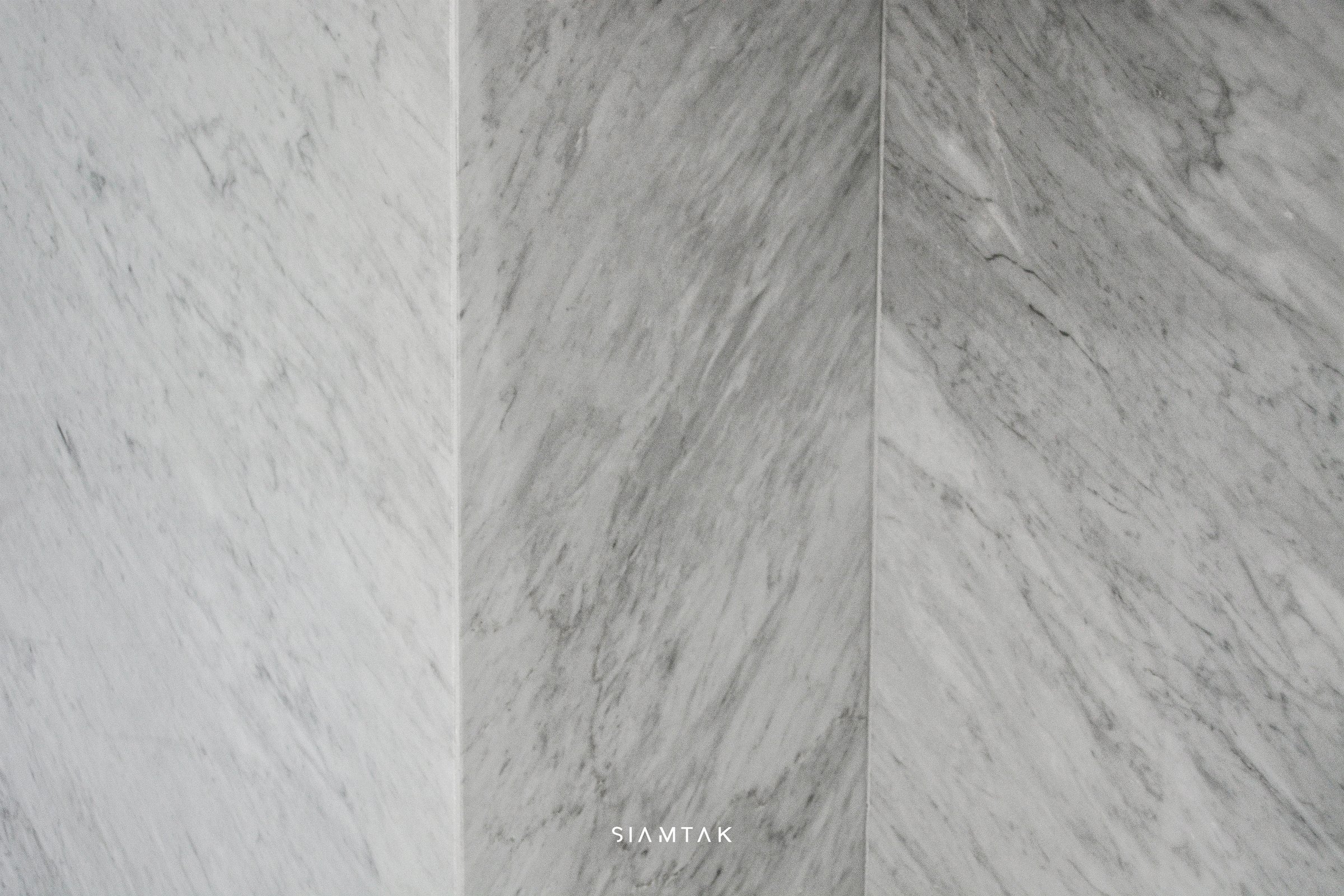
With proper care, Carrara is fairly durable among marbles, as centuries-old buildings across Italy still testify. However, marble remains softer and more porous than granite or quartzite, so it should be cleaned with pH-neutral products and sealed regularly. With the right care it can be used for vanity tops, walls, interior floors, furniture, decorative work, fireplaces, feature walls and some kitchen applications.