natural stone
Natural stone is a high-end material for interior and exterior decoration and architecture. Its beauty and durability, which can last over 100 years, make it a preferred choice for homeowners and projects to enhance the value of their developments.
Siamtak imports various types of natural stone, including marble, granite, and quartzite, from all over the world, making them available to Thai consumers for beautiful home decoration at affordable prices
Dolomite

marble


granite


Quartzite


Limestone


sandstone


Semi-precious stones


natural stone
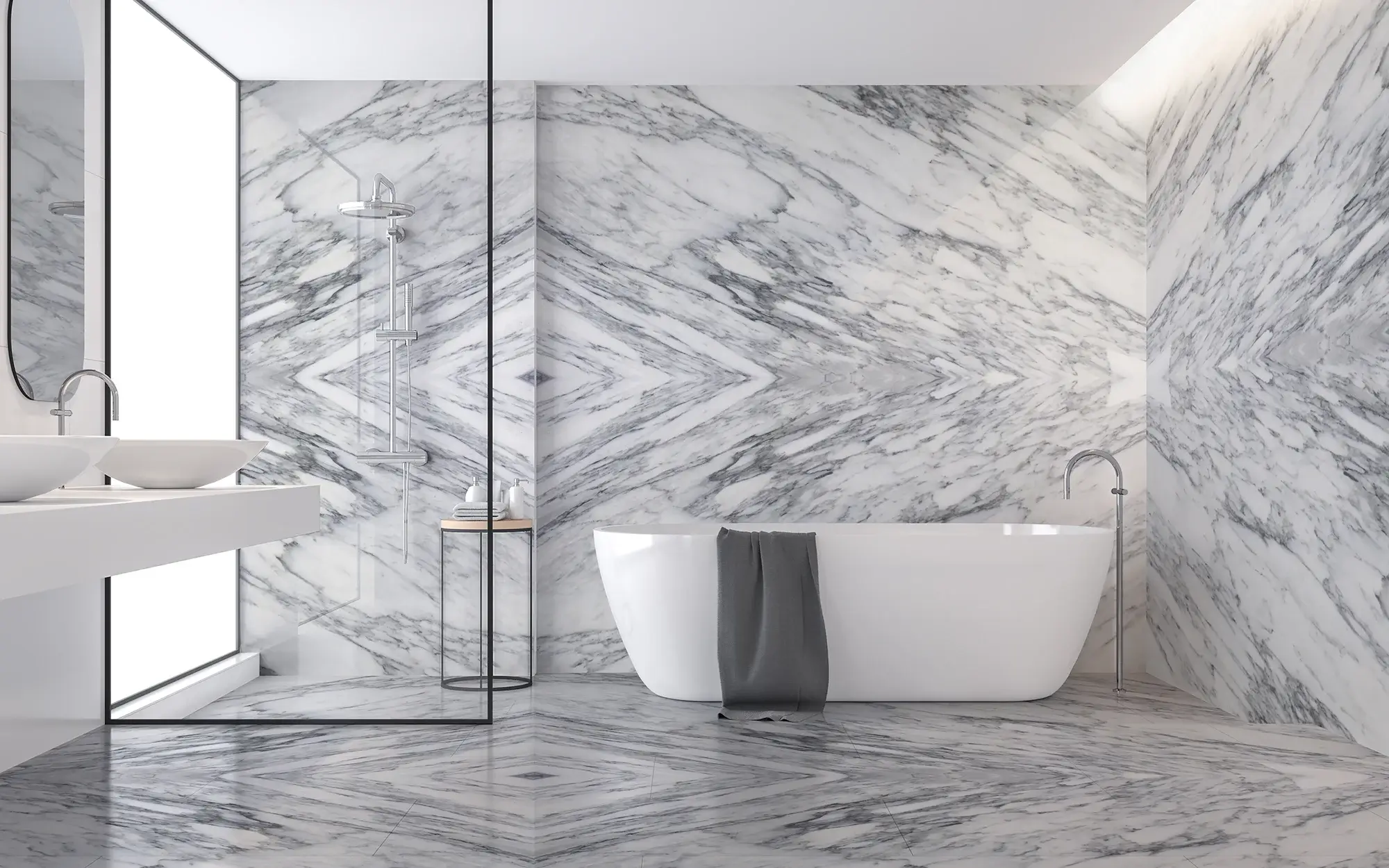
Natural stone is one of the construction materials that has been used by humans for a long time. Today, various innovations have allowed natural stone to be used in diverse ways beyond construction, such as in home and building decoration. Natural stone can be used in a wide variety of applications, from paving walkways and wall cladding (interior and exterior) to kitchen countertops, tabletops, bathrooms, and even small and large pieces of furniture.
How many types of natural stone are there?
Geologists have divided natural rocks into three main types: igneous rocks, sedimentary rocks, and metamorphic rocks. Each type has further subcategories. For example, igneous rocks can be further subdivided into granite, diorite, gabbro, peridotite, etc. Sedimentary rocks include limestone, sandstone, chert, etc. Metamorphic rocks include important rocks such as marble, quartzite, gneiss, and many others. Currently, marble, granite, and quartzite are the most popular types of rock used in home decoration
What types of natural stones are available at Siamtak ?
Siamtak primarily offers six types of natural stone:
- marble
- granite
- Quartzite
- sandstone
- Slate
- Cube stone
Why are the stones at Siamtak so cheap?
Siamtak is a marble and granite supplier that imports its own stone from around the world and owns large-scale manufacturing facilities. This allows Siamtak to control production costs from upstream to downstream, resulting in lower prices and making marble more accessible to Thai consumers, with prices starting at just 890 THB per square meter
Read more articles about natural stone here.
About natural stone
Rock, stone & geological classification
What is a rock?
In geology, a rock is a naturally occurring aggregate of one or more minerals or mineraloid materials.
Minerals have characteristic chemical compositions and internal crystalline structures. Common examples include quartz, feldspar, mica and calcite.
What is stone?
The term stone is generally used in architecture and construction once rock has been quarried, selected and processed for use as a building or decorative material.
Commercial classifications or names do not always align precisely with geological classifications. Materials may also be grouped according to their appearance, fabrication behaviour and established market use.
The three geological groups
Igneous rocks Form when molten rock or magma cools and solidifies over millions of years.
Sedimentary rocks Form when mineral or organic material accumulates, precipitates, or becomes compacted and cemented over time.
Metamorphic rocks Form when existing rocks are transformed by heat, pressure, mineral-rich fluids or a combination of these conditions without fully melting.
Metamorphism can create new minerals, increase density and produce folding or deformation within the stone.
How geological origin affects appearance
Igneous stones commonly display granular or crystalline structures.
Sedimentary stones may contain layers, fossils, directional movement and natural voids.
Metamorphic stones often show folded bands, recrystallised minerals and expressive veining.
Performance considerations
Geological classification provides a useful starting point for understanding how a stone is likely to perform. For example, marble is generally softer and more sensitive to scratching than granite or quartzite.
However, performance can vary considerably within the same geological family. Individual stones may differ in:
- Density
- Porosity
- Mineral composition
- Strength
- Structural character
- Weathering behaviour
For this reason, geological classification should be used as a general guide rather than a complete measure of performance. Each stone should be assessed individually, taking into account its specific characteristics, surface finish and intended application.
© 2026 Siamtak Company Limited. This datasheet is Siamtak's copyright.